
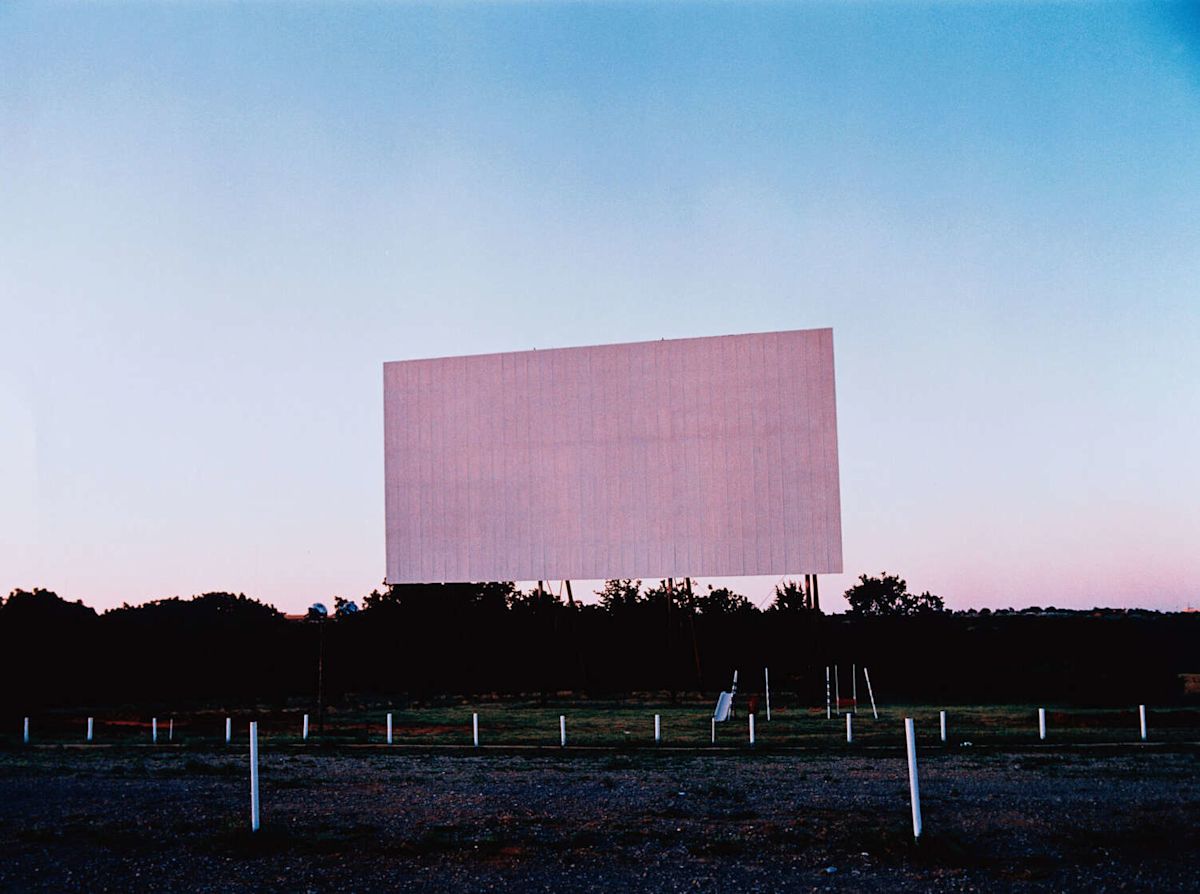
Texas used to be a drive-in movie theater hub, but now the film-going experience is nearly extinct in the Lone Star State.
The Coyote Drive-In theater in Fort Worth has announced it will permanently close after 14 years of operation. The theater opened in 2012 and featured four screens and a full restaurant and bar. Redevelopment plans for the area are at the heart of the closure, with Fort Worth planning to build new canals and a 3-acre park where the theater lies.
“When we opened Coyote Drive-In, we hoped to create more than just a place to watch movies; we wanted to create a place where families and friends could come together and make lasting memories,” Glenn Solomon, a managing partner of the theater, said in a press release.
According to the Fort Worth Star-Telegram, the drive-in theater hosted high school graduations, a Jimmy Buffett concert, an outdoor skating rink, Fourth of July celebrations and more. The theater will host a final screening on Sept. 7.
Residents and patrons of Coyote Drive-in commenting on a North Texas Hood news Facebook post about the closing were less thrilled about the news.
“That’s just PATHETIC. Fort Worth always taking away from us,” another chimed in.
“What does another 3-acre park provide Fort Worth that Coyote Drive-In doesn’t already provide-and what are we losing by removing one of the few truly unique, locally established entertainment destinations in the area?” another resident upset with the decision wrote.
With the closure of the Coyote, there are approximately 14 drive-in theaters left in Texas. Sixty years ago, there were hundreds.
Drive-in theaters used to be abundant in Texas
Drive-in movie theaters used to be a cultural fixture across the country, with more than 4,000 of the car-centric film venues operating at the phenomenon’s apex in the late ’50s. In Texas, there were more than 400 drive-in theaters at that time.
The rise of drive-in theaters went hand in hand with suburban growth and car culture that pervaded American life at the time. They were affordable family entertainment with private spaces provided by the customer, yet in a way still brought the community together.
Drive-in theaters are nostalgic and have long been romanticized in pop culture. Drive-ins are where first dates and first kisses took place, and where horror movie monsters beset unsuspecting moviegoers. Although they still exist in a massively reduced capacity, they are symbols of a bygone era of Americana.
Currently, there are around 230 drive-in theaters left nationwide, a far cry from the theaters’ peak era. Texas, one of the lucky states to still have just a handful left, has around 14 or so drive-in theaters still kicking, with the Coyote’s closure. Houston has one in the Moonstruck Drive-In in the Second Ward that is still operating.

With the closure of the Coyote Drive-in theater in Fort Worth, there are approximately 14 drive-in theaters left in Texas. Sixty years ago, there were hundreds. (shaunl/Getty Images)
Why did drive-in movie theaters die?
There are a few reasons why the once inescapable pastime has all but faded away. Mainly: the way people watched movies changed.
Malls (which are similarly endangered) played a part in the death of drive-ins. By the time the car-centric era that made them popular came to an end, the mall-centric culture of the 1980s made the place to see movies a giant commercial property with stores, a food court, air conditioning and protection from the elements.
Drive-ins went hand-in-hand with suburban expansion, but they used a ton of land to operate, meaning that when something needed to be built, or when more important community needs were introduced, drive-ins were an easy casualty.
Drive-in theaters saw a boon during the COVID-19 pandemic, when social distancing and restrictions were in place that made normal movie-going impossible. Drive-Ins became the only way some filmgoers were able to see movies like Tenet on the big screen.
Surviving today is an entirely different animal. Movie-going culture and the film business are in flux. Movie studios and theater chains are constantly trying to engineer ways to bring people back to the theaters post-pandemic. In the past couple of years, the box office has continued its upward trend, largely driven by large-format theaters (IMAX, Dolby, etc.) becoming an essential viewing experience for film buffs.
Drive-in theaters still serve a purpose, providing a nostalgic experience that you can’t get at your nearest AMC. But there are places like Rooftop Cinema Club and other outdoor showings across Houston that offer alternatives that still capture that drive-up communal viewing experience.
More Culture
Beef | John Oliver says Buc-ee’s ‘aggressively’ refused to engage
| Goodbye, Texas THC. I’ll miss all the panic attacks you gave me
Courts | Houston club accused of ‘Hustlers’-type scheme is being sued again
281… | Sprite campaign connects new generation to Houston icon
For the latest and best from Chron, sign up for our daily newsletter here.
This article originally published at Texas’ drive-in theaters dwindle with North Texas location closing.