
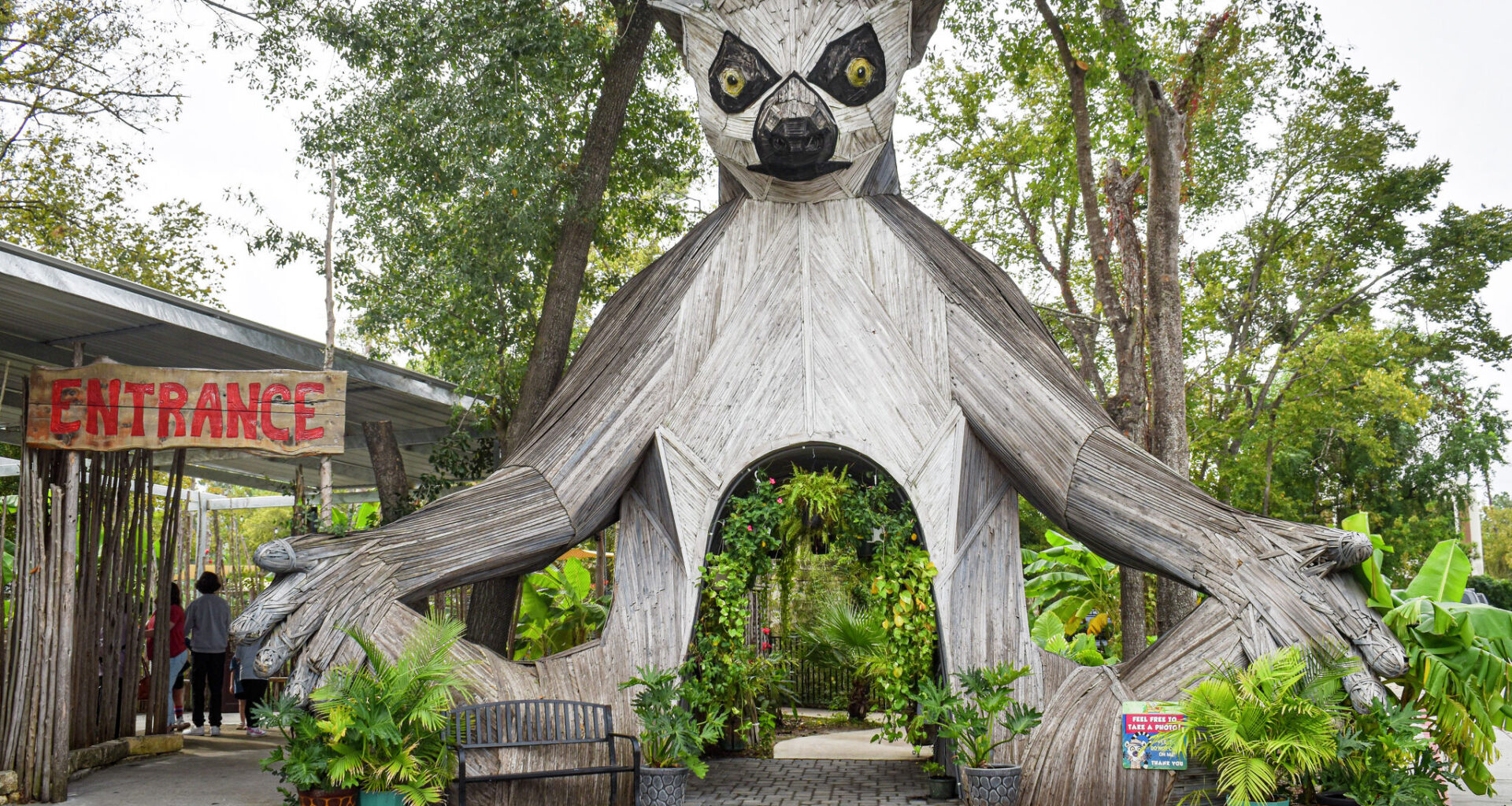
The Houston Interactive Aquarium and Animal Preserve was cited for 17 USDA violations across two inspections this year.
Ariana Garcia
An armadillo was left swimming in about two feet of water after its enclosure flooded at the Houston Interactive Aquarium and Animal Preserve. By the time the animal was pulled from the water, it was lethargic, unresponsive, cold and purple, with abnormal breathing, according to federal inspectors.

The incident was among a string of violations the U.S. Department of Agriculture documented at the Houston wildlife attraction this year. Other findings included a juvenile animal with infected wounds crawling with maggots, an injured ostrich that did not immediately receive veterinary care, rodent feces, spoiled food and swarms of fruit flies.
Article continues below this ad
The Houston Interactive Aquarium and Animal Preserve allows visitors to interact with and feed animals.
Ariana Garcia
The attraction, where guests can touch and feed some animals, was cited for 15 violations during an April inspection and two critical violations in June. The facility says the April violations were corrected by their deadlines, except for one finding it disputes.
Armadillo enclosure floods
The armadillo incident resulted in the sole critical violation cited during the April 16 inspection. Contractors left a water line running, flooding most of the enclosure to about two feet and forcing the animal to swim for an extended period before it was rushed to a veterinarian, according to the report.
Article continues below this ad
An ostrich at the Houston Interactive Aquarium and Animal Preserve. A USDA report said an ostrich was injured while contractors attempted to corral her and did not immediately receive veterinary care.
Ariana Garcia
An ostrich was also injured while contractors attempted to corral her. Inspectors said the animal was lying down, panting and appeared distressed, but a veterinarian was not contacted until later that afternoon despite staff being aware of the severity of her injuries.
Inspectors also raised concerns about public encounters with sloths. Complaint videos and photos showed children with direct access to the animals and a sloth near an open enclosure door without an attendant immediately present, creating potential bite and injury risks.
A sloth at the Houston Interactive Aquarium and Animal Preserve. USDA inspectors cited concerns about public sloth encounters that they said posed bite and injury risks to animals and visitors.
Ariana Garcia
Carrie Covino, chief operating officer of the Houston Interactive Aquarium and Animal Preserve, told Chron a staff member was present and supervising throughout the encounter but was not in uniform and may not have been readily identifiable as an attendant.
Article continues below this ad
The facility has since changed its protocol to require a uniformed attendant throughout encounters, present only one animal at a time and reposition the perch and barrier, Covino said.
Juvenile cavy euthanized
USDA inspectors returned in June and documented two critical violations, including one involving a juvenile Patagonian cavy attacked by other cavies.
A Patagonian cavy at the Houston Interactive Aquarium and Animal Preserve. A USDA report said a juvenile was euthanized after bite wounds became infected and infested with fly larvae.
Ariana Garcia
Its bite wounds became infected and infested with crawling fly larvae, or maggots, extending into tissue beneath the skin. The attending veterinarian said the lethargic animal appeared to have been sick for several days before staff recognized the problem. It was euthanized.
Article continues below this ad
The USDA concluded the facility failed to adequately observe the animals and promptly report health problems to its veterinarian.
Covino said the facility accepts the June findings and acknowledged staff did not identify the cavy’s condition soon enough. Once the wounds were discovered on June 4, he said, the animal was taken to the facility’s attending veterinarian that day and euthanized to end its suffering.
“This is not an outcome I can be at peace with,” Covino said. “I hold this facility to a high standard of animal welfare, and an animal suffering before we noticed falls short of it.”
Rodent feces, flies and spoiled food
Other April violations centered on sanitation, food storage and pest control.
Article continues below this ad
Inspectors found deteriorating spring mix intended for primates, including wilted and discolored lettuce in brown, watery liquid. Fruit flies on cantaloupe and other produce were “too numerous to count,” while rodent feces were found near food-storage containers and bedding. Inspectors also documented bugs and mold beneath stored food.
USDA inspectors reported that about half of the facility’s giraffe and petting-zoo yards were covered in feces during an April inspection.
Ariana Garcia
Covino acknowledged failures in the facility’s food-handling areas. He said the spring mix should have been discarded after it was removed from the primates’ approved diet, while uncovered fruit contributed to the fruit flies. The facility’s existing pest-control program was “clearly not adequate” in the two locations where rodent evidence was found, she said.
The facility has since expanded pest-control coverage and cleaning and added end-of-shift produce checks, according to Covino.
Article continues below this ad
About half of the giraffe and petting zoo yards were also covered in feces, according to inspectors. Pest control was cited as a repeat problem, with a camel repeatedly kicking and nipping at his legs as flies landed on him and complaint videos showing excessive flies around otters.
Covino said the facility increased yard cleaning and reviewed fly control, including the camel’s topical product, with its veterinarian.
A warthog at the Houston Interactive Aquarium and Animal Preserve. USDA inspectors found standing water and heavy mud covering about half of a warthog enclosure during an April inspection.
Ariana Garcia
Inspectors also found standing water and heavy mud covering about half of the warthog enclosure, forcing the animal to walk through it to reach shelter. Covino said warthogs naturally create depressions while wallowing and that staff regularly regrade the exhibit to improve drainage.
Article continues below this ad
Aquarium says violations were corrected
Covino said every item cited in April was corrected by its assigned deadline except a disputed finding involving vaccination requirements for otters and kinkajous.
The facility has asked the USDA’s Animal and Plant Health Inspection Service to amend that finding, arguing its veterinary care plan does not require vaccinations annually.
Otters at the Houston Interactive Aquarium and Animal Preserve. A USDA report cited complaint videos showing excessive flies around otters as part of a repeat pest-control violation.
Ariana Garcia
Covino also said three findings involving animal inventory records, a contingency plan and enrichment records resulted from staff being unable to locate and present existing records during the inspection, rather than the programs not existing.
Article continues below this ad
“That is a real failure and we do not dispute it,” Covino said.
When inspectors returned in June, Covino noted, they did not again cite the April issues involving sanitation, feeding, records, contingency planning, pest control or enrichment.
Smart, funny and sometimes unhinged look at the week that was.
By signing up, you agree to our Terms Of Use and acknowledge that your information will be used as described in our Privacy Policy.
“We do not have a grievance with USDA,” Covino said. “Inspections exist to catch exactly the kinds of lapses that were caught, and on the substance of most of these findings, the agency was right.”
Article continues below this ad
Since 2022, the Houston Interactive Aquarium and Animal Preserve has received 39 citations for alleged violations of federal animal welfare regulations, including two critical citations in 2024 after 40 parakeets and an Eclectus parrot escaped from an enclosure and were never recovered.
Chron reached out to the USDA for additional comments.