
Testing Strength_CCPREP 2026 Camp_Jaime Garcia and Nedal Sheber
Program Representative: Nedal Shheber Associate Professor of Computer Science/Engineering and CCPREP Co-Director
Computer Science, Engineering, Architecture and Advanced Technology Department
A longtime summer staple at Del Mar College, the Texas Prefreshman Engineering Program (called the Corpus Christi Prefreshman Engineering Program at DMC or CCPREP) was first launched at The University of Texas at San Antonio in 1979 as a statewide initiative to encourage middle school students to pursue careers in science, technology, engineering and math or STEM. As of July 2026, CCPREP has been offered by DMC for 26 successful summers.
Q: How are advancements in technology and platforms changing how your area delivers services or instruction?
A: Technology continues to enhance the way CCPREP introduces middle- and high-school students to mathematics, computer science, engineering, and problem solving. Digital tools allow students to access instructional resources, communicate with instructors, conduct research, and explore engineering concepts in ways that complement classroom instruction. Technology also supports hands-on activities and engineering projects, giving students opportunities to apply mathematical and scientific concepts to real-world problems. Because CCPREP is designed to introduce students to STEM fields at an early stage, technology helps make engineering more accessible, interactive, and relevant to their future academic and career goals.
Q: What is the most impactful innovation you’ve implemented, and what problem did it solve?
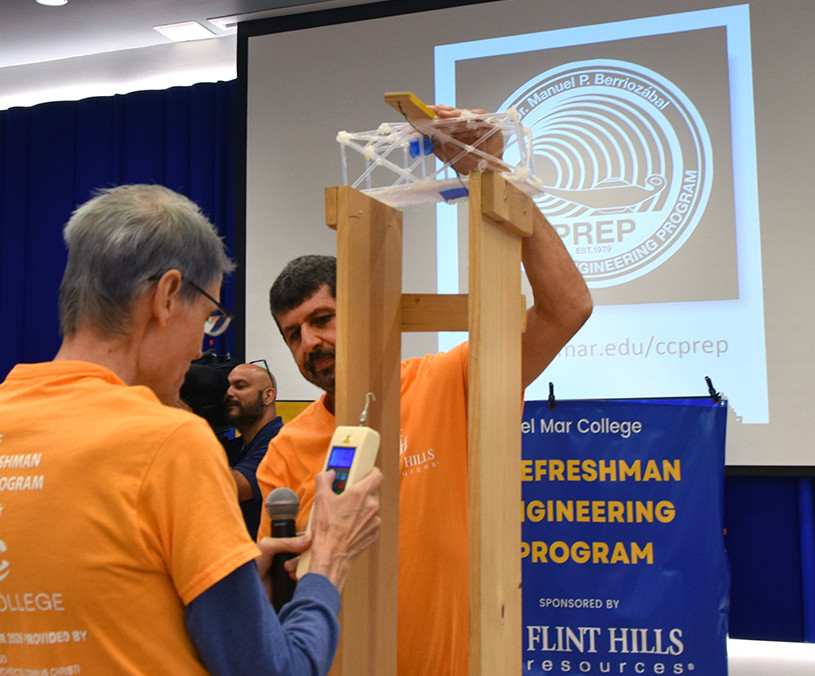
A: One of the most impactful innovations in CCPREP is the integration of technology with hands-on engineering, problem-solving, and research activities. Rather than learning STEM concepts only through traditional instruction, students have opportunities to apply what they learn through projects such as bridge building, air rockets, electric engines, robotic cars, physics experiments, and engineering design activities. Technology helps students move from learning a concept to designing, testing, analyzing, and improving a solution. This approach makes challenging STEM concepts more meaningful while helping students develop confidence as problem solvers.
Q: How has this innovation improved student success?
A: The combination of technology, hands-on projects, and problem-based learning gives CCPREP students an opportunity to see how mathematics and science are applied in engineering and other STEM fields. Students develop problem-solving, teamwork, communication, research, and technical skills while working on challenging projects. As students progress through the program, they move from introductory engineering and problem solving to physics, technical writing, research methods, and group research presentations. This progression helps students build both the academic foundation and confidence needed to pursue future STEM education and careers.
Q: How has technology helped you build or strengthen partnerships with employers, schools, or other organizations, and how do these connections support the region’s workforce and economic growth?
A: Technology makes it easier for CCPREP to connect students with schools, industry professionals, community organizations, and STEM professionals. These connections give students opportunities to learn about engineering and technology from people working in the field and to see how classroom concepts relate to real-world careers. CCPREP’s partnerships and support from organizations such as Flint Hills Resources, the American Institute of Architects, TxDOT, Citgo, and the Coastal Bend Community Foundation help expose students to the broad range of STEM opportunities available in the Coastal Bend. By introducing students to these careers while they are still in middle and high school, CCPREP helps build an early pipeline of students who may eventually pursue engineering, technology, science, and other workforce opportunities in the region.
Q: Looking ahead, what advancements do you foresee impacting your area, and what new skills will DMC graduates need?
A: Artificial intelligence, automation, data analytics, advanced manufacturing, robotics, and digital engineering tools will continue to influence STEM education and the engineering workforce. Students will need strong foundations in mathematics and science as well as skills in programming, data analysis, communication, critical thinking, creativity, and problem solving. They will also need to be adaptable and comfortable learning new technologies throughout their careers. CCPREP can help prepare students for this future by introducing them early to engineering concepts, research, technology, and collaborative problem solving.
Q: If talking to a prospective student, what are the top benefits or opportunities you’d highlight about your program or service?
A: CCPREP gives students an opportunity to explore engineering, mathematics, computer science, and other STEM fields before they reach college. Students learn through challenging coursework, hands-on projects, research, problem solving, and interactions with professionals. The program allows students to experience college-level STEM learning while developing technical, communication, teamwork, and leadership skills. Most importantly, CCPREP helps students discover what they are capable of and gives them an early understanding of the academic and career opportunities available in engineering and other science-based fields. It can be the beginning of a pathway toward becoming the next generation of engineers, scientists, innovators, and problem solvers.
‘;