
So far, we’ve published more than 30 of retired city planner Jim Duncan’s short Tex-Mex histories. Missed your Austin favorite? Let me know at mbarnes@statesman.com. We plan a big roundup for September. — Michael Barnes

1963: Stube Steakhouse / El Alma
The upstairs patio at El Alma.
Austin American-Statesman
Despite being across the street from some of Austin’s major activity centers and on one of its high-traffic streets, the corner of Barton Springs Road and Dawson Street was a revolving door of restaurant concepts from 1963 to 2010.
Article continues below this ad
A Statesman food critic said it was like the “location had been cursed.” Most of the tenants during that time lasted less than two years each. They included the Bier Stube Steakhouse, Bobby and Curly’s Family Inn, Flying Circus, Malamutes Saloon, Martin’s Place, Gypsy Italian Bistro and Castleberry’s Sammiches.
This period also included a two-year residency by an architect, Marley Porter. Architecturally, the building mimics Mexican design styles. A stone staircase built into the rock formation leads to a rooftop terrace. While only on the second floor, the terrace offers impressive views of the Austin skyline.
In 2011, Carlos Mario Rivero opened El Chile, a walk-up taco stand, which he later transitioned into a full-service Mexican restaurant. He branded it El Alma after his chef, Alma Alcocer-Thomas, who had previously worked at Fonda San Miguel. In addition to tacos and enchiladas, El Alma serves a full menu of Mexican creations, such as duck relleno, chuleta del Puerco, pasilla mole and adobo shrimp quesadillas. The new concept worked. It just needed the right menu mix.
1977: Trudy’s Tex-Mex
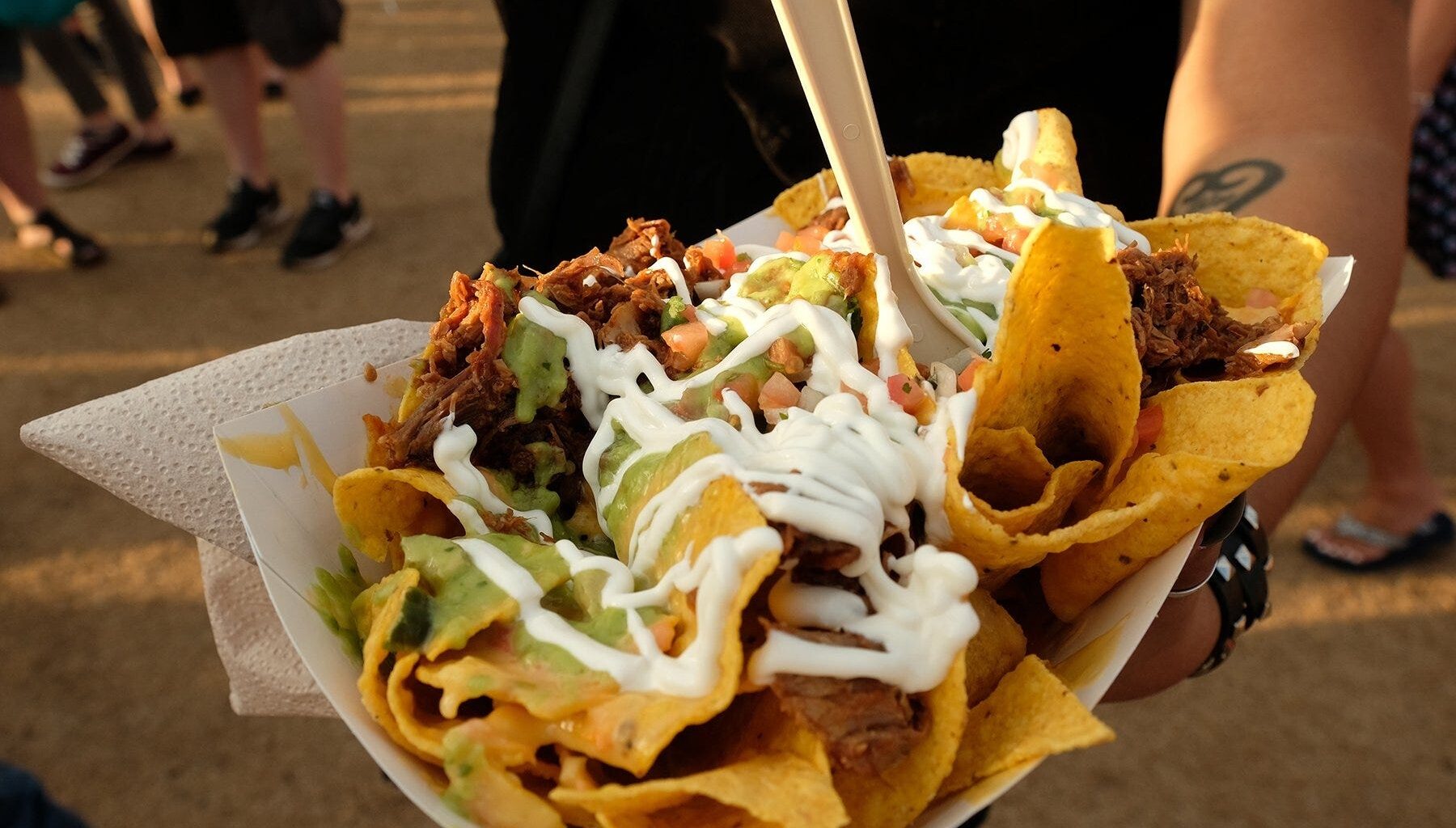
Trudy’s loaded nachos were popular during the Austin City Limits Music Festival.
Austin 360
Gary Wayne Truesdell, an Austin motorcycle policeman, opened the first Trudy’s Cafe in 1977 just north of the University of Texas at 2900 Guadalupe St. He claimed that it was the first gringo restaurant in Austin to serve migas.
Article continues below this ad
In 1980, Truesdell quit the police force and moved Trudy’s around the corner into a converted Craftsman bungalow at 409 W. 30th St. In 1981, he married Cheryl Diane Finley, a Trudy’s waitress.
During the early 1980s, business was good, and Trudy’s rapidly expanded, opening cafés in 1984 at 1000 South Lamar Blvd., and in 1986 in Oak Hill at 6281 U.S. 290.
After Gary and Cheryl divorced in 1986 and split ownership of Trudy’s, a fourth café opened in 1987 in North Austin at 8820 Burnet Road, a fifth in 2008 at Interstate 35 and Little Texas Lane and a sixth in 2011 at 13059 Four Stars Blvd.
With rapid growth, however, the chain also encountered problems, including a fire, a controversial unpermitted deck, a lawsuit and the COVID-19 pandemic.
Article continues below this ad
1983: Dos Hermanos / Habañero Cafe
The Habanero Cafe and its owner Arturo Ibarra.
Ricardo B. Brazziell/American-Statesman
After living the migrant life and annually caravaning from South Texas to Oregon chasing crops, the Ibarra family moved to Austin in 1983, where two brothers, Miguel and Efraim, opened a café-bakery at 2730 East Cesar Chavez St. They named it Dos Hermanos Tortilla Factory and Restaurant.
Article continues below this ad
The following year, they opened a second restaurant at 501 West Oltorf St. When the brothers retired in 1998, Miguel’s son, Arturo, took over the Oltorf location and renamed it Habañero Cafe.
The Chavez location was closed by fire in 2004. Statesman dining critic Matthew Odam described the Habañero as “the kind of restaurant that has the vibe of your aunt or grandfather’s dining room, with extended family always coming and going, workers moving with proficiency while maintaining warmth.” In 2024, Odam inducted Habañero into the Statesman Restaurant Hall of Fame.
Arturo Ibarra’s advice to the budding entrepreneur: “The first five years were really hard. Trying to run a business is way different than just running a kitchen and buying supplies. I’ve learned a lot. There have been ups and downs, but you can make a really good living.”
1985: Don Dario’s Cantina
Ray Vera, left, and Frank Wilm lunch on classic Tex-Mex at Dario’s on Austin’s East Side in 1998.
Ted Albracht/American-Statesman File
Born in Bejucos, southwest of Mexico City, Dario Perez Gonzales immigrated to Austin with his parents, Esquivel and Trinidad Gonzales. After learning the restaurant ropes working for El Matador in Round Rock, he opened his own restaurant in 1985 at 1800 East Sixth St. in East Austin. He branded it Dario’s.
Article continues below this ad
The building had previously been home to Taco Village. Promoting them as the “Cadillac of Mexican breakfasts,” Gonzales made morning migas his specialty menu item. A Statesman food critic described Dario’s as “about as plain as a pinto bean. A few electric signs, spangled sombreros and velvet paintings on the walls were the only frills.”
As East Austin continued to gentrify and property taxes started to soar, Gonzales opened a second restaurant, Don Dario’s Cantina, in 2010 at 8801 South I-35 across from Southpark Meadows in South Austin. Four years later, he closed the East Austin location to focus on South Austin.
Dario’s has become watch party central for various sports events, such as Spurs NBA and World Cup games, and special occasions such as Father’s Day and Mother’s Day. Today, the former East Austin location is home to Suerte, an award-winning upscale restaurant specializing in interior Mexican cuisine.
Some previous stories in this Tex-Mex series
Las Manitas, El Gallo and more: Austin Tex-Mex history
Article continues below this ad
Austin Tex-Mex history: Texas Chili Parlor, La Palapa, Fiesta Tortilla Factory
Austin Tex-Mex history: Taco Flats, Las Palomas and Tony’s Tortillas