
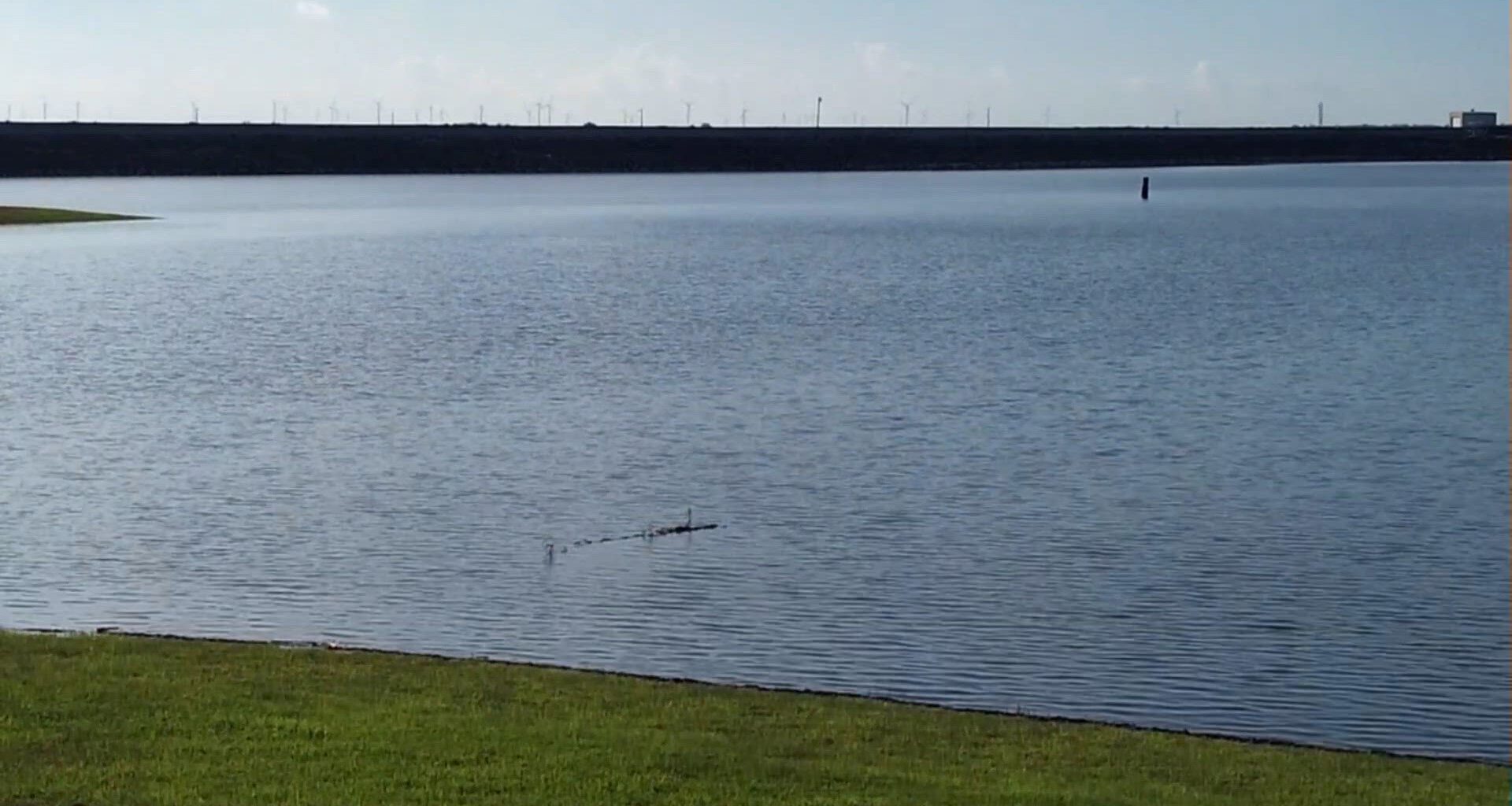
The TCEQ is reviewing Corpus Christi’s request to temporarily pause water releases into the Nueces Estuary, with a decision possible as soon as Aug. 25.
CORPUS CHRISTI, Texas — The Cities of Corpus Christi and Three Rivers, along with the Nueces River Authority, are asking state regulators for permission to temporarily pause water releases from Lake Corpus Christi and Choke Canyon into the Nueces Estuary. This comes as the region continues to manage its water supply during a prolonged drought.
The request is now under review by the Texas Commission on Environmental Quality. State Rep. Denise Villalobos said she recently met with TCEQ’s Executive Director Kelly Keel, who is reviewing the request.
If the request meets the necessary requirements, Villalobos said it could be approved as soon as Aug. 25. From there, the request would go to the TCEQ Commission for final ratification at its Sept. 9 meeting.
“We’ve been in a drought for five straight years. We need our water supply,” Villalobos said.
Villalobos explained what could happen if the request is not approved.
“If not approved, then in the month of August, we will release three days of supply of water into the bay. If not approved, then in the month of September, I think it increases up to like 28 days of supply,” Villalobos said.
The city and its partners that are part of the 2001 Agreed Order submitted the request to amend operating procedures for beneficial inflows from Choke Canyon Reservoir and Lake Corpus Christi to the estuary.
TCEQ confirmed it is reviewing the application.
“The application from the City of Corpus Christi, the City of Three Rivers, and the Nueces River Authority amending operating procedural requirements for beneficial inflows to estuaries from Choke Canyon Reservoir and Lake Corpus Christi was received by TCEQ and is currently under review,” TCEQ said in a statement to 3NEWS.
Scientists say the system may be due for another look
Dr. Paul Montagna, Endowed Chair for Hydroecology at the Harte Research Institute, helped write the original agreed order governing the releases in 2001.
“The amount of information we’ve uncovered in the last 20 years is just remarkable. So it really is time to take another look at everything,” Montagna said.
Montagna cautioned that completely stopping freshwater releases would significantly affect the bays, but he said there could be opportunities to reconsider how the current system operates.
“It’s actually state law. It’s a combination of Senate Bill 3, which said that once an environmental flow standard is approved for a base system, it should be reevaluated after 10 years,” Montagna said. “Well, that for our system, it was 2014, which meant starting in 2024. Over the last two years. We should have been already reevaluating what the environmental flow needs are for Nueces Bay and Nueces Estuary.”
The Coastal Bend Bays & Estuaries Program also said it supports taking another look at how freshwater is delivered to the estuary, all while protecting it.
In a statement to 3NEWS, Dr. Kiersten Stanzel with the Coastal Bend Bays & Estuaries Program said the following:
“CBBEP is not trying to fight the City and we are not saying the Agreed Order should never change. In fact, we believe adaptive management is important and we want to work with the City – there are likely opportunities to improve how freshwater is delivered so we achieve greater benefits for the bay with less water,” Stanzel said.
What’s next?
If the TCEQ executive director approves the request, it will move to the TCEQ Commission for consideration at its Sept. 9 meeting.
For Corpus Christi, the decision could determine how much water the city is able to retain in its reservoirs while state regulators and scientists continue to consider the long-term environmental needs of the Nueces Estuary.
More from 3NEWS on KIIITV.com:
Subscribe to our YouTube channel for your daily news and exclusive extended interviews.
Do you have a news tip? Tell 3!
Email tell3@kiiitv.com so we can get in touch with you about your story should we have questions or need more information. We realize some stories are sensitive in nature. Let us know if you’d like to remain anonymous.