
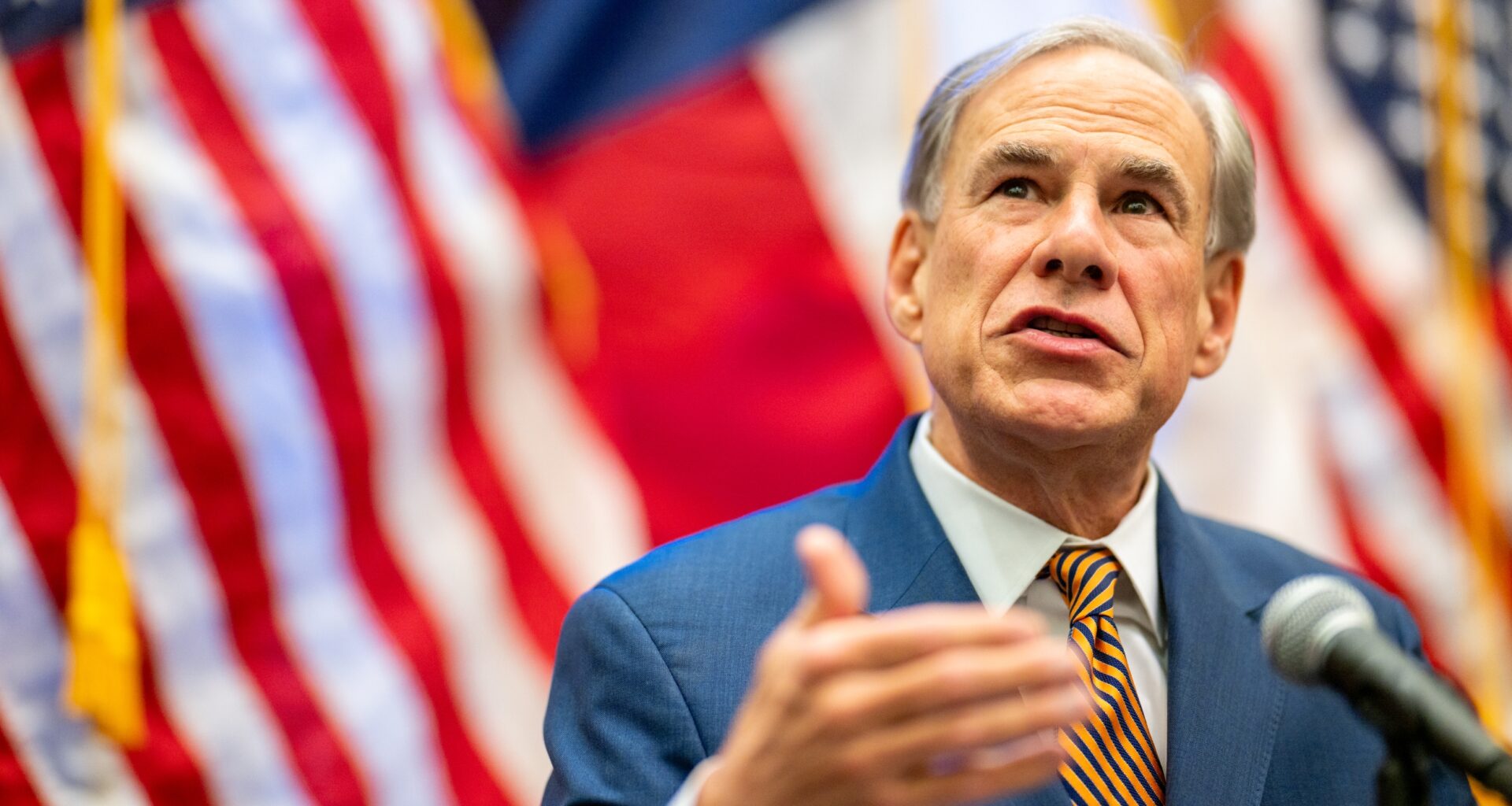
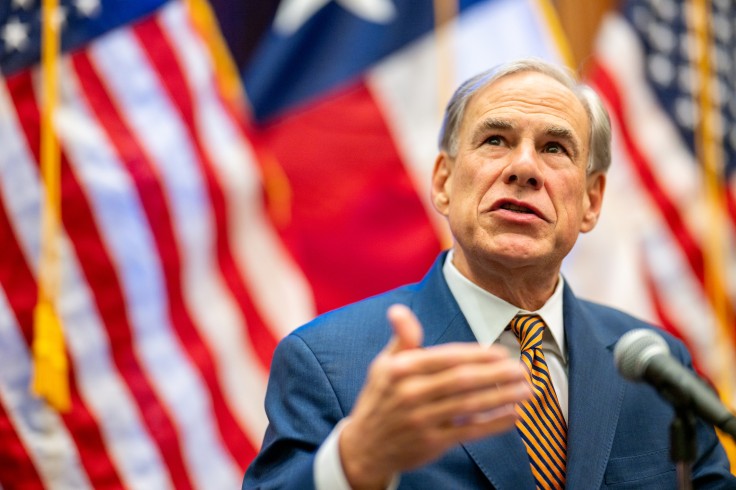
AUSTIN, TEXAS – AUGUST 15: Texas Gov. Greg Abbott speaks during a news conference in the State Capitol on August 15, 2025 in Austin, Texas.
Photo by Brandon Bell/Getty Images
Texas Gov. Greg Abbott wants state lawmakers to write a flat rule into law: no employee of a Texas public school may hold an H-1B work visa, ever. He unveiled the demand at an Aug. 18 campaign-season event in Austin, framing it as one front in a larger fight against what he calls outside interference in the classroom. Fewer than 350 teachers and staff statewide currently hold the visa, but the handful of districts that lean on it most heavily — Dallas, Houston, and the Houston suburb of Alief — also serve some of the largest shares of Latino students anywhere in the state, which pulls a fairly obscure federal-visa dispute into schools built around working-class Latino families.
What Abbott Wants Lawmakers to Pass
Speaking at an event hosted by the Texas Public Policy Foundation — a conservative think tank that has long pushed against what it sees as outside ideological influence in schools — Abbott told reporters, according to the Texas Tribune, that “exactly zero” school employees should hold H-1B status. The bill he wants would do more than block new sponsorships going forward — it would also force out teachers already working under the visa today, since Abbott has said the rule should apply to current holders and future applicants alike.
He paired that ask with a second one: a ban on districts accepting gifts or striking funding deals with foreign governments, mirroring a rule already on the books for Texas public universities.
Both proposals build on a directive Abbott signed in late January, which froze new H-1B paperwork at state agencies and public universities through the end of the Legislature’s next regular session, set to close May 31, 2027. That freeze alone touches somewhere in the neighborhood of 1,100 to 1,200 university and state-agency employees, based on the individual campus totals reported around the time of the order.
The “Foreign Influence” Argument Behind It
Abbott has folded the school proposal into a wider case that Texas classrooms are absorbing money and curricula from abroad without enough scrutiny. He’s pointed specifically to Austin ISD’s Arabic-language program, which researchers at the Foundation for Defense of Democracies have traced to roughly $462,000 in funding from Qatar Foundation International between 2016 and 2022, along with districts that have run Confucius Classroom partnerships tied to the Chinese government. Those arrangements are documented and real — but they’re a separate issue from H-1B teacher hiring. The visa program doesn’t fund curricula or create a partnership between a district and a foreign government; it simply lets a school district sponsor one foreign worker’s legal right to work in the U.S.
Abbott has also argued that districts already have in-state tools to solve teacher shortages, pointing to a merit-pay program that pushes bonus money toward high-need and rural schools. Independent research on that program has found it modestly improved retention in participating districts, but didn’t move the needle much at the campuses with the deepest staffing problems.
Federal data reviewed by KXAN puts statewide district-level H-1B sponsorship at 337 people — roughly a tenth of one percent of everyone teaching in Texas public schools. One district dominates that count: Dallas ISD alone had 171 visa applications approved for employees over the year ending June 30, 2026, a total that the Dallas Morning News reports tops every other K-12 system in the country. Widen the lens to every H-1B sponsor in Texas — private employers included — and Dallas ISD drops to 12th statewide, well behind the corporate sponsors that dominate the program, led by outsourcing firms such as Cognizant and Infosys. Alief ISD sponsors 17 of the visas; Houston ISD’s total runs smaller still, in roughly the same range districts of its size typically report. Districts generally use the program to land bilingual instructors and special-education and hard-to-staff math and science teachers — positions that can sit open for months when a district recruits only within Texas.
Where a Ban Would Land Hardest
The districts leaning most on H-1B sponsorship line up closely with Texas’s biggest Latino-serving systems. Dallas ISD’s enrollment runs 71.2% Hispanic, Houston ISD’s is 60.5% Hispanic, and Alief ISD sits at 63.1% Hispanic — all well above the statewide share, even though Hispanic students have made up a majority of Texas’s public-school enrollment for more than a decade. An Alief ISD spokesperson told KXAN the district uses the visa program to recruit and hold onto teachers “in areas where there is a limited supply of certified candidates,” warning that losing the option would hurt consistency for students. Dallas ISD’s statement to the outlet struck a similar note, saying that if the governor’s expectation becomes reality, the district will need more homegrown teachers in the pipeline to replace the ones it would have to let go.
Abbott’s Democratic opponent this November, state Rep. Gina Hinojosa of Austin, argues the real story is a shortage his own policies helped create. “Texas public schools are in crisis, and desperate districts have sought teachers” from abroad for years, Hinojosa said in a statement — arguing the practice long predates this particular news cycle. She’s also gone after the contrast between Abbott’s approach to schools and his treatment of corporate visa sponsors, pointing out in a separate campaign statement that firms like Oracle and Tesla, among the state’s largest private H-1B users, have received property-tax breaks under legislation Abbott signed while facing none of the restrictions now aimed at classrooms.
The Enrollment Backdrop
Statewide, Hispanic students account for 53% of Texas’s roughly 5.5 million public-school students, a majority that has held for well over a decade, according to Texas Education Agency figures. A separate Texas 2036 analysis released in May found statewide enrollment fell by more than 76,000 students in the 2025–26 school year — the first non-pandemic drop of that scale in roughly four decades — and that Hispanic students accounted for about 81% of that decline. Researchers pointed to falling birth rates, competition from charters and private-school vouchers, and immigration-related pressures on families as likely factors, though the group’s own analysts said they couldn’t isolate how much stricter immigration enforcement specifically contributed. That backdrop complicates any simple story about who a hiring freeze in bilingual and dual-language programs would ultimately affect.
What Happens Next
Because the ban requires new legislation, nothing changes immediately for teachers currently working under H-1B status in Texas classrooms. The Legislature isn’t scheduled to reconvene until January 2027. As of this writing, no bill text implementing Abbott’s proposal has been filed, and neither the governor’s campaign nor Hinojosa’s has issued a fresh statement on the issue since the week of Aug. 18 — this remains a campaign proposal, not pending legislation.
© {{Year}} Latin Times. All rights reserved. Do not reproduce without permission.