
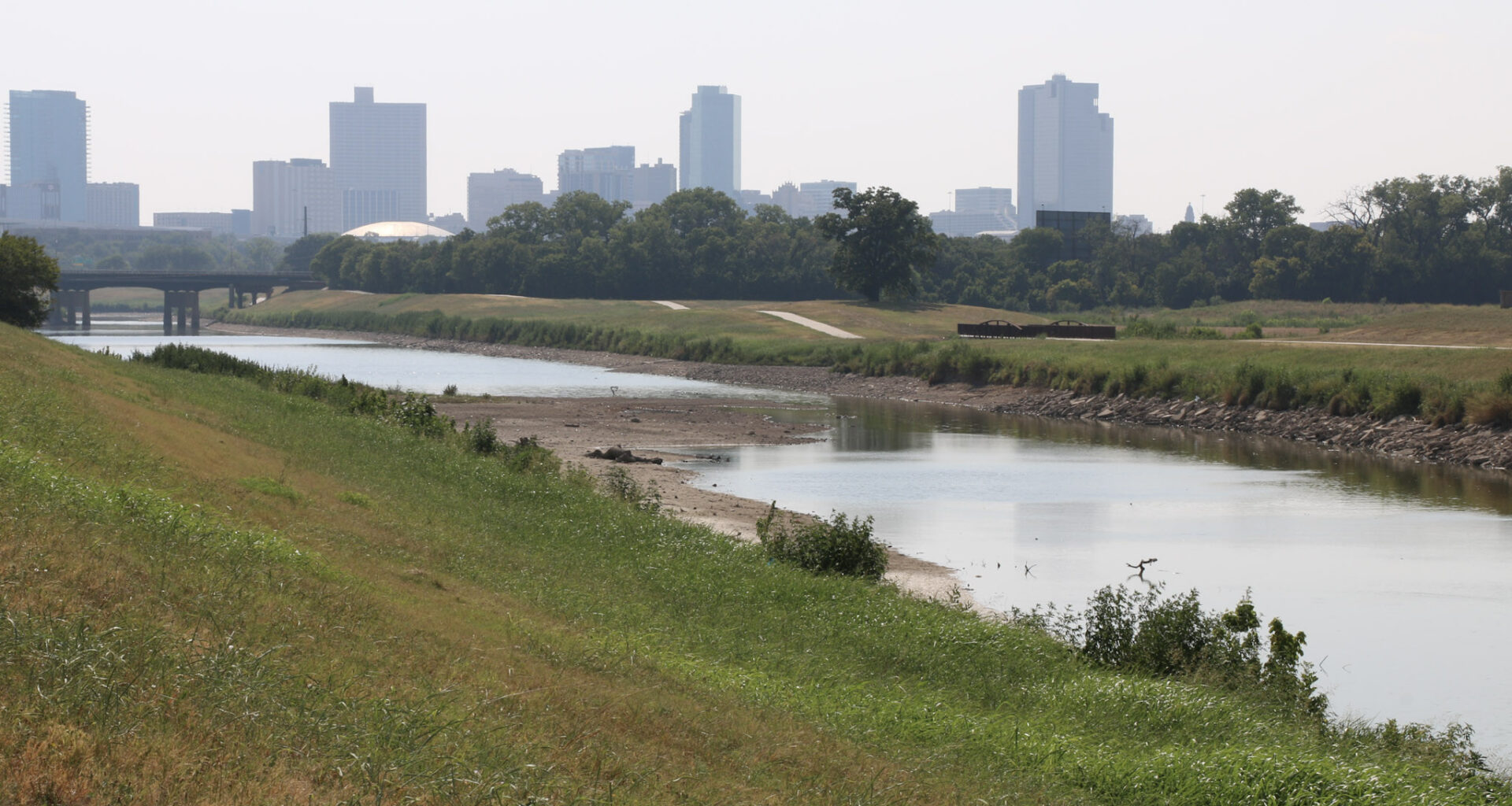
Area lakes are slightly below maximum capacity levels as Fort Worth-Dallas experiences drier than normal conditions, but climate patterns forecast rain later this year is expected to level out waterways.
Meanwhile, North Texas reservoirs are a few feet below their conservation levels — the amount of water the Tarrant Regional Water District is permitted to store in its waterways — according to the agency’s latest data. That includes the Richland-Chambers and Cedar Creek reservoirs in East Texas, which collectively supply 80% of Tarrant County’s water.
The Richland-Chambers Reservoir is at about 2 feet below, and the Cedar Creek Reservoir is measured at about 5 feet below conservation levels, data shows.
In turn, the Trinity River currently holds less water as a lower volume of supplies from reservoirs is being discharged into the waterway, which also serves Fort Worth as a floodway.
A combination of factors are driving lower levels in North Texas-owned reservoirs, said Zach Huff, water resources engineering director for the district.
It’s typical for the region to see lower lake levels this time of year due to increased demands, dry conditions and evaporation, Huff said.
The latest data from the National Oceanic and Atmospheric Administration shows Tarrant County is experiencing abnormally dry conditions. North Texas last experienced measurable rainfall in mid-July, when over 2 inches of rain were recorded in the region, according to data from the National Weather Service.
Although the region has seen little rainfall in the past two months, the water district’s capacity to pump water from its lakes is not inhibited, Huff said. The agency’s lakes — which provide water to 2.5 million people across 11 counties in North Texas — are at 90% of their total capacity, according to Huff.
“This is pretty typical of what we’ve seen through the years,” he said.
The region has seen 23 days when temperatures reached triple digits so far this year, according to the latest data, with more forecast through this week. Last year, North Texas saw significantly fewer days when temperatures hit or exceeded 100 degrees, totaling seven days in 2025, NWS data shows.
There’s a 40% to 50% chance that Fort Worth and surrounding cities will see above normal temperatures through October, according to the NWS’s latest three-month forecast.
The average high for this time of year is 96 degrees, NWS meteorologist Daniel Fenske said.
The three-month forecast also shows a 33% to 40% probability that North Texas will see below normal rainfall. The region’s average rainfall for August is 2 inches, Fenske said.
North Texas’ dry conditions and lack of rain are caused by a mid-level high-pressure system, or the heat dome effect, Fenske said.
Heat domes are defined as the presence of extreme heat lingering over a region for an extended period. The weather phenomenon traps hot air and prevents precipitation, Fenske explained.
North Texas is part of many regions across the globe this year experiencing heat domes, which strain water supplies and exacerbate wildfires.
Rainfall as a result of El Niño and lower temperatures later this year will help stabilize the region’s lake levels, Huff added.
A “super El Niño,” a global weather phenomenon caused by an accumulation of warm water and winds from the Pacific, is forecast to hit Texas. This is forecast to bring wetter and cooler conditions to the state this winter.
Nicole Lopez is the environment reporter for the Fort Worth Report. Contact her at nicole.lopez@fortworthreport.org.
The Report’s environment coverage is supported by the Marilyn Brachman Hoffman Foundation.
At the Fort Worth Report, news decisions are made independently of our board members and financial supporters. Read more about our editorial independence policy here.
This <a target=”_blank” href=”https://fortworthreport.org/2026/08/17/north-texas-is-enduring-abnormally-dry-conditions-what-does-this-mean-for-tarrant-waterways/”>article</a> first appeared on <a target=”_blank” href=”https://fortworthreport.org”>Fort Worth Report</a> and is republished here under a <a target=”_blank” href=”https://creativecommons.org/licenses/by-nd/4.0/”>Creative Commons Attribution-NoDerivatives 4.0 International License</a>.<img src=”https://i0.wp.com/fortworthreport.org/wp-content/uploads/2021/04/cropped-favicon.png?resize=150%2C150&ssl=1″ style=”width:1em;height:1em;margin-left:10px;”>
<img id=”republication-tracker-tool-source” src=”https://fortworthreport.org/?republication-pixel=true&post=734442&ga4=2820184429″ style=”width:1px;height:1px;”><script> PARSELY = { autotrack: false, onload: function() { PARSELY.beacon.trackPageView({ url: “https://fortworthreport.org/2026/08/17/north-texas-is-enduring-abnormally-dry-conditions-what-does-this-mean-for-tarrant-waterways/”, urlref: window.location.href }); } } </script> <script id=”parsely-cfg” src=”//cdn.parsely.com/keys/fortworthreport.org/p.js”></script>