
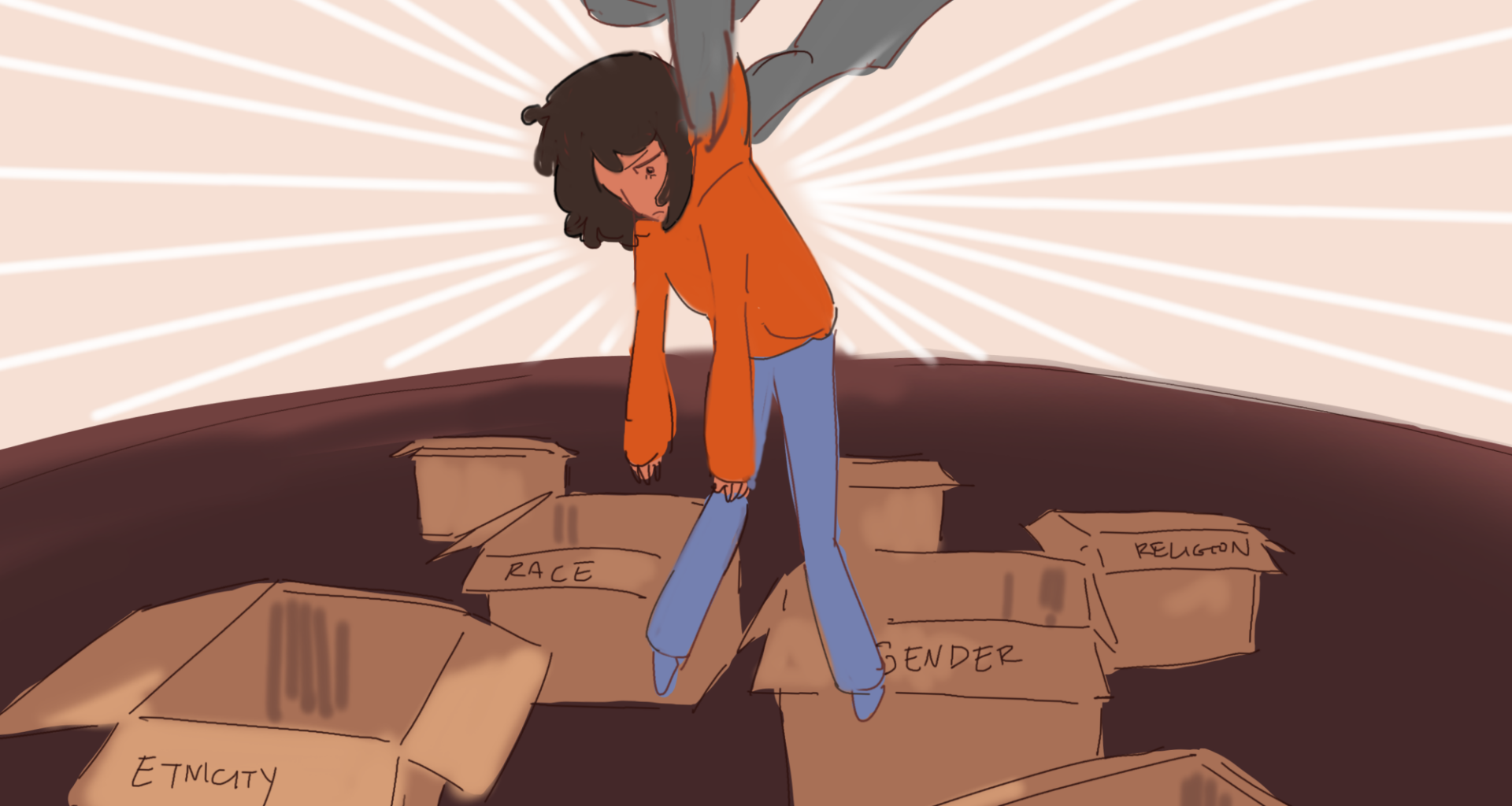
Most people change depending on who they’re around. We speak differently with our professors than we do with our best friends. We code-switch between home and school, work and evenings out and with family and friends. For many first-generation and immigrant students, that switch is further ingrained into their everyday life.
I was born in India, just like every generation before me, but I’ve spent most of my life — over 13 years — in Texas. Most of my memories were made in Leander; it’s where I learned how to drive and make new friends, but every visit and phone call to my family in India reminds me of another place and culture that has shaped me. Growing up with these two identities, I got used to molding myself into two different people, carefully deciding which parts of my identity belonged in which rooms.
Among my American classmates, I was always the girl with the hard-to-pronounce name. Around my relatives in India, I became the cousin who stumbled over my Hindi words, barely able to string together full sentences. No matter where I was, I always seemed to be too much of one thing and not enough of the other.
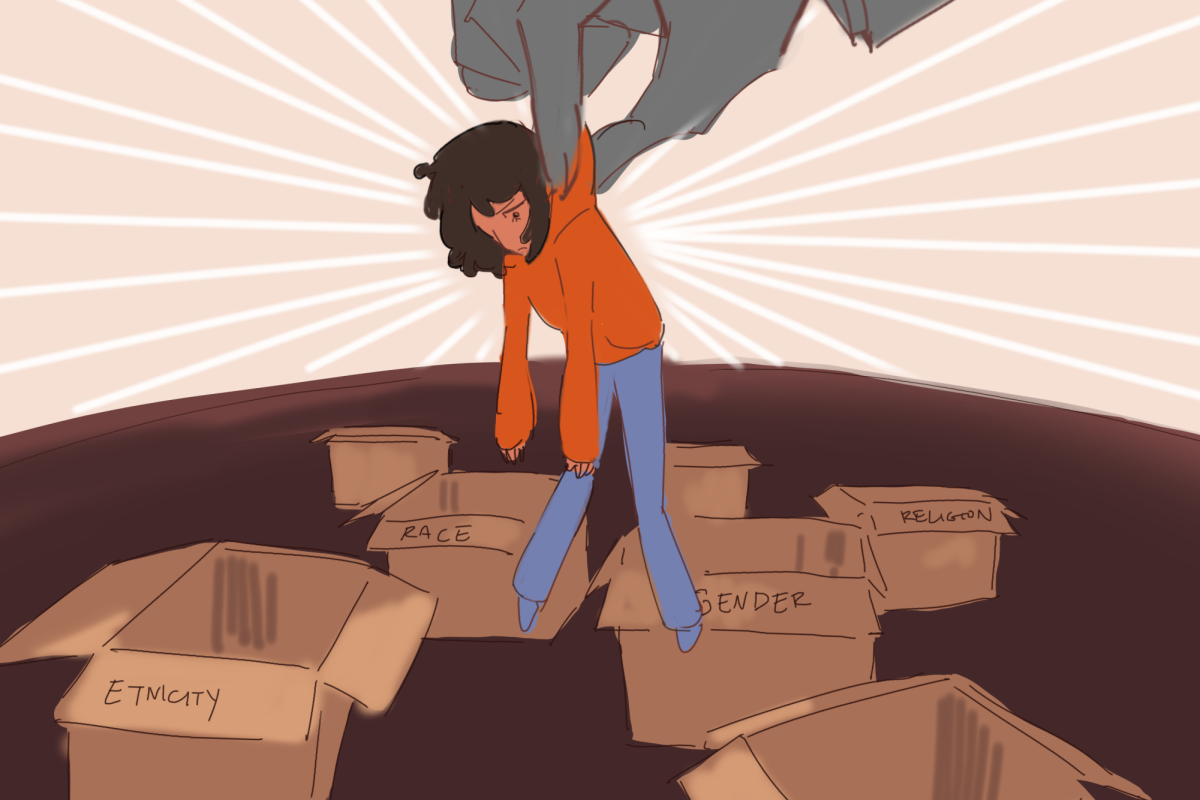
For a long time, I thought the solution was to pick a side. I became Ri at school and Riyanjali at home, spending years editing my speech, humor and personality. If I could be a bit more Indian, would my Desi community stop calling my sisters and me “whitewashed?” If I were a bit more American, would I stand out less? I laughed at different jokes, emphasized different interests and tucked away the parts of myself that didn’t fit.
The exhausting part wasn’t balancing two cultures; it was believing I couldn’t fully belong to either. It’s a feeling shared by so many children of immigrant families, regardless of where their families have come from.
Coming to UT helped change that perspective. For what felt like the first time, I met countless students who understood the feeling of existing between worlds. I found students who took pride in the fluidity going between cultures, and it was then that I learned about biculturalism — the condition of being comfortable and identifying with two distinct cultures.
Research on bicultural identity has found that people who integrate both cultures into their sense of self often experience better mental well-being than those who feel pressured to fracture up their identity. Instead of seeing the different parts of us as competing, we can learn to see them as complementary.
UT already offers spaces where that mindset can flourish. Cultural organizations and first-generation communities create environments where students can embrace all parts of themselves. UT has over 1,000 organizations on campus, providing an abundance of opportunities to find a group of like-minded individuals. However, true belonging doesn’t come from a club; it comes from giving yourself permission to stop performing.
I still get called the “American cousin” by relatives, and my name is still mispronounced daily by peers. For years, I’ve thought those labels meant that I would always be caught in between identities. Now, I see them as proof that I’m a bit of both, a uniquely Riya combination.
For students who have ever been caught between cultures, maybe belonging isn’t about deciding which version of you is the real one. Maybe it’s realizing that the person you’ve spent so long trying to divide has been whole the entire time.
Sengupta is an international relations and global studies and Plan II sophomore from Leander, Texas.