
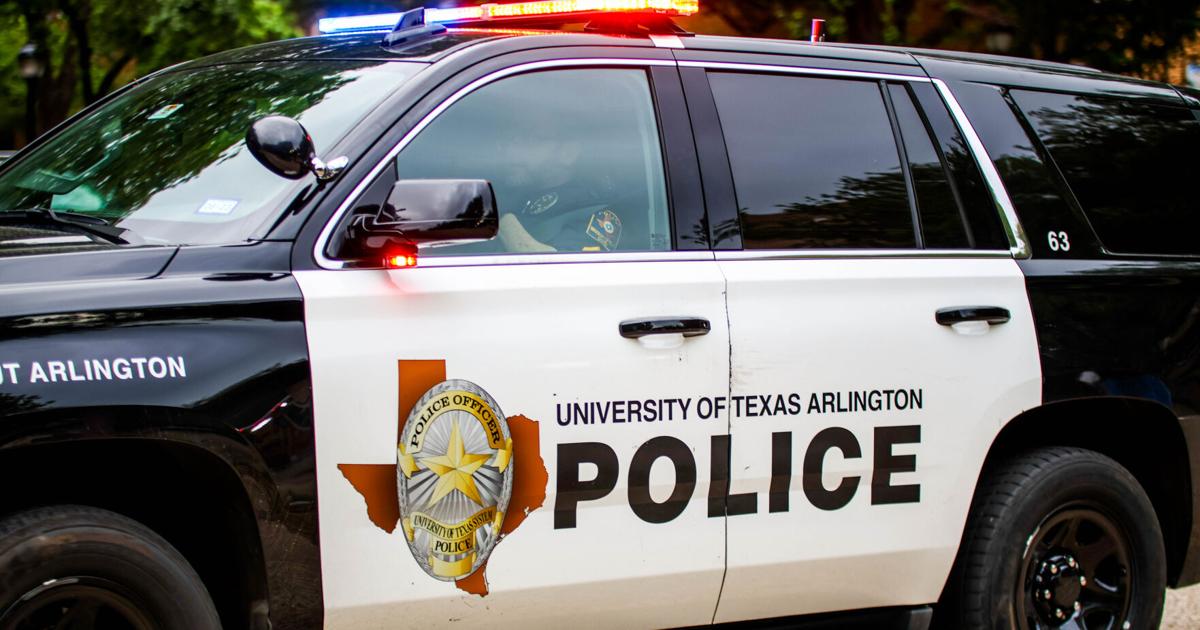


A police car sweeps by during an altercation April 25, 2023, outside Ransom Hall.
File photo / The Shorthorn staff
With classes ramping up and students getting back into the groove of college, crimes like theft and online scams can become prevalent in the first few weeks.
While the thought of this can be worrying, UTA’s police department has information about common campus crimes, preventive measures and what students should do if they are affected by one.
Theft
Bicycles, electric bikes and electric scooters are common means of transportation for students, and their value can make them easy targets for theft.
The police department recommends using a U-lock to secure bikes and scooters onto bike racks. Students should place the lock around the frame of their bike and through the back or front wheel to secure it to the rack, according to a UTA Police safety pamphlet.
To avoid having a wheel stolen, the front wheel can be taken off and the lock can go through it and the back wheel.
Students can register their bikes with the police department so that if the vehicle is stolen, the police could have a higher chance of locating and returning it.
Theft of property can occur anywhere, and unattended items can be easy targets. Gregory Finney, UTA Police crime prevention and community engagement officer, said it is a preventable risk.
Finney said that at the beginning of the semester, students could be running around with a lot on their minds and forget they left something behind.
“The department usually tells students not to leave their personal property unattended, to avoid leaving your valuables in plain sight, and you can register, mark or photograph your valuables,” he said.
If a student thinks an item has been stolen, they can make a report to the police by phone or in person. Students can check on the case at the front desk of the UTA Police Department, which also serves as a lost and found center.
Detectives assigned to cases may also reach out to students with updates.
Scams
Scams can happen in many forms and are ever-changing. One of the most common ways students can see scams is through emails or phone calls.
If a student receives communication from somewhere or someone they do not know, they should resist the pressure to act immediately, according to the pamphlet. Do not give out personal information digitally, through the mail or over the phone.
Instead, students should talk to someone they trust before going forward with something that might seem suspicious. A trusted person could help determine if the email or phone call is a scam.
“Know where the URLs are from,” Finney said. “If you don’t, I wouldn’t bother it.”
Students, faculty and staff can contact UTA Police at:817-272-3003 for emergencies817-272-3381 for nonemergencies
@j.e.journalism