
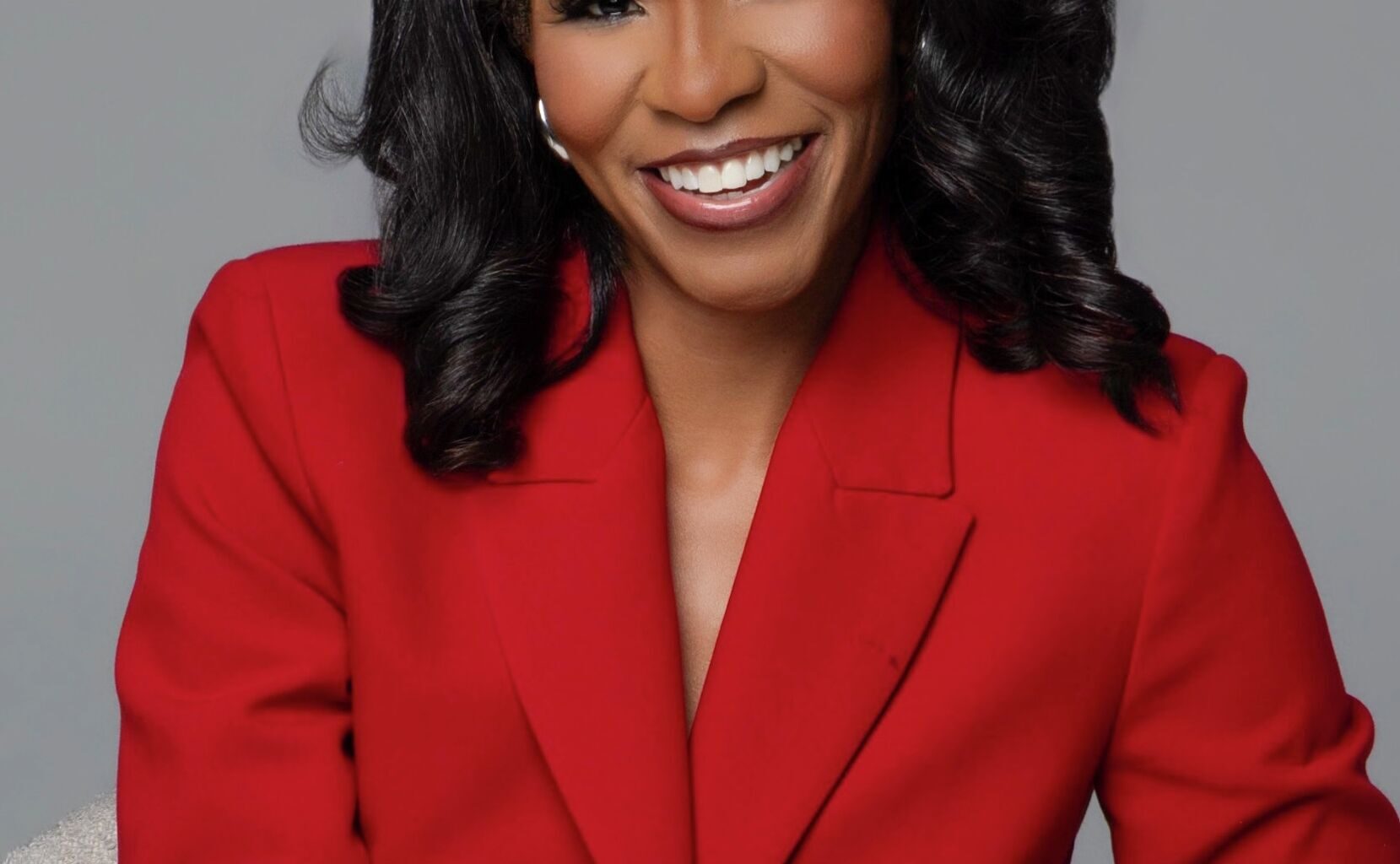
Brandy Alfred, CEO of Dallas-Fort Worth Urban League.
Dallas-Fort Worth Urban League
Income inequality is a solvable problem as North Texas’ economy booms, said Dallas-Forth Worth Urban League’s new CEO Brandy Alfred.

The league, which works to boost economic opportunity for historically underresourced groups, announced Aug. 5 that Alfred would be the organization’s next leader. She has spent more than 20 years involved in executive leadership, scholarship, technological innovation and healthcare and economic policy.
The National Urban League was founded in 1910 to help Black Americans access economic empowerment, quality housing, education and healthcare and advocate for civil rights and social justice. The organization also engages in policy advocacy, addressing areas such as voting rights and criminal justice.
Article continues below this ad
Related: Black Dallas businesswomen keep philanthropy on the forefront
The D-FW Urban League was reestablished in 2025 after about 10 years without an official affiliation, but D-FW young professionals during that time connected with the Houston affiliate to keep engaging with North Texas. Once it was reestablished, Marnese Barksdale Elder served as interim CEO until Alfred was selected.
With the league spanning 13 counties in D-FW, Alfred sees it as her imperative to ensure communities that have been “left behind” are included in the region’s growth. According to recent data, white households nationally have more than 6 times as much wealth as Black households, one example of a disparity that Alfred wants to address.
Alfred spoke with The Dallas Morning News about her vision for the league and what she’ll bring to the role.
This interview has been edited for length and clarity.
Article continues below this ad
Did you grow up in Dallas? If not, when did you come to Texas?
I’m a Louisiana-born and raised young lady. I see myself as a daughter of Louisiana, but I got to Texas as soon as I could.
I’m a third-generation [Southern University and A&M College] graduate. My mother was an educator. My dad was a Navy mechanic. My grandmother fought in many of the movements in the ’60s. I got to Texas in 2002. My now husband, then boyfriend, had moved to Dallas. We thought this is a good place to take root, and so we did.
What is your vision for the D-FW urban league?
My vision is really complementing a compilation of visionary leaders who had been in Urban League as members years prior, which is truly to be the go-to trusted partner of creating pathways and pipelines for opportunity again for communities that are sometimes left behind or left out. I would want the business community of Dallas to recognize the irreplaceable constituency that’s in the Urban League. That’s my highest vision, not just to bring those economic empowering opportunities to the clients and the members, but to allow the business community to realize we won’t succeed as a growing economy without every stakeholder being engaged.
Article continues below this ad
What do you think the constituents that D-FW Urban League works with need from the organization right now?
I think what they need more than anything is a really fact-based and optimistic understanding around how to ready themselves for the future workforce that’s being developed around them and how to stay on their toes to participate in the economy and to participate in the workforce. They need additional readiness skills at every level of participating in an economy, as well as health and housing, which are also huge impacting factors for economic participation.
As more wealth comes to Dallas, how do you hope to tackle inequality?
I think we think about [the wealth being created] as a great opportunity. But if we’re not ready to take advantage of the opportunity, then it’s just something we’re going to see from the sideline. Our desire at Urban League is to prepare our community for full engagement in the wealth being created and to receive wealth as it transfers from one generation to the next. I actually think the wealth creation pace can continue because Urban League is going to make many, many citizens ready to participate in it.
Is there anything unique about the nature of income inequality in Dallas compared to other cities, in your eyes? How do you plan to address those unique dynamics?
Article continues below this ad
I think it’s incredibly unique on a large geographical spread in Dallas County, Tarrant County, Collin County, even out to Denton, down to Mansfield, you have the opportunity to connect this geography in a way that no other city really has. Dallas is not short of capital. There [are billions of dollars] worth of capital is moving through this ecosystem. The capital doesn’t get all the way into the workforce population. It is exchanged between the businesses. So our job is to bridge that gap between where that capital is concentrated and making sure that the workforce is prepared to engage with that level of exchange.
Different industries conflate in this geography. If you think about our data centers and the level of construction and trade needed to support the growth of that ecosystem, that’s another great opportunity for Urban League — to ready construction and skills.
The Dallas Fort Worth Urban League will have four areas under your leadership: workforce development, empowering young leaders, supporting small businesses and entrepreneurs in underresourced communities and civic engagement. What made you choose these?
We wanted to widen our pillars so that they were more inclusive than just being in a room, but in being in the economy participating. If you are not in the economy participating because you have a job but it’s not a living wage, it is not yet fulfilling the mission. Those pillars help us really undergird what it means to be a full participant in our economy and to really aspire for the highest quality of one’s life and one’s aspiration.
Are there any programs you hope to launch or build on that you can share?
Article continues below this ad
For each of our pillars, we’re going to have a portfolio of programs. The initial launch of our entrepreneur center is something we’re really excited about that we’re about to announce, starting with our first flagship pilot partner, PepsiCo Foundation. We’re going to stand up a food restaurant accelerator program, and we’re going to select 20 food entrepreneurs to participate in this flagship program.
Is there anything else you want to add?
The economic engine that the Dallas-Fort Worth Urban League is able to ignite, turn on will continue to march forward for the next 100 years because our economy is growing all around us, and there is a considerable population that’s ready to engage with it. Inequality is a very solvable problem, and everyone has something to gain in solving that problem. Sixty cents on the dollar is what some of our households are making, and we can close that gap.