
The door of Ruth Buskirk’s office is covered with nature photos—an owl, a sea turtle, a baby penguin, fall leaves—and with stickers, sporting everything from self-care tips to affirmations.
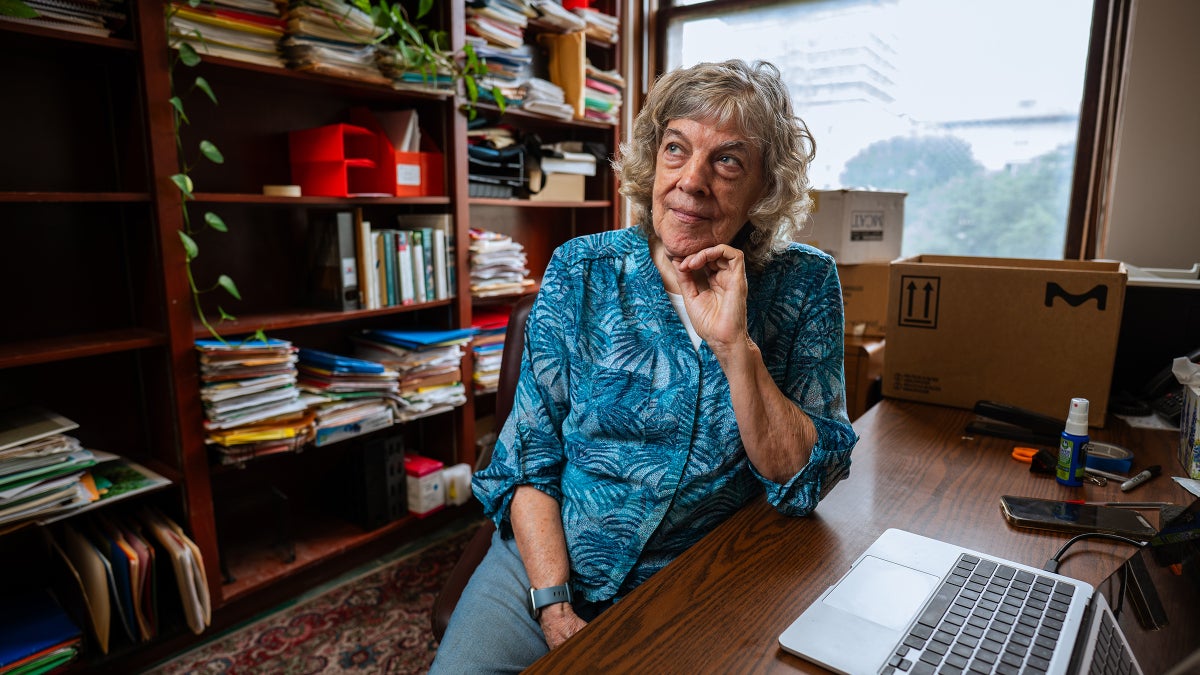
Inside the long, narrow office a window looks out over the turtle pond to the iconic UT Tower on a quiet day on campus. One wall is covered floor to ceiling by dark wooden shelves overflowing with textbooks, notebooks, student files, and notes from Buskirk’s own time as a graduate student. The other wall is a gallery of photos, maps, posters and certificates.
The distinguished senior lecturer and newly minted retiree stands in the middle of what amounts to an archive of five decades of biology research and teaching. She’s clearing out her office, trying to decide what to keep and what to let go of—and sharing insights from her time in the College of Natural Sciences that new generations can benefit from.
“It’s been kind of like ‘This is Your Life’ as I go through,” she says.
Lesson #1: When Students Know They Belong, They Thrive.
Buskirk shows me a stack of “get to know you” index cards that students filled out for years on the first day to introduce themselves. They smile at us from little glued-on headshots. They say things like: “Nothing makes me more alive than discussing topics I’m passionate about. Also, I have two tortoises that I love very much,” or “I biked from Houston to Anchorage this past summer,” or “I learn and perform Indian classical dance called Bharatanatyam.”
“They’re fascinating,” she says. “That’s why I could not throw them away.”
It’s a reminder of one of the many ways she connects with students. On the shelf, a box that reads “Snacks for Stress Reduction” awaits hungry students dropping in for her generous office hours.
Over the years, Buskirk learned that for students to reach their full potential, they have to feel a sense of connection and belonging. She often tells her students how, when she left the Midwest and went to Harvard for graduate school, she felt like an outsider. The other students seemed so much more sophisticated in how they talked and dressed.
“It was awful at the beginning,” she recalls.
But then after a semester of taking challenging courses, she realized she was actually a quick learner, which built her confidence. And she started to make friends.
“I tell that story to my students, and like a year later, somebody will come, and they’ll say, you told me that story about Harvard, and it really hit me, I feel the same way,” she says.
Her own research on teaching affirmed that when an instructor shares how they found a sense of belonging, the students identify with it and they become more effective learners.