
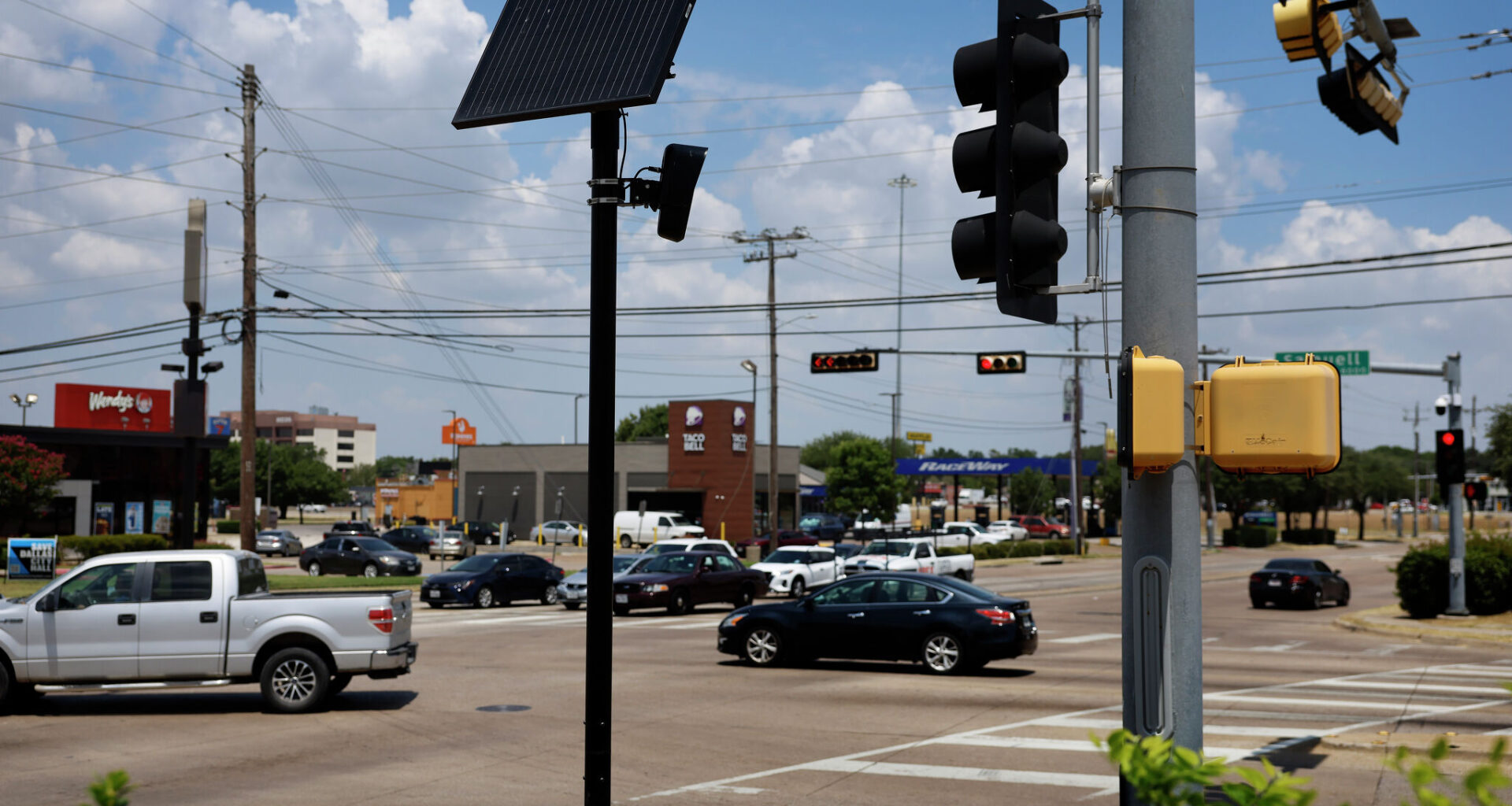
WYLIE — City Council members voted unanimously to end the city’s contract with Flock Safety after a coordinated campaign from residents, which included an online petition to cut ties that garnered hundreds of signatures.
Wylie, a suburb 25 miles northeast of Dallas, has six Flock license plate-reader cameras in its city limits. Across the nation, people have raised privacy concerns about the technology that law enforcement agencies say helps them fight crime more effectively.
In public comment at Tuesday’s council meeting, residents quoted the founding fathers’ views on liberty and marshaled statistics to express their opposition to the cameras. Residents argued that concerns the technology could be misused for illegal surveillance outweighed its crime-fighting benefits.
Wylie has had the cameras since 2024, and its current contract will expire Oct. 13.
The cameras photograph vehicles traveling on public roads and store information including a car’s description and the date, time and location a vehicle passed through. These cameras provide clearer images than regular CCTV cameras. Through Flock, law enforcement agencies can opt to share data with other agencies — which officials say is helpful in investigations where a suspect fled after committing a crime.
People across the country have raised concerns about Flock Safety, a private company, building a searchable database of people’s license plates, which critics say may be used to track people’s movements without a warrant. There have also been reports of law enforcement officials using Flock data to stalk former partners.
Before the vote, Assistant Police Chief Tommy Walters presented the example of a homicide where Flock data helped the police department solve a case that might otherwise have gone cold and praised the technology.
“I’ve been in law enforcement here in Wylie for almost 27 years, and there’s a few technologies …. that are game changers and this is definitely one of them,” Walters said.
He mentioned safeguards the Wylie police department had put in place such as requiring officers to enter a case number when searching for a vehicle.
City Council members discussed the possibility of amending the contract to limit which law enforcement agencies can see the data and store images for 7 days instead of 30 days.
Residents said the guardrails were not enough to allay their concerns. Some cited a Flock data audit that showed some officers entered a random set of characters in the case number field to bypass that requirement and search the database.
Riley Curtis, 29, a cybersecurity professional, said she opposed Flock because it amounted to government overreach. She quoted Benjamin Franklin to make an argument for privacy.
“To those who would tell me that I should be willing to give up a small amount of my freedom in order to feel more secure, I say to you this: ‘Those who would give up essential liberty to purchase a little temporary safety deserve neither liberty nor safety.’”