
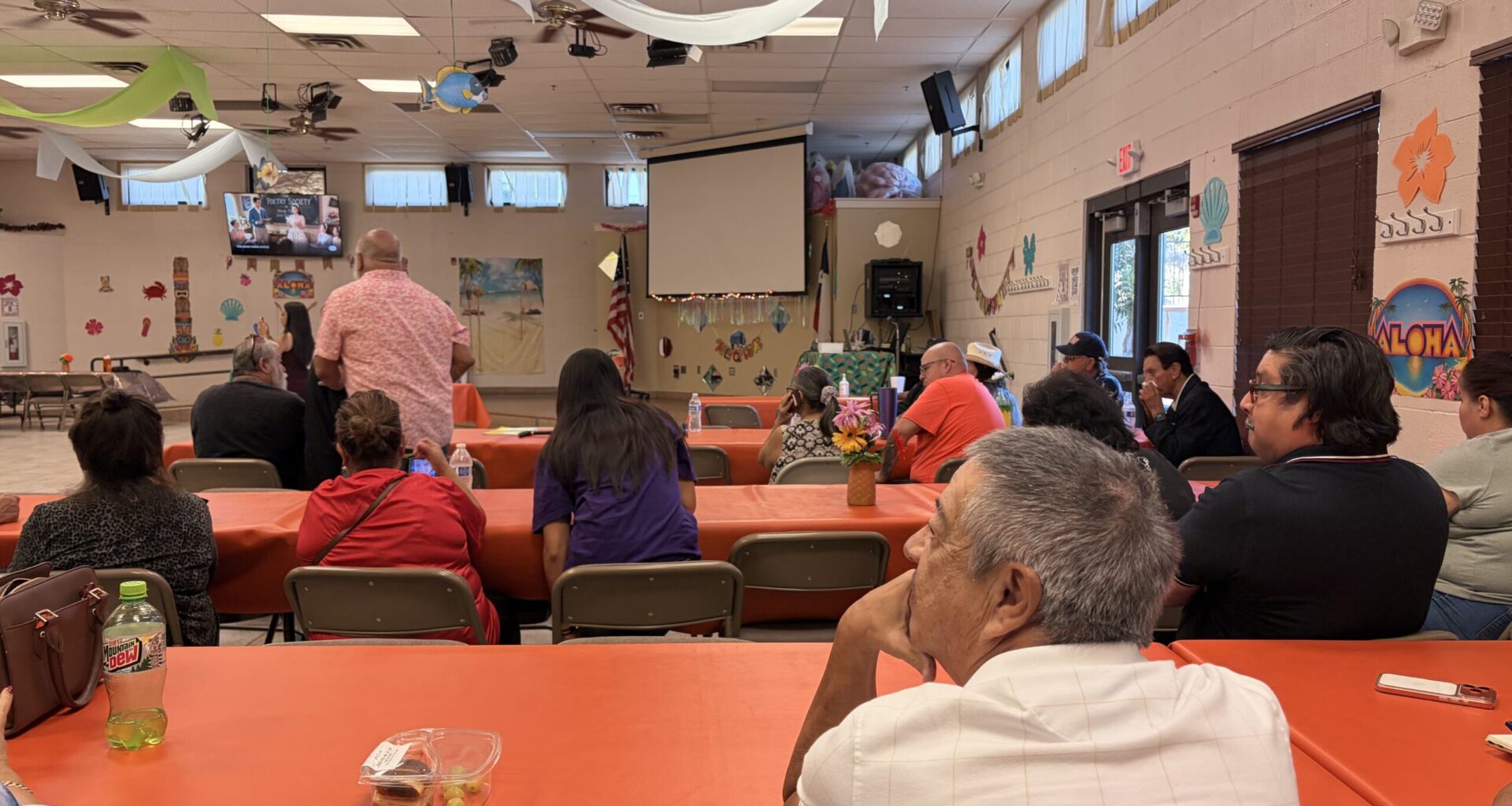
EL PASO, Texas (KVIA) — The San Juan Neighborhood Association invited residents to attend a community meeting Wednesday to discuss Marathon Petroleum refinery. The meeting comes three weeks after the refinery released more than 15 tons pollutants, according to environmental reports.
The Texas Commission on Environmental Quality said an electrical issue caused the Aug. 4 incident. Emissions left some residents in the area with irritated eyes and nausea.
U.S. Congresswoman Veronica Escobar, and City Representative Josh Acevedo are all expected to attend the meeting tonight, according to the neighborhood association.
In response to the meeting taking place, Marathon provided ABC-7 with the following statement:
We share the goals of transparency, air monitoring, public information, timely notification, and protection of public health. Safe and reliable operations are core principles of Marathon Petroleum. We never want our operations to negatively impact our neighbors, and we are sorry for the disturbance residents experienced due to the event on Aug. 4. We believe it is important to note the actions we took – and have taken – since the event:
This week, we will host our Community Advisory Panel meeting. This is a meeting we have been holding regularly for years with members of neighborhoods near the refinery to share information about our operations and hear about neighbors’ concerns and answer their questions. We will be providing these neighbors with information about the Aug. 4 odor event and details regarding our response.
In response to this event, our operators responded immediately. We shut down the affected equipment, stabilized the unit, deployed mobile off-site air monitoring, and notified the City and the TCEQ, following required notification and reporting protocols.
From that Tuesday night through the following Sunday, we monitored surrounding neighborhoods and locations as far as downtown, taking hundreds of individual readings. Although the odor Tuesday night was undoubtedly strong, our monitoring equipment is calibrated to detect levels that could represent a risk to health, and at the locations and times sampled, the monitoring did not detect levels indicating a health risk. We have shared air monitoring data with EPA.
After the incident, we filed our preliminary findings about the emissions through TCEQ’s reporting system. That report was available publicly and was mentioned in several news stories. The report provided our initial estimate of source emissions on site at the refinery. Those are not the same as ground-level air monitoring in the neighborhoods beyond our fenceline.
On Aug. 18, we filed our final report on the incident with the TCEQ, including refined calculations of what was released. This is a transparent process; this final report is available publicly.
In addition, Marathon Petroleum provides fenceline emissions monitoring data to the EPA which is publicly available through EPA’s website. Also, TCEQ maintains air monitors, including the Womble Air Monitoring Station near the refinery, and makes air quality data from its monitors available through TCEQ’s website.
We support the idea of a better community notification system and have been working with the city of El Paso for the past year to establish a system that can directly call and inform residents of events at the refinery – even when health risks are not involved. This process would be in addition to Marathon’s 24-hour Community Helpline, which has been expanded to manage higher call volumes.
We are also investigating the Aug. 4 event, reviewing the cause, and identifying any appropriate corrective actions. Our trained professionals work every day to operate this refinery safely, reliably, and in compliance with environmental requirements.