
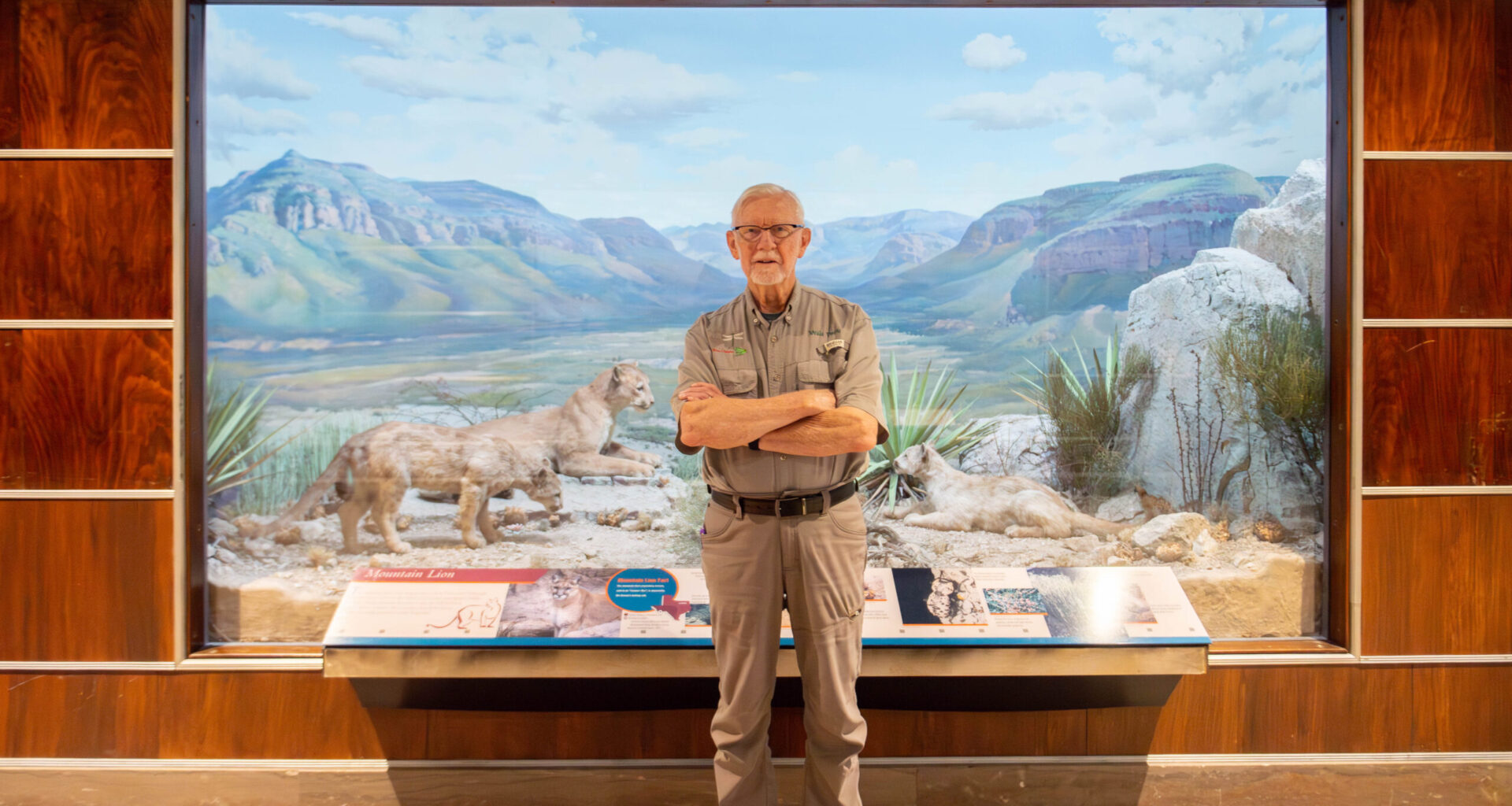
He handled a variety of roles, but it became clear that he was best at building the exhibits, specifically, “taking your scientific specimen and using some artistic sense about how you display it.” The field work required for the dioramas — collecting materials, making molds, camping out on location — was Davis’s favorite part.
“You saw it in your head. You knew what you were aiming for, and it was a matter of collecting everything that you needed to make that thing new,” he says.
Davis thought the museum would continue the dioramas forever, but Louis F. Gorr, museum director from 1979 to 1986, turned toward paleontology and archaeology instead.