
From a hotel room back in June, Kristie Bryant joined me on a Zoom call. She was overseas, in between sessions at some kind of sister cities-related conference.
But she was also there because Austin was welcoming another sister to the family — Greater Manchester in the U.K.
“As of one hour ago we now have 14 sister cities,” Bryant said.
That makes Austin part of a tetradecapolis, or a fourteensome of sister cities.
Bryant and a delegation of volunteers signed the newest agreement earlier this summer. It connects two cities that are thousands of miles apart but share an interest in music and tech.
Bryant asked ATXplained about Austin’s sister cities, but she also knows a lot about them. She’s the chair of a group called Austin City Sister Cities International.
She’s been involved with the organization since she was in college at the University of Texas at Austin in the 1990s.
“I was studying Japanese, and I knew somebody who was in the international studies department,” Bryant said.
A friend asked her if she would be interested in volunteering for Austin’s Japanese sister cities program. “And I’m like: what is that? What are you talking about? I have no idea what that is.”
Thirty something years later, sister cities remain a program that not a lot of people are familiar with. So, Bryant thought it was time to change that.
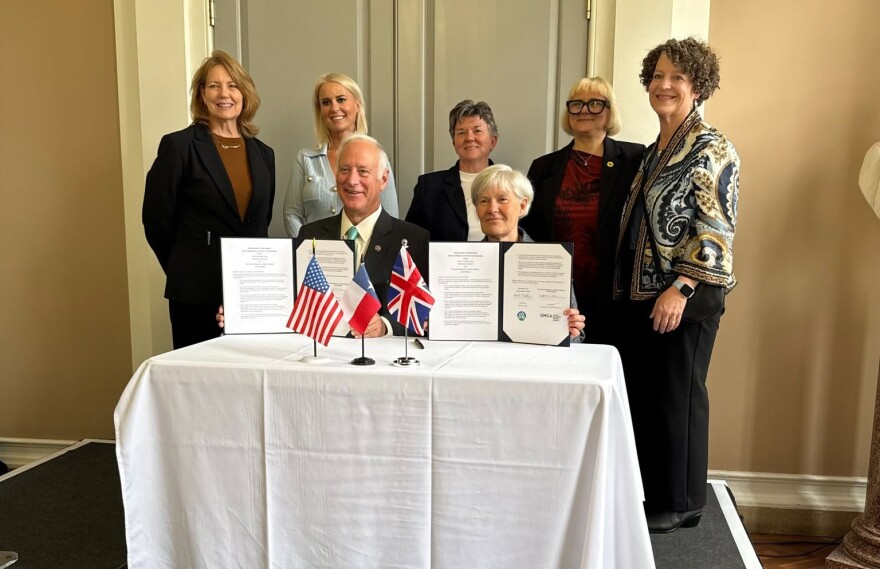
Greater Manchester in United Kingdom officially became Austin’s sister city in June. It’s the 14th sister in the bunch.
Friends, not enemies
To understand Austin’s family of sisters, we need to go back to 1956, when then-President Dwight D. Eisenhower announced the People-to-People program. After World War II, Eisenhower wanted to restore international peace through understanding and mutual respect.
“If we are going to have — take advantage of the assumption — that all people want peace then the problem is for people to get together,” Eisenhower said in a press conference in September 1956.
The idea was: if you know each other, you won’t go to war against each other.
“[People can get together] to leap governments, if necessary, to evade governments, to work out not one method, but thousands of methods, by which people can gradually learn a little bit more of each other,” Eisenhower said.
The People-to-People program eventually became better known as the Sister Cities Program. Today, more than 2,000 U.S. cities are linked to more than 1,800 foreign cities in more than 120 countries, according to Sister Cities International.
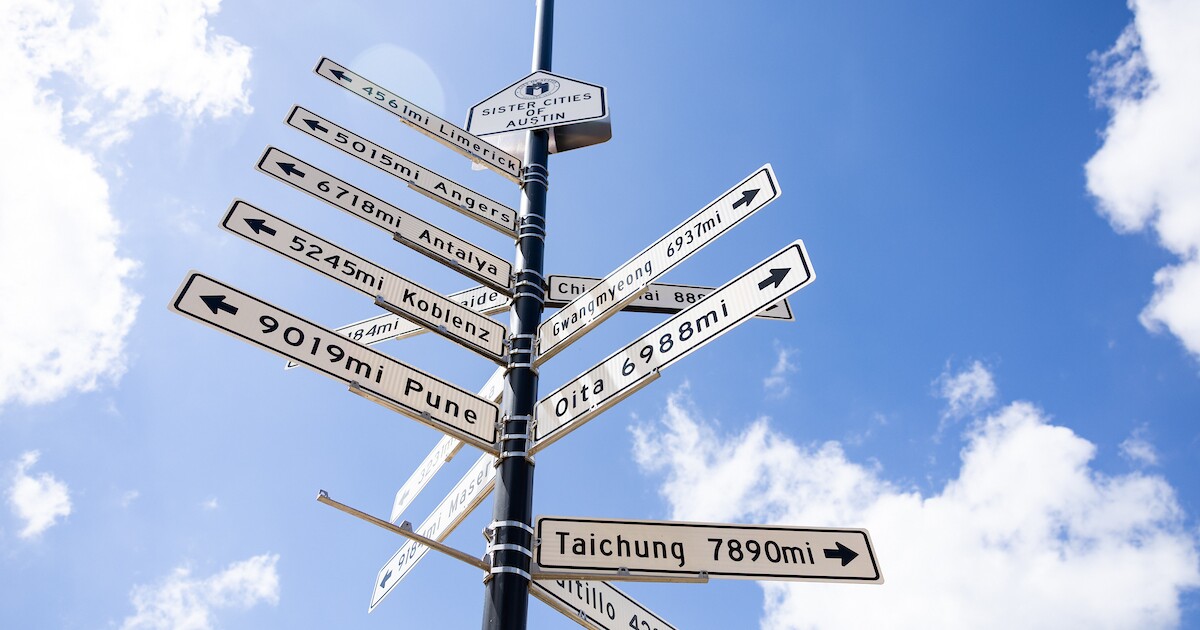
Out on the plaza of Austin City Hall, there’s a big directional sign. Each arrow on the sign shows the direction and distance to each of Austin’s sister cities.
“We put this up in 2024,” Bryant said. “We had a lot of citizens, myself included, who wanted something like this in front of city hall for years and years.”
The relationships between Austin and each of the cities on this sign are different. Sure, there’s periodic calls, planned visits and email and text exchanges. But sisterhood is not defined by any one thing. Like any good relationship, it’s rooted in support and growth.
“Since we’re volunteers it’s really what our passion is and finding those connections,” Bryant said.
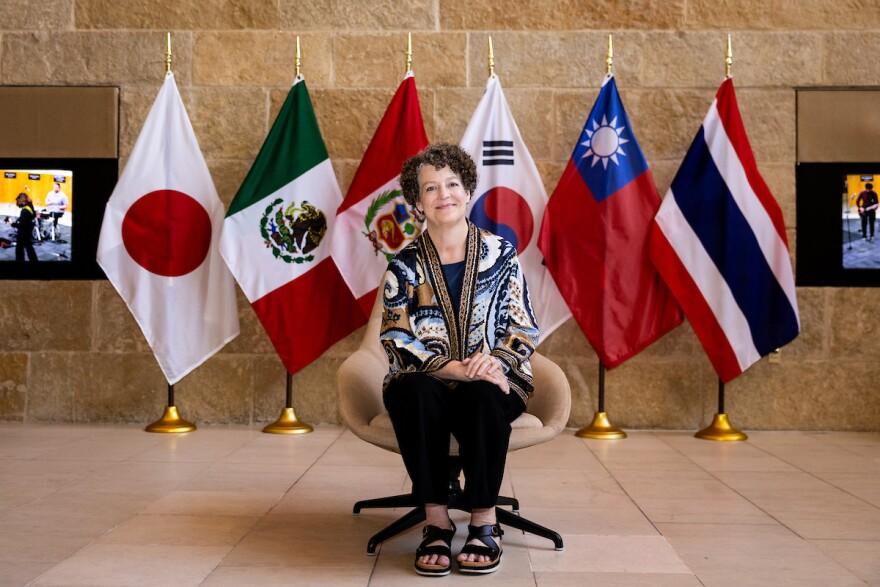
Kristie Bryant, chair of Austin Sister Cities International and Austin-Oita Sister Cities, has been involved with the group since she was a student in the 1990s.
The first sister city
Austin’s first sister city relationship began in 1968.
Saltillo, Mexico, and Austin share a history as two capitals of Texas. Saltillo was the capital of the region when Texas was still part of Mexico. Austin would later become the capital of the Republic of Texas.
Their sisterhood started first as visiting delegations, and slowly grew to include small business development and cross-border trade.
Eventually, a partnership with the bomberos, or firefighters, in Saltillo, Mexico, was born. Some members of the Austin Fire Department traveled there to train Saltillo’s firefighters and learn Spanish.
Billy Webb, one of the founding members of Austin Sister Cities International, spent decades in the Austin Fire Department.
“When I found out that there were some friends in the fire department who were making trips down there, and helping with training down there — I was also an instructor — but I didn’t speak any Spanish,” Webb said. “But I said ‘sign me up, I want to go’.”
That was in 1999. Over the years, Webb said he helped train Mexican firefighters to improve their response in their region. Austin even donates some of its old fire equipment to Saltillo.
In exchange, several Austin first responders, including Webb, were able to learn Spanish and understand a new culture.
There’s also a wine project and even a student exchange program.
“These are products of that relationship that wouldn’t exist otherwise,” Webb said. “There’s plenty of other cities in Mexico that we are not doing this with. There’s plenty of other cities in Germany. There’s plenty of other cities in Thailand.”
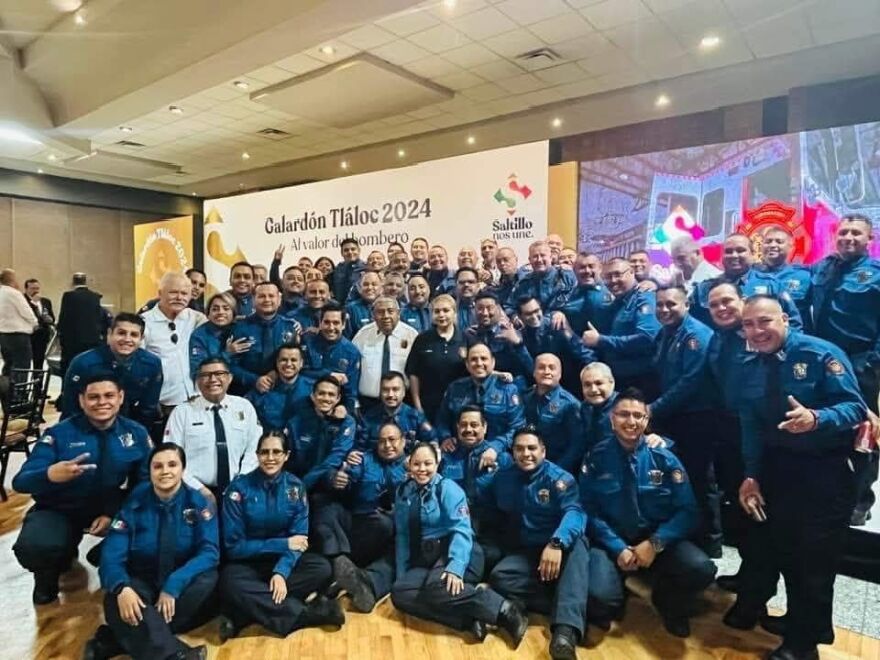
Billy Webb, left, is one of the founders of Austin’s Sister City Program. He got involved in the late 1990s to help train firefighters in Saltillo, Mexico.
Building sisterhood
Since Austin’s sister cities program started in the late ’60s, the organization has slowly grown.
They say you can’t pick your family. But in this case, Aditi Joshi, vice chair for Austin Sister Cities International, said a lot of thought goes into who Austin’s sisters are going to be.
“When we build sister city relationships, we build sister city relationships in such a way that they are mutually aligned and there are commonalities for growth,” Joshi said.
And, she says, there are ways to measure that.
“So when we build a relationship with any city anywhere in the world, it has to align on arts, culture, music, entertainment, education, technology, health care,” Joshi said. “So we can’t just go out and build any relationship.”
Joshi said there’s a two-year trial period that they call a “friendship city” that helps find those similarities.
Right now, Austin has a friendship city agreement with Florence, Italy.
“Austin is the only that does it because we are very intentional and very serious about the way we build a relationship because we want that relationship to stay on in the long-term,” Joshi said.
Joshi is also the chair of Austin’s sisterhood with Limerick, Ireland.
“So for Limerick and Austin, yes we both have Michelin Star restaurants, and yes we are both cities on a river,” Joshi said. “But we are both cities that are growing. We want to make space for the younger population to stay and have career opportunities. And on the other side, we want to retain our talent and we want to grow our cities.”
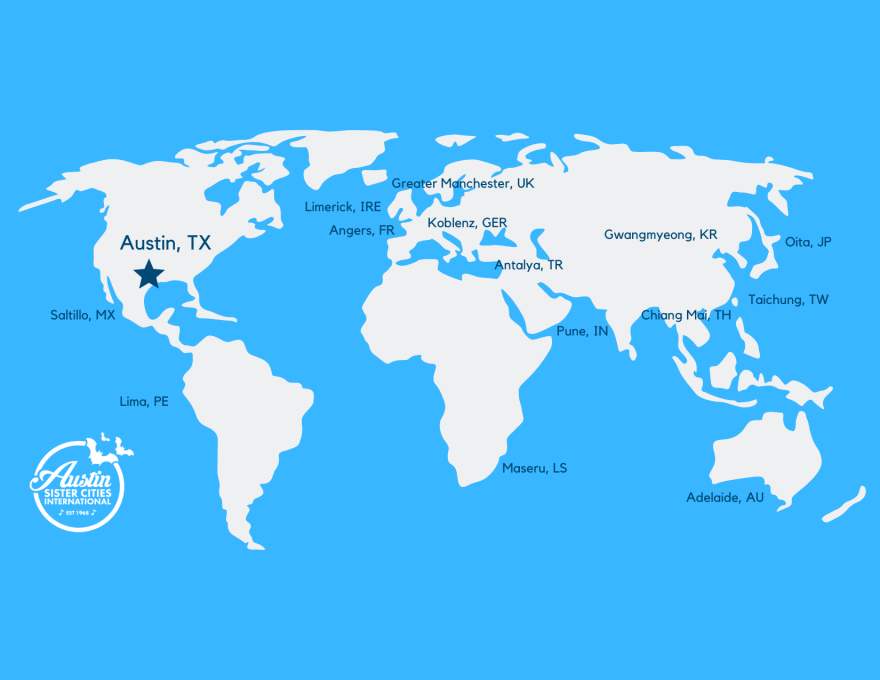
Courtesy Austin Sister Cities International
A map of Austin’s 14 Sister Cities
Sister connections
Sisterhood can also be built on personal connections. People who grew up in another place but now call Austin home.
Fernando Nieri, who chairs the committee for Austin’s sisterhood with Lima, Peru, said that’s what got him involved.
Nieri was born in Lima. He saw this as a chance to show a love for both his cities — Austin, where he’s lived for 26 years, and his home city of Lima.
He said people can learn a lot about each other through things like annual events and discussions.
“It’s amazing how much in common cities have versus how different they are,” Nieri said. “But it’s a matter of making those differences something that is good. Like ‘yes, we might be different here, but we are so alike in this part of life.’”
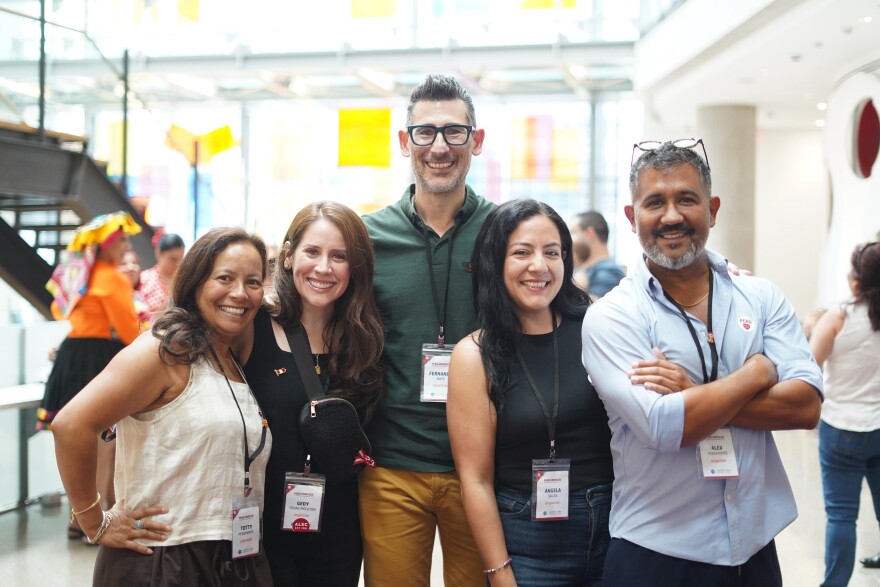
Fernando Nieri, center, got involved because he shares a love for both his cities — Austin and Lima, Peru.
Pramod Patil said the relationship he’s helped build with Pune, India, had a similar start. He was born in Pune. He said it’s also known for its university — like Austin and UT. But one of its biggest similarities is live music.
“Pune has a very vibrant culture and music lover community,” Patil said. “And then going further, drumming culture in Pune is so vibrant. It’s one of the identities in Pune. And, of course, on the similar lines, again of music of all kinds of world cultures is welcomed in Austin.”
That is what inspired the creation of the group’s diversity band, which debuted after Austin signed a city sister agreement with Pune in 2019.
Koblenz, Germany, and Austin have been sister cities since the early 1990s.
“The history of this sister city relationship is strongly tied to the school exchanges that have existed, and still exist today,” said Ralf Bendlin, the chair of the Austin-Koblenz Sister Cities committee.
But the relationship has grown into one that’s rooted in people and personal connection.
“People meet each other and learn to know each other and often remain friends for many years or a lifetime,” said Christian Schmitz, Bendlin’s counterpart in Koblenz.
Schmitz is a child of the sisterhood. He came to Austin in 1994 in a student exchange program between the two cities. To this day, he has relationships with the people he met in Austin, like Bendlin.
“This can really change your life and bring you brilliant memories and sometimes can even extend your family across the Atlantic,” Schmitz said. “That is something that I find amazing.”
Teams that run the sister cities programs with Adelaide, Australia; Oita, Japan; and Angers, France, shared similar things.
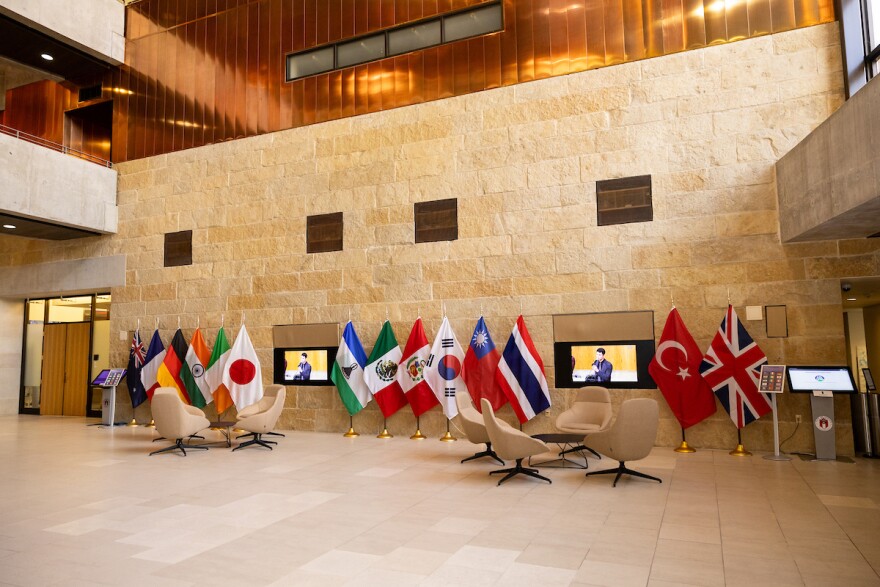
The flags in the lobby at Austin City Hall serve as a reminder that while each city is different, in many ways they are alike.
Understanding each other
It’s been almost 70 years since President Eisenhower announced his People-to-People program. This idea that two cities across the globe can be different but, in many ways, the same.
Inside Austin City Hall there’s a line of flags against the east wall of the lobby that represent each sister city. They serve as a reminder that even thousands of miles and oceans apart, the world can be a better place when people time the take to understand each other.
“We don’t all get to experience another country, but when they are coming here and we are delivering that type of programming we get to learn about their culture and our world becomes bigger,” Bryant said. “Our world can be so small. But the more we learn about the world — we’re all the same, we’re human beings.”