
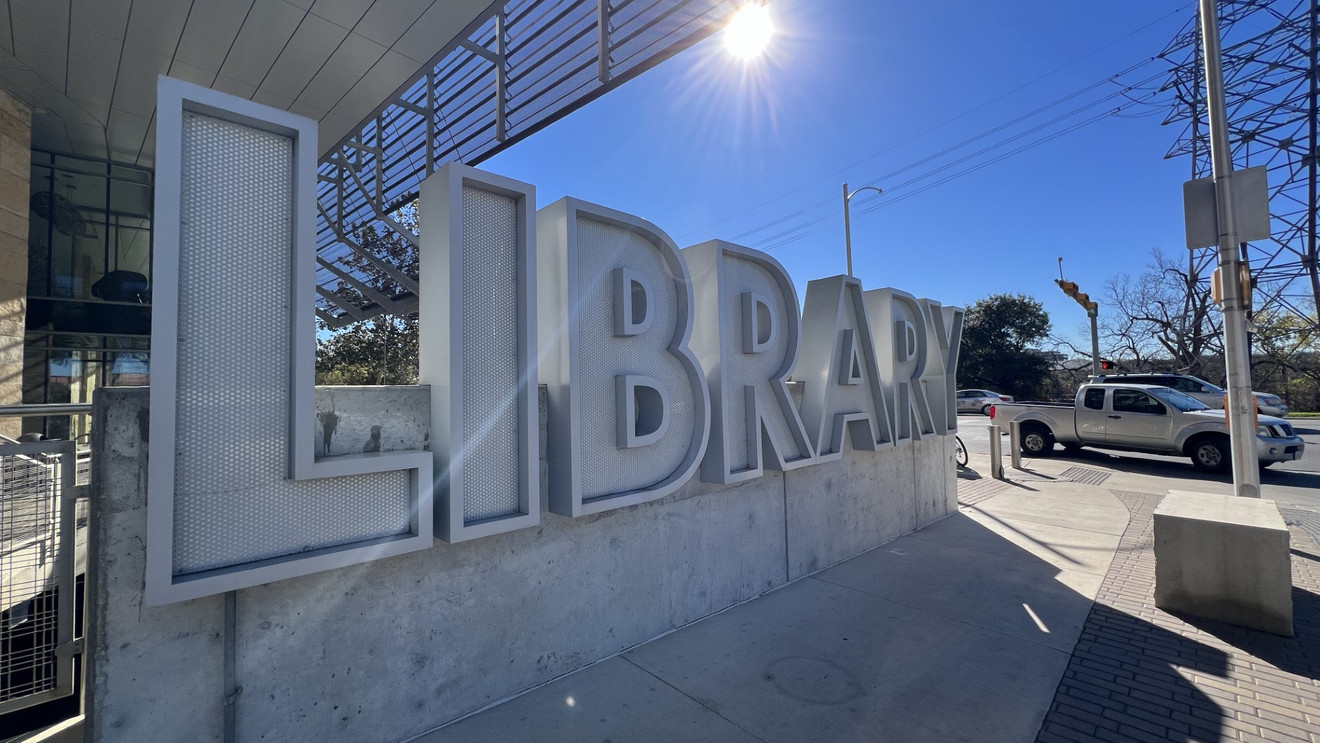
AUSTIN, Texas — Austin City Council will vote Thursday on a resolution to declare the City of Austin a “Book Safe Harbor,” building on the city’s 2022 Freedom to Read policy.
The resolution, brought forward by council member Krista Laine, would “signify the City’s commitment to safeguarding equitable access to library materials, protect the community’s freedom to read, and uphold established policies and processes that ensure thoughtful and transparent consideration of any concerns regarding library materials.”
“With public school libraries still under immense pressure to remove books from their shelves it is even more important that city libraries continue to provide access,” said Laine.
This issue has become part of a much larger debate playing out across the state. Last week during a press conference, Lt. Gov. Dan Patrick called for the removal of more than 2,000 books from public schools. Patrick said he was not banning books. He also claimed 80% of Texas schools were not complying with Senate Bill 13. The law grants school boards the authority, rather than librarians, to approve or remove books following complaints from parents or other groups.
ALSO | Liberty Hill leaders hear concerns over Flock license plate readers amid backlash
Patrick’s list heavily focuses on gender-identity topics, sex education, body-awareness, and romance titles. There are commonly-challenged titles like “The Perks of Being a Wallflower” by Stephen Chbosky and “Looking for Alaska” by John Green. There are also frequently-studied works of literature such as “Slaughterhouse-Five” by Kurt Vonnegut, and “I Know Why the Caged Bird Sings” by Maya Angelou.
Laine spoke about some of the books at the library that were also on Patrick’s list of books including Toni Morrison’s “The Bluest Eye” and “Stamped: Racism, Antiracism, and You” by Ibrahim X. Kendi. She said they hold value for young people by showing “the experiences of people of color.”
“Reading a diverse array of books also offers insight into the experience of people in situations different from our own, which builds empathy, connection, and community,” said Laine.
At Wednesday’s press conference, Laine said that the groups challenging books in school libraries would also come after public libraries.
The resolution doesn’t appear to change much for the Austin Public Library.
But supporters said the resolution reaffirms Austin’s commitment to intellectual freedom, open access to information, and freedom to read.
“Our responsibility is not to build a collection that represents only one perspective or only one experience. It is to build a collection that serves the entire community, with materials that reflect the wide range of interest, backgrounds,” said Hannah Terrell, Austin Public Library director.