
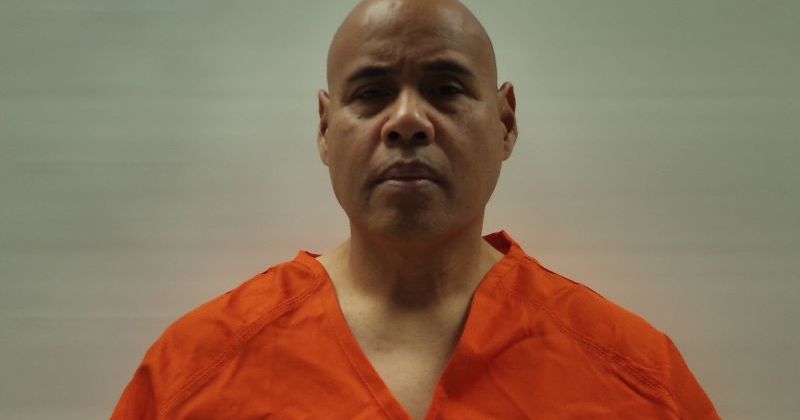
Photo: Cameron County Sheriff’s Office
A federal immigration agent being sought by Minnesota authorities for his involvement in a shooting was released from a Texas jail on Thursday morning after a judge said he lacked jurisdiction to compel his extradition.
The Minnesota Star Tribune reports that Christian Castro, an Immigration and Customs Enforcement agent, was released from a detention center in Brownsville, Texas, where he’s been held since being arrested by Texas law enforcement in May. Under Texas law the state can detain a fugitive awaiting extradition for a maximum of only 90 days, a limit that was officially reached on Wednesday. Minnesota’s attempt to prosecute Castro — who stands accused of shooting a Venezuelan immigrant in the leg through a door back in January, then lying to state authorities about what happened — is the highest profile effort by any state to hold ICE agents legally accountable for alleged crimes during President Donald Trump’s immigration crackdown.
Minnesota officials had tried to block Castro’s release in court, alleging that Texas governor Greg Abbott has failed to comply with Minnesota governor Tim Walz’s order for Castro’s transfer, but Texas U.S. District Judge Fernando Rodriguez Jr. denied their request. In his ruling, Rodriguez said the state’s lawsuit did not meet the requirements for a temporary restraining order, noting that Abbott hasn’t officially denied Minnesota’s extradition request and that the governor’s decision was delayed by an investigation he requested into whether Castro qualifies for extradition.
“Minnesota’s lawsuit necessarily rests on the argument that Governor Abbott has violated the Extradition Clause, the Extradition Act, or the UCEA by having failed to sign a rendition warrant by now. Minnesota cannot premise its causes of action on the allegation that Governor Abbott may violate those authorities in the future; it must prove that a violation has already occurred,” Rodriguez wrote.
In May, Hennepin County attorney Mary Moriarty announced that her office was charging Castro in connection with a Minneapolis shooting that occurred back in January. Moriarty alleged that Castro fired through the door of a residence, striking Julio Cesar Sosa-Celis, a Venezuelan immigrant, in the leg. Per the Hennepin County prosecutor, Castro alleged Sosa-Celis and his roommate beat him with a shovel and broom prior to the shooting, claims that were contradicted by surveillance footage that showed Castro alone in the house’s front yard when he fired. Moriarty issued a nationwide warrant for his arrest and filed four counts of second-degree assault and one count of falsely reporting a crime against him. Castro was arrested later that month in Texas.
Minnesota attorney general Keith Ellison revealed the state’s plan to sue Texas earlier this month, arguing that Castro is likely a flight risk and could potentially flee to Mexico if released from jail rather than extradited. Following the judge’s ruling on Wednesday, Ellison issued a statement, writing that his office will continue to litigate the matter and that Abbott is “playing with constitutional fire.”
“Greg Abbott is turning Texas into a sanctuary state for violent criminals. But regardless of today’s ruling, Christian Castro will not escape justice in Minnesota,” Ellison wrote Wednesday.
Andrew Mahaleris, a spokesperson for Abbott, in a statement to the Texas Tribune, applauded the court’s decision.
“The Constitution requires deliberate consideration of extradition requests and tasks Governor Abbott to ‘decide, upon such evidence as he may deem satisfactory’ whether ‘the person demanded is a fugitive,’” he said, per the Tribune. “Today’s order rebuffs Minnesota’s efforts to conscript federal courts into commandeering the authority of Governor Abbott’s office.”
Sign Up for the Intelligencer Newsletter
Daily news about the politics, business, and technology shaping our world.
Vox Media, LLC Terms and Privacy Notice