
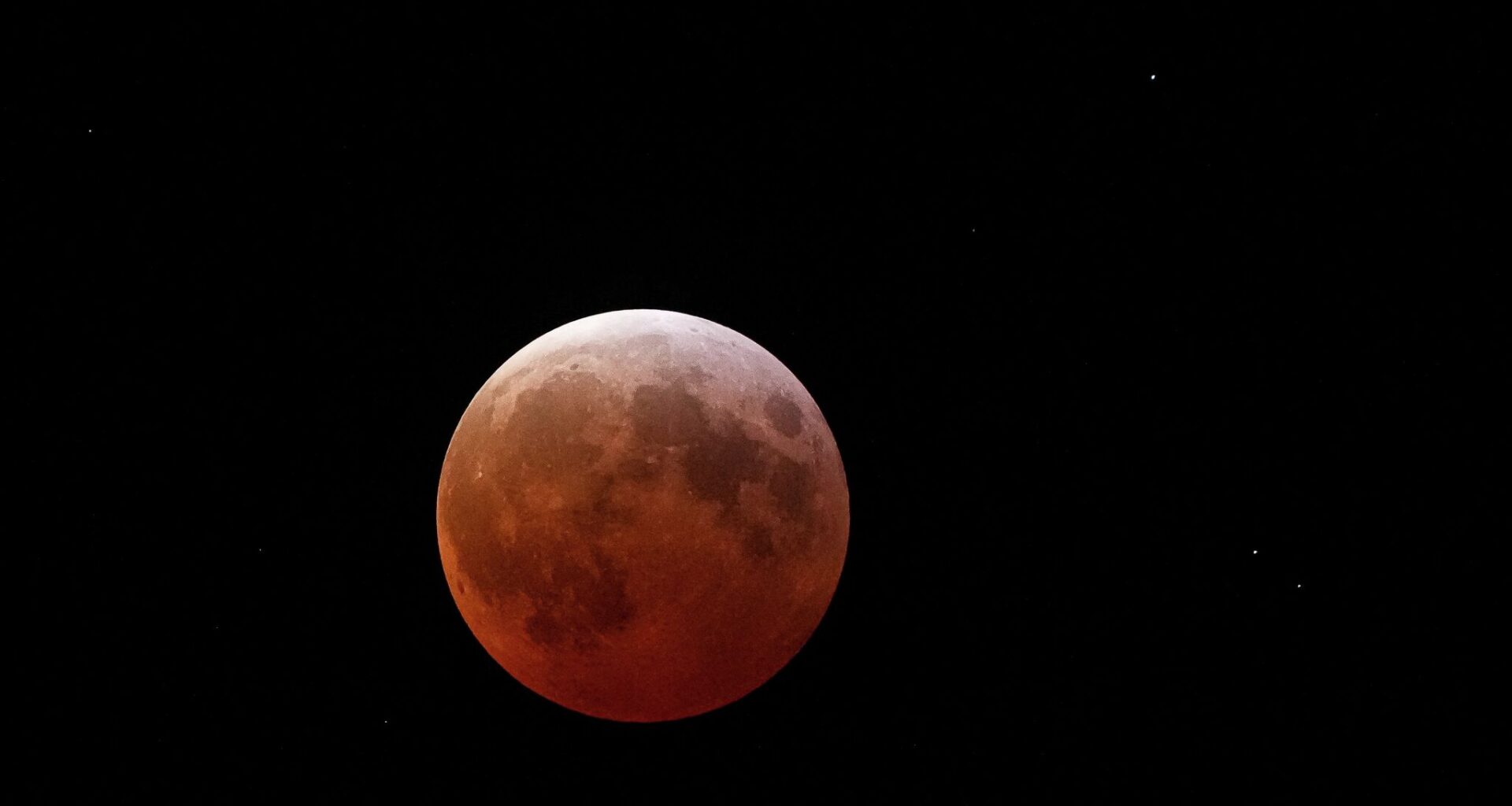
A partial lunar eclipse will darken most of the moon over Texas tonight, giving Austinites a special late-night show — if they’re willing to stay up for it.
The eclipse will begin Thursday evening and stretch into early Friday morning. But viewers who don’t want to spend nearly six hours watching the moon can narrow it down: The eclipse is expected to reach its peak at about 11:12 p.m.
At maximum eclipse, about 94% of the moon will be obscured by Earth’s shadow. Much of the moon could take on a reddish or copper color, while a small portion remains brightly illuminated.
The first stage of the eclipse begins at 8:23 p.m. Thursday, although there won’t be much to see at first.
The moon should begin visibly darkening around 9:33 p.m. as it moves deeper into Earth’s shadow. The eclipse will continue building for about another hour and a half before reaching its 11:12 p.m. peak.
After that, the process will reverse. The most visible portion of the eclipse is expected to end around 12:51 a.m. Friday, with the final stage wrapping up at about 2 a.m.
The moon doesn’t produce its own light. Instead, the lunar surface reflects sunlight.
During a lunar eclipse, Earth moves between the sun and a full moon, blocking sunlight that would otherwise directly illuminate the moon. Some sunlight still travels through Earth’s atmosphere before reaching the lunar surface.
The atmosphere scatters much of the shorter-wavelength blue light while more red and orange light passes through, a similar process to the one that gives sunrises and sunsets their reddish hues.
Lunar eclipses, unlike solar eclipses, are safe to watch without eye protection. No special equipment is required, although binoculars or a telescope can give viewers a closer look.
As long as the sky is clear, the eclipse will be visible to the naked eye.
And Texans interested in seeing it may want to take advantage of the opportunity. The Lone Star State isn’t expected to see another lunar eclipse that obscures at least half of the moon until 2029.