
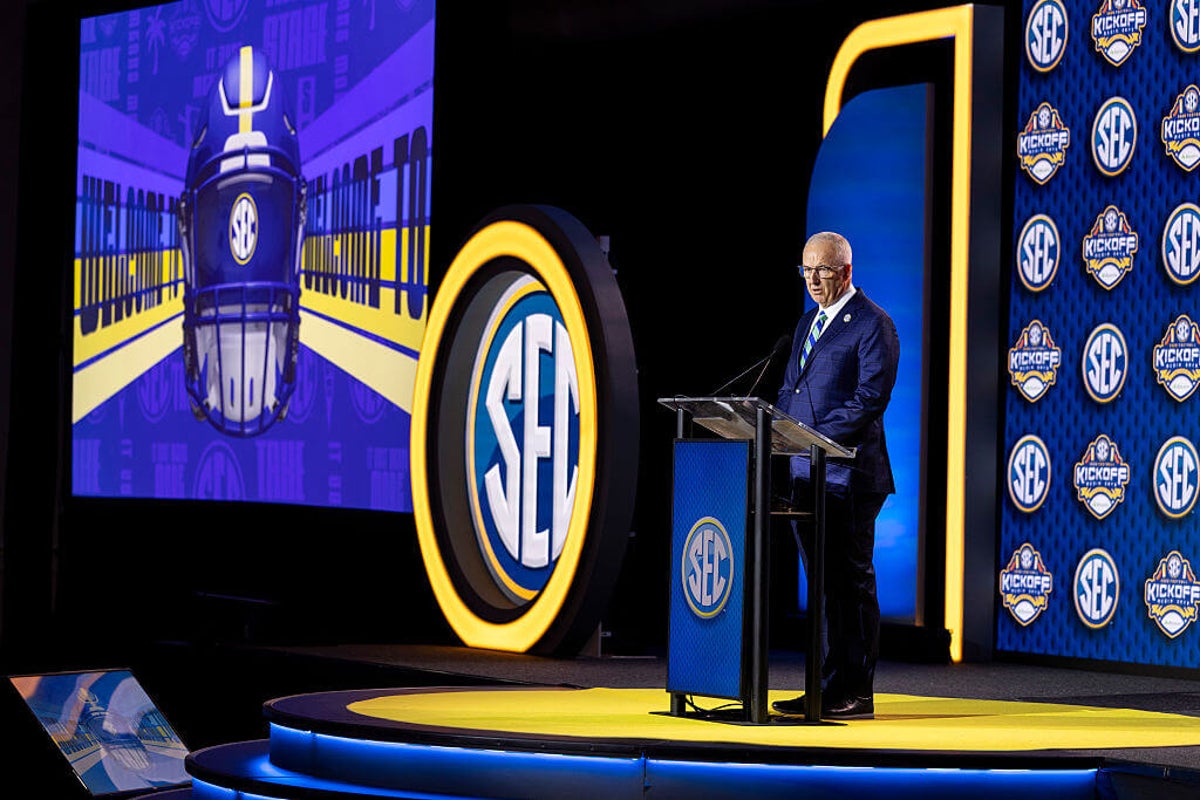
A Texas judge issued a temporary restraining order against the NCAA, the SEC and commissioner Greg Sankey on Thursday, granting more than 40 plaintiffs a fifth year of eligibility to play college sports in the first major court ruling against an individual conference.
Multiple active NFL rookies are among the group now permitted to play college sports this season, if they choose and if a school is willing to take them and challenge rules passed by each of the Power 4 conferences this week.
A Dallas County judge ruled the NCAA and SEC “are hereby temporarily restrained and enjoined from NCAA Bylaw 12.6, or any other NCAA or SEC bylaw or rule, to preclude Plaintiffs from competing in NCAA Division I athletics during the 2026-2027 season on the basis that Plaintiffs have already competed in four seasons of competition,” according to the order.
The order, which only lasts 14 days, sets up another hearing Sept. 11, unless the NCAA and/or SEC come before the court to provide another reason to declare the players ineligible.
TEXAS TRO – This afternoon after getting out of trial in Dallas, Ryan had a TRO hearing which the NCAA appeared for and oral argument was heard. The TRO was granted against the NCAA, SEC and Sankey. pic.twitter.com/DLREThSU0l
— The Texas Trial Group (@TexasTrialGroup) August 27, 2026
In response to recent court rulings against the NCAA, the Power 4 conferences passed or clarified rules this week banning athletes who have signed a professional contract or been on an official NFL roster from returning to college sports. Two of the plaintiffs in the Texas case — Dallas Cowboys receiver Jordan Hudson (who played at SMU) and Kansas City Chiefs linebacker Wesley Bissainthe (who played at Miami) — would fall under those bans, though neither played in the SEC.
It’s not yet clear if the order could be updated to include other Power 4 conferences. The order requires the NCAA to open the transfer portal for one week for this specific group of athletes. It’s also not clear if schools will be willing to go against conference bans and use these players — even if a court allows them.
The slew of recent court fights and rulings only pertain to high school athletes from the class of 2022 who already used four years of eligibility under previous NCAA rules. The association passed a rule change this summer granting athletes five years of college eligibility, but it did not grandfather in those class of 2022 athletes, leading to dozens of legal challenges.
Thursday’s TRO states, “it is the Court’s intention to place Plaintiffs in the position they were in at the end of their last college sports season. As long as they would have been eligible to continue playing college sports in the following semester if they had a fifth year of eligibility, they are eligible today.”
Among the other plaintiffs is SMU safety Ahmaad Moses, a first-team All-ACC selection last year who underwent spinal surgery after the season and went undrafted. He did not sign a pro contract, so the ACC ban would not apply to him. Moses has been practicing with the Mustangs in camp, and this order makes him eligible to play this fall, for now.
Other athletes in states like Louisiana are expected to file similar legal challenges against conference rules. While the NCAA has lost the initial ruling in some cases, it has won subsequent legal stays in multiple states, putting some orders on pause.