

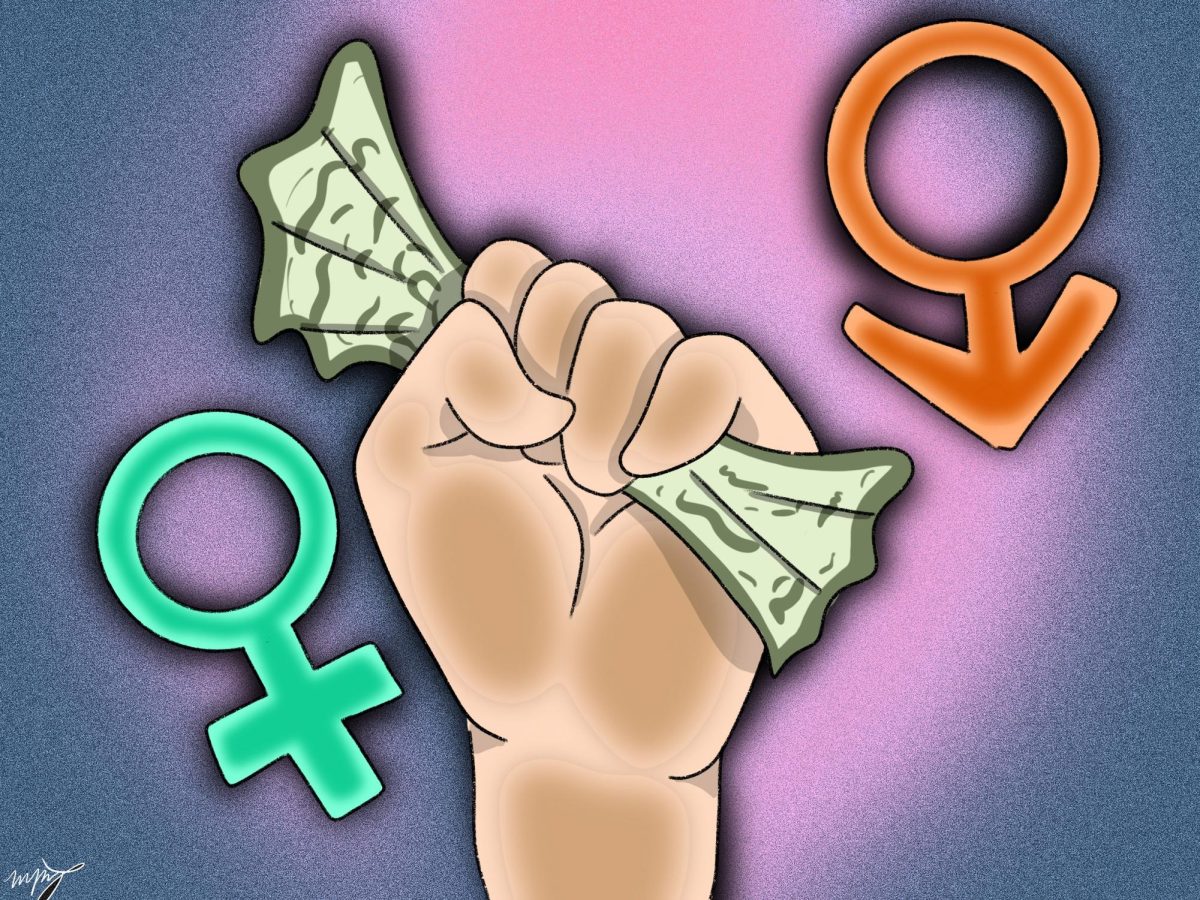
In June, the U.S. Equal Employment Opportunity Commission filed a lawsuit alleging that the UT Medical Branch — a UT-system public academic health sciences center — had paid a female employee significantly less than one of her male counterparts. The suit claims that the woman, working as a solutions architect from October 2023 to January 2026, received around $12,000 less per year than her male counterpart despite having significantly more experience and education in the field.
Moreover, the woman had over six years of experience, obtained her master’s degree while in her position and held multiple certifications. Recognizing this, she reported the gap to her supervisor, but UTMB still denied her a salary increase after a formal compensation review. In the lawsuit, the EEOC is asking for back pay and liquidated damages, along with the implementation of policies, practices and programs at UTMB to prevent any future injustice.
“Supposedly all these are meritocracies,” said Nicole Smith, a philosophy associate professor of instruction. “People are supposed to be in the positions they’re in, making the kind of money they’re making, because of their talents and skills and abilities they’re bringing to the table, and this completely contradicts that.”
The EEOC’s legal argument falls under the Equal Pay Act of 1963. SEC. 206.(d)(1) states that no employer can discriminate between employees on the basis of sex for doing work requiring equal skill, effort and responsibility. Despite this being law for over 60 years, women in Texas earn around 82 cents for every dollar men make as of 2025. This ultimately accounts for a discrepancy of 22% between the genders.
Nationally, full-time working women earn 81 cents to the male dollar, which results in a $542,800 difference over a period of 40 years — negatively affecting both their Social Security and pension benefits. If we take race into account, the numbers plummet even more, with white women at 77 cents, Black women at 65 cents and Hispanic and Native American women at only 58 cents per $1 men make.
“$12,000 isn’t a small amount,” said Harper Whittemore, history and government junior. “$12,000 is months of rent. $12,000 can be the difference between living paycheck to paycheck and being able to put money into savings. … The fact that not only was there such a great discrepancy between a man who is less qualified for the job and the woman who had been there longer, but also in a system like UT that likes to position itself as a leader in equality and as a trusted institution, it’s disappointing.”
Numerous social factors contribute to the perpetuation of such a gap. For one, women often have less time to work because they spend around twice as much time on childcare duties compared to men. These duties not only limit how much time women — especially mothers — can spend working, but also their availability, the commutes they can commit to and the opportunities they have access to. Women are also societally pressured into undervalued jobs, and our culture of pay secrecy often keeps us from understanding the extent to which the bias goes.
“Having other people who are in a similar place as you, either applying for jobs, trying to find work, getting offers, knowing people in the field … and what they’re making (helps) you know what to ask for as a starting salary,” Smith said. “Being socialized as a woman means that it’s much more difficult to have uncomfortable or what we even perceive as confrontational moments. Even though it’s something expected, like negotiating for a salary, it might feel confrontational for us, so we might be (averse). The only thing you can really do to prepare yourself for that is actually practice it.”
Over 30,000 women attend UT. This should not be the kind of workforce they enter, where even their own university system has the audacity to pay a woman of longer tenure and experience over $12,000 less than a male coworker in the same position. Despite the discomfort we may feel at the prospect of salary negotiation or confrontation, it’s exceedingly important that women power through these obstacles and engage in wage transparency with our coworkers and others in similar fields.
It is only by doing this that we will be able to increase both the awareness and the pressure on institutions like UTMB to give women what we deserve: equal treatment.
Gray is an anthropology, government and philosophy senior from Baytown, Texas.