
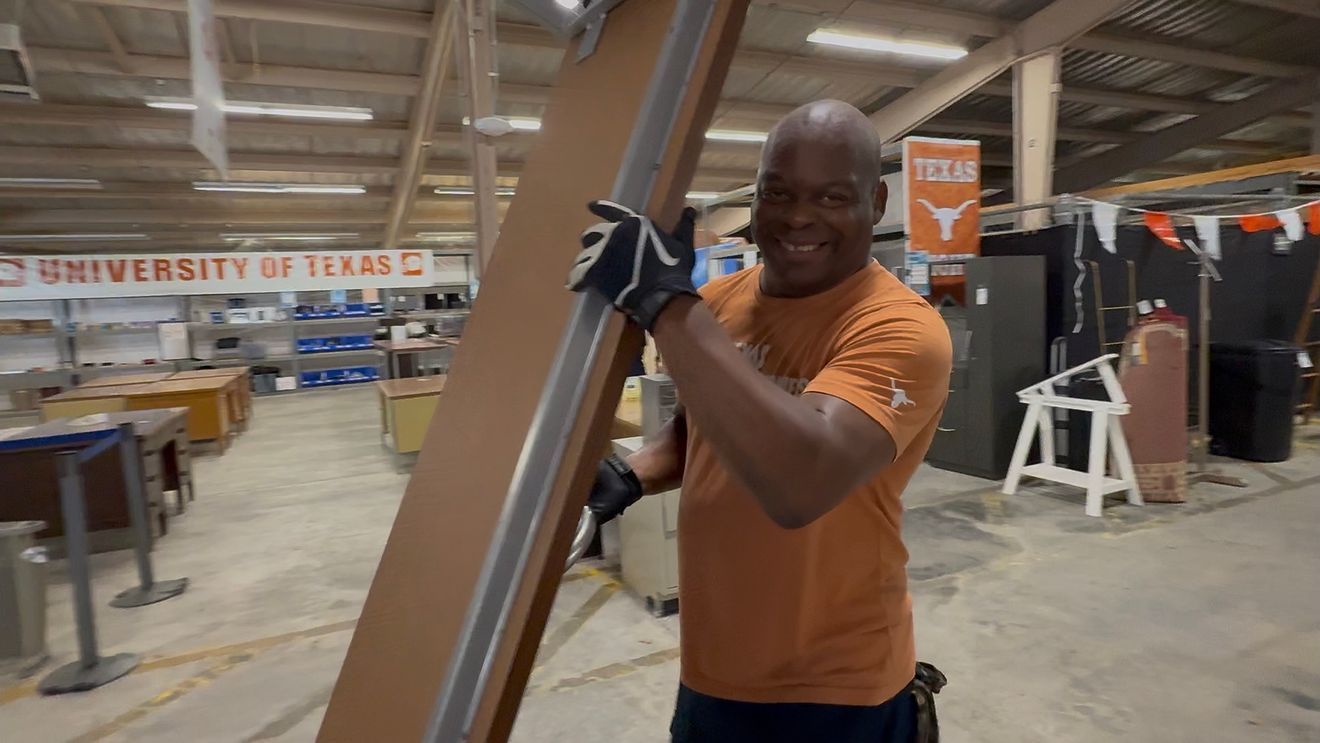
Austin, TX — For thousands of students arriving at the University of Texas at Austin, the beginning of a new school year means moving into a new home.
For international students, that move can mean starting over thousands of miles away from family, sometimes with little more than what they can fit into their luggage.
Bridges International is helping make that transition a little easier.
The organization works with international students throughout the school year, and one of its efforts helps newly arriving students find affordable furniture for their apartments.
Students visit UT Austin’s Surplus Reuse Store, where used university furniture and other items are given another opportunity to be put to use.
For Raghav, an incoming graduate student from Chennai, India, the trip meant searching for some of the basics.
“Tables, chairs, sofas, things like that,” he said. “It’s super helpful. I got myself a chair.”
Bridges volunteers don’t just help students shop.
Micaiah Kuhl, a former Bridges intern who now volunteers with the organization, said part of his job is providing some muscle.
“I am a muscle to help out lifting all of the heavy, heavy furniture,” Kuhl said.
But his role continues after the furniture has been delivered.
“During the school year I’ll try and connect with as many students as I can, help them feel welcomed, help them adjust to American culture,” Kuhl said.
That personal connection is an important part of the program.
Bridges International Team Leader John Achilles said helping students with practical needs gives volunteers an opportunity to build relationships.
“It’s a way to develop friendship with them, to develop trust with them, and to show them that we care for them and that we’re glad that they’re here studying here,” Achilles said.
The effort also gives used university furniture another life rather than allowing usable items to go to waste.
For students, the result may be a chair, table or sofa for an empty apartment. But for someone adjusting to a new city and a new country, organizers hope it provides something less tangible: a sense of community and a place that begins to feel like home.