
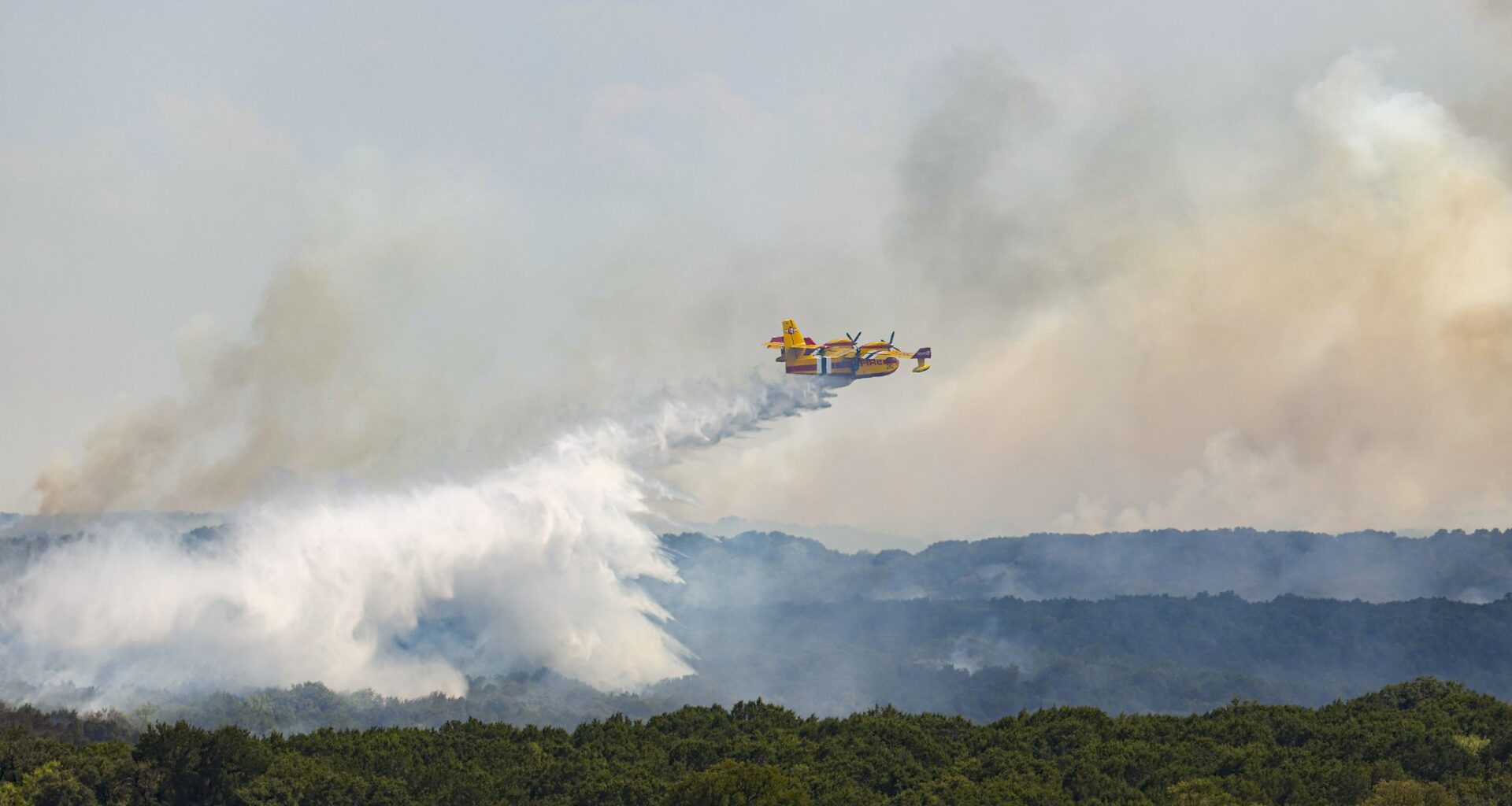
Texas firefighters are getting help from above as the Ross fires continue to burn, with two ‘Super Scooper’ airplanes flying in from Nevada to help quell the fires.
As of Friday evening, the fire remains at 85,000 acres and is 31% contained. The Texas A&M Forest Service, which is helping coordinate the response, called in the two planes from Bridger Aerospace to help fight the fires.
The ‘Super Scooper’ airplanes are the only purpose-built aircraft specifically designed to fight fires, said Bridger Aerospace vice president Mel Holtz. They arrived in Texas Tuesday and began working on extinguishing the fire on Thursday.
Sam Davis, the president of Bridger Aerospace, wrote in a statement that their pilots are “working alongside the firefighters, aviation crews, dispatchers, and other responders.”
The planes can pick up more than 1,400 gallons of water from Possum Kingdom Lake in mere seconds, according to Holtz, rather than needing to land and manually reload water. The planes helped responders drop more than 60,000 gallons on the fire Thursday.
It’s just “one of the components in wildfire response” working to help quell the western edge of the blaze, Holtz said.
The planes don’t just drop water — they also help direct ground crews to where they are most needed. Holtz said Super Scooper pilots helped guide a fire engine into a hot spot that was flaring up Thursday, knocking out flames so the crew could get on the ground.
“We can just do continuous drops on this fire for the maximum effectiveness,” he said, “so firefighters can get in there and actually put out the fire.”
The two planes flew in from a different response in Nevada to help fight the blaze that has grown to the third-biggest fire in North Texas history. It’s an especially important resource for firefighters navigating the hilly terrain of Palo Pinto and Jack counties, Holtz said.
“I do know there is some some rugged terrain in there,” Holtz said. “That’s what makes the Scooper effective — is that it can get in these areas.”
Holtz said the Super Scoopers will stay in North Texas as long as it takes to get the blaze under control.
“If the fire is still rapidly spreading and is uncontained, we’re there to help out,” he said.