
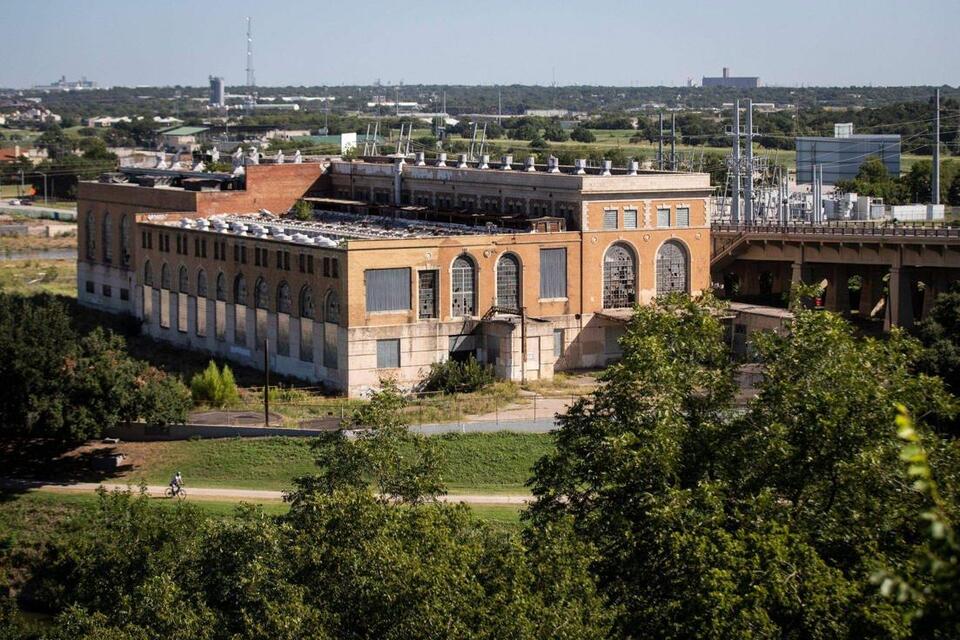
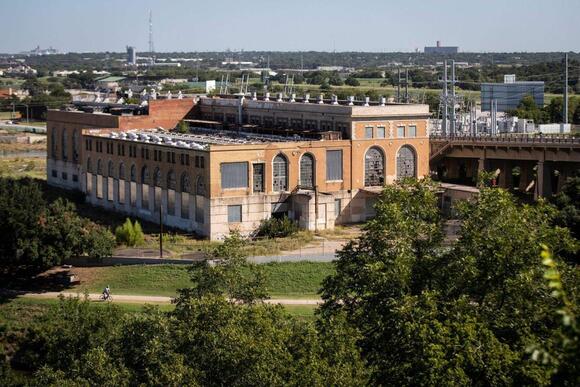
Tarrant County College is looking for buyers for the abandoned TXU power plant property along the Trinity River near downtown Fort Worth, on what will be the future Panther Island development.
TCC bought the plant in 2004 with the idea of a 35-acre campus downtown, and eventually amassed about 47 acres on both sides of the river. But the 2008 financial crisis and other factors put a hold on any plans, and the college instead spent $238 million to buy RadioShack’s corporate campus.
The college said now is the time to gauge interest in the property. The dilapidated plant sits on two parcels totalling about 8 acres adjacent to the North Main Street bridge. The location will be a prime spot when the $1 billion-plus Panther Island development comes to fruition years from now.
“Proceeds from the sale can be reinvested in TCC’s core educational priorities — upgrading teaching and learning equipment, to better serve our students, our future workforce for the region,” TCC Chancellor Elva LeBlanc said in a statement.
The Panther Island project — technically a flood mitigation initiative reliant on federal funding — involves digging another channel for the Trinity River. The plan is to develop the newly formed island into a residential and commercial riverfront district that connects downtown, the Stockyards and West 7th Street corridor.
The vision for Fort Worth’s Panther Island is changing. Here’s what a new report says.
In 2022, a Fort Worth Star-Telegram analysis of property records showed that TCC owned a total of 21.6 acres of the Panther Island area, valued around $9.4 million.
Some development work has already begun. In 2023, Fort Worth-based Tillar Partners began exploring potential for $120 million mixed-use project on nearly 12 acres of the west side of the island. In 2024, the abanonded LaGrave Field baseball stadium was demolished. Encore Panther Island Apartments, at the foot of the North Main Street Bridge, opened about four years ago with 300 units.
In all, the public-private Panther Island project will open up more than 5 miles of shoreline and several hundred acres for development. As originally conceived, Panther Island’s development would be focused on dense residential buildings with some commercial. Consultants HR&A Advisors recommended in 2023 a district with both residential and a vibrant entertainment hub, outdoor recreation and the potential to attract companies and talent to the city.
Matt Oliver, a spokesman for the Tarrant Regional Water District, said construction on a stormwater canal system is expected to begin in 2026.
“ ”I think there’s a lot of exciting momentum around Panther Island right now,” he said.
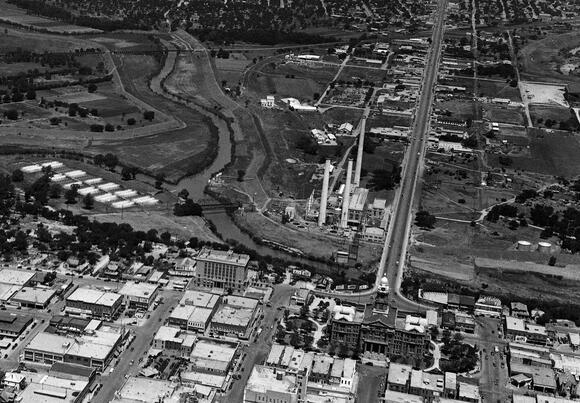
The TXU plant was built in 1912 for the Fort Worth Power & Light company by the Cleveland Construction Co. of Ohio. The steam-driven plant, with 265-foot smokestacks, used water from the river to generate electricity for homes, downtown buildings and the Stockyards meatpacking plants.
The Fort Worth Record and Register newspaper reported in 1912 that the structure under construction would be “one of the greatest industrial plants” in the Southwest with a promise of attracting new industry to the city — not to mention putting an end to “petty inconveniences” suffered by residents of household lights often “flickering and at times going entirely out.”
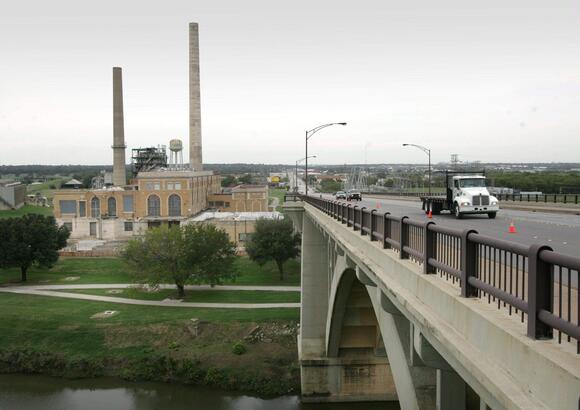
In 2014, TCC trustees issued a request for qualifications from developers and other real estate professionals for help with the building, but nothing came of those. Over the years, the roof disintegrated and many of the windows are broken.
Historic Fort Worth Inc. has sought to have the property designated a historic landmark since 2005. The group has previously listed the TXU plant on its annual most endangered list.
In a letter to the Fort Worth mayor and city council on Oct. 21, the organization once again made the plea.
“We urge you to nominate the power plant as a City of Fort Worth historic and cultural landmark and to work towards a nomination for the National Register of Historic Places,” Alyssa Banta, chairman, and Jerre Tracy, executive director, wrote in the letter. “Historic designation would help to offset the restoration expenses for the power plant, as it adds economic incentives for the restoration of this iconic resource.”
LeBlanc, the TCC chancellor, also referenced the opportunity to preserve the building with a historic designation, which would bring in state and federal grants, tax credits, and other infrastructure funding.
“Selling now enables private investment to help realize Panther Island’s vision—a vibrant, mixed-use waterfront district with walkable streets, green spaces, and robust transit,” LeBlanc said.
TCC said it will accept bid submissions through Nov. 20.