
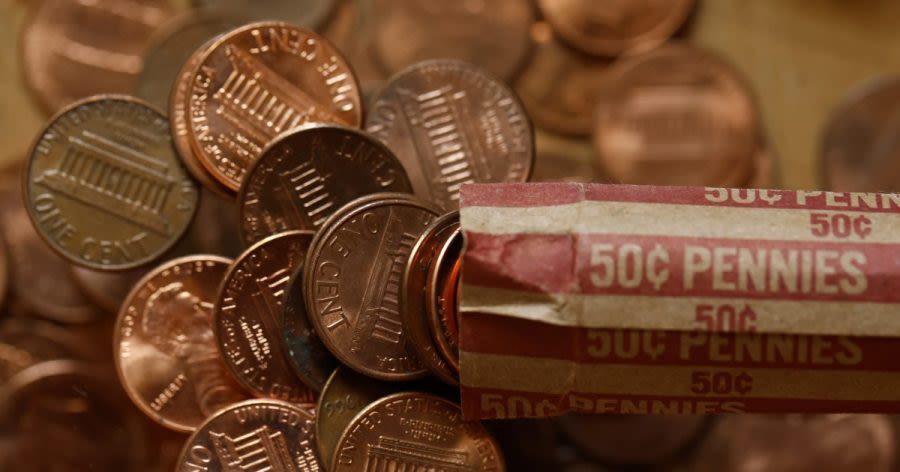
AUSTIN (Nexstar) — They can be found hidden between couch cushions, littered in car ashtrays, and if you’re lucky, one may even be facing heads up on the street. The penny — that bronze-colored coin emblazoned with the nation’s 16th President — will soon become a relic.
Last year the U.S. Department of Treasury directed the U.S. Mint to suspend the production of new pennies indefinitely because of cost. It cost more than three times the worth of a penny to produce and distribute it, according to a 2024 report from the U.S. Mint.
Soon pennies will drop in demand and fall out of circulation, no longer in cash registers across the country. Private companies have adapted to the change and are either rounding up or down to the nearest nickel when someone pays in cash at checkout.
But the suspension of penny production has produced a headache for local government officials who are dealing with cash transactions with Texans. Some county tax assessors and treasurers shared their concerns with Texas lawmakers during a sparsely-attended subcommittee hearing in mid-August.
“It’s not necessarily a payment issue,” Ronnie Keister, the Lubbock County tax assessor, testified. “It’s a change issue.”
Texans can still make cash payments to local government entities for things like car payments, fines and fees, and property taxes. But if you overpay, even by a penny, government entities in Texas must make change for you.
For example, Keister, who said a taxpayer overpaying by even two cents can become a relatively expensive and drawn-out procedure. The Texas property tax code requires the county to send a letter to the taxpayer to notify them they are entitled to a refund.
“Now for two pennies, we have to send a letter that’s going to cost us several dollars,” Keister said.
“A surprisingly large number of residents still utilize cash transactions,” Travis County Treasurer Dolores Ortega Carter testified.
According to Ortega Carter, 19% of all property tax payments made to her county last year were made in cash. The local government officials who testified to lawmakers said the Texas Constitution requires them to make exact change on cash transactions.
“We have a responsibility to account for every penny we receive,” Ortega Carter explained. “Therefore, counties lack the statutory responsibility, the authority, to address this situation.”
A representative from the Texas Conference of Urban Counties even testified that the non-profit’s attorneys believe the way to fix this will have to come from a constitutional amendment, which Texas voters must approve by a majority vote during an election.
Texas lawmakers did not take any action this month since the legislature is still in an interim session. The next session begins January 2027, but lawmakers said they will be working with the local officials to find the best path to give them guidance on the issue. County officials ask that whatever lawmakers come up with, they make it uniform across all 254 counties in the state.
Copyright 2026 Nexstar Media, Inc. All rights reserved. This material may not be published, broadcast, rewritten, or redistributed.For the latest news, weather, sports, and streaming video, head to KXAN Austin.