
The practice of addressing treatment-resistant depression with ketamine has risen significantly in recent years, as have the number of clinics offering such treatment.
These treatment options have drawn excitement from the scientific community due to their fast-acting effects and potential as another option for those who have not had success with other medications.
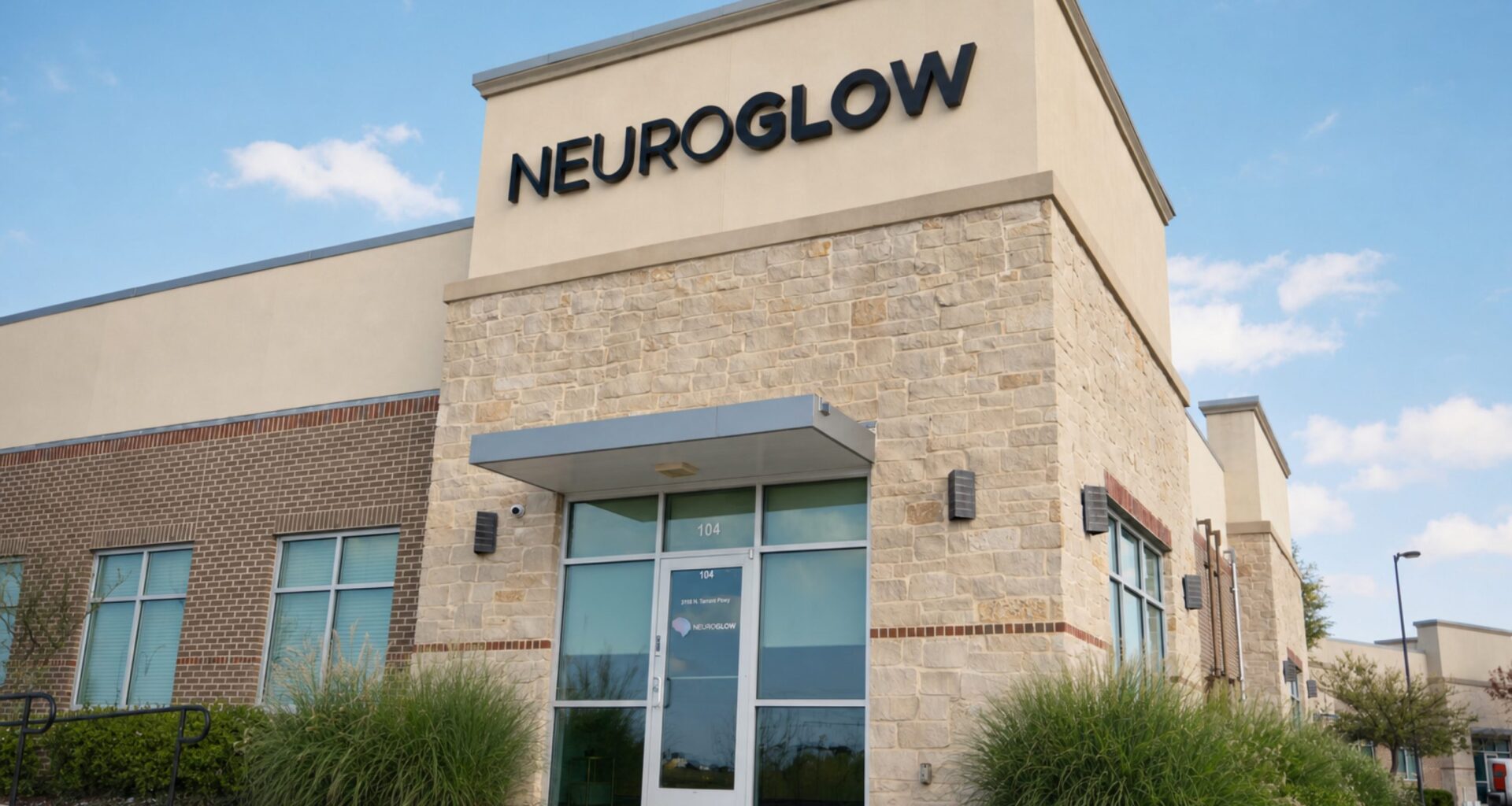
Earlier this year, NeuroGlow opened its relocated Fort Worth clinic in a larger space in Alliance, the company’s third clinic in North Texas.
Ketamine and its derivative, esketamine, are thought to help the brain generate new connections between its cells, according to the Cleveland Clinic. This can improve a patient’s mood and reduce their depression symptoms.
“For the first time in 60 years, we have a new antidepressant therapy that isn’t just a spinoff of existing drugs,” psychiatrist Dr. Adam Kaplin said on the Johns Hopkins website. “For some people, esketamine therapy is revolutionary, giving them the chance to experience life without depression for the first time in decades.”
Still, some researchers remain cautious.
Declan McLoughlin, a professor at Trinity College Dublin, authored a study in which repeated IV infusions of ketamine did not have a significant positive effect.
He suspects that participants’ and researchers’ ability to tell if they had received ketamine or a placebo during a trial — referred to in scientific research as unblinding — has inflated positive outcomes in other studies.
“This is a major, often unacknowledged, problem with many recent trials in psychiatry evaluating ketamine, psychedelic, and brain stimulation therapies,” he told PsyPost.
There is still more research to be done, including on the long-term impacts of ketamine treatments, according to the Mayo Clinic.
Reese Ormand, CEO of NeuroGlow, sees potential for growth in his business as research and acceptance of ketamine and psychedelic treatments grow, backed by recent support at the state and federal level.
Here’s a look inside this Tarrant ketamine clinic and how it operates.
Treatments offered
Founded by a certified registered nurse anesthetist in 2021, NeuroGlow first offered IV ketamine therapy before expanding to the nasal spray Spravato. The company has locations in Fort Worth, McKinney and Flower Mound.
Ormand became involved in the company after encountering it as a patient and finding the treatment “incredibly transformative.”
Ketamine has been approved by the Food and Drug Administration as an anesthetic for decades, but use for depression is currently considered off-label, meaning it has not yet been FDA-approved for that use.
Spravato is a nasal spray of esketamine, a derivative of ketamine. The nasal spray is approved by the FDA to treat major depressive disorder and depression that has not responded to other therapies. For some patients, the spray may be a more viable option than IV ketamine because it is covered by their insurance, Ormand said.
Before patients receive treatment at a NeuroGlow clinic, they undergo an evaluation by a nurse practitioner who determines if they are a candidate. Then, they meet with the clinic’s integrative therapist.
“We do a second touch to make sure that they’re kind of mentally aligned to be able to do this,” Ormand said.
The integrative therapist then meets with the patient a third time to prepare and set intentions for their treatment.
The drugs affect patients in different ways. With IV ketamine, patients may feel as if they are in a dreamlike state, Ormand said. Spravato, on the other hand, was designed to be less dissociative, he noted, and patients may journal, read or listen to music in the time after they self-administer the nasal spray. During both treatments, patients’ vital signs are monitored.
Research has shown that the effects of ketamine treatment last longer if paired with talk therapy, Ormand said.
“It’s very strongly framed as, ‘This is a tool,’” he said. “‘It’s going to open a door for you. You’re going to have to put in the work and walk through that door.’”
The environment at the clinic is designed to be relaxing. The patient’s mindset plays a critical role in how the treatment is experienced, Ormand said.
Patients sit in recliners in private rooms. They can use weighted blankets and eye masks. Music and lighting choices are intentional.
“When patients come into our clinics, they’re not coming into this sterile, gross medical office,” he said. “We’re going to do everything we can to get them in the best mindset possible.”
After the treatment, the patients are observed for a period of time and are required to have arranged for someone to drive them home.
Looking to the future
Other companies offer ketamine and esketamine treatments at their Fort Worth clinics, such as Nura Therapy and Vigeo Wellness. The ketamine market is expected to continue to grow.
Ormand plans to expand his company beyond ketamine into areas of psychedelic treatment, with psilocybin and MDMA-based products expected to receive FDA approval over the next couple years.
“What I’m building is not a ketamine clinic chain,” he said. “I’m building a psychedelic therapy platform.”
He pointed to state and federal support for further exploring the potential of psychedelics to treat mental health disorders and other conditions.
In April, President Donald Trump signed an executive order directing the FDA to give qualifying psychedelic medicines expedited consideration for approval and allocating $50 million to support efforts at the state level.
Texas also passed a law in 2025 that set aside $50 million in funding and formed a research consortium to develop a drug from ibogaine, a psychoactive compound that comes from an African shrub. Although currently illegal in the United States, ibogaine is available in Mexico and Canada to treat addiction and traumatic brain injuries.
On the operational side of Ormand’s business, he is currently laying the groundwork to become a front-runner when those treatments do become available, he said.
“What we are building at NeuroGlow will be a brand that is synonymous with psychedelic therapy that has multiple locations in North Texas,” he said.
McKinnon Rice is the health reporter for the Fort Worth Report. Her position is supported by a grant from Texas Health Resources. Contact her at mckinnon.rice@fortworthreport.org.
At the Fort Worth Report, news decisions are made independently of our board members and financial supporters. Read more about our editorial independence policy here.
This <a target=”_blank” href=”https://fortworthreport.org/2026/08/30/a-look-inside-a-tarrant-ketamine-clinic-and-where-the-business-plans-to-go-next/”>article</a> first appeared on <a target=”_blank” href=”https://fortworthreport.org”>Fort Worth Report</a> and is republished here under a <a target=”_blank” href=”https://creativecommons.org/licenses/by-nd/4.0/”>Creative Commons Attribution-NoDerivatives 4.0 International License</a>.<img src=”https://i0.wp.com/fortworthreport.org/wp-content/uploads/2021/04/cropped-favicon.png?resize=150%2C150&ssl=1″ style=”width:1em;height:1em;margin-left:10px;”>
<img id=”republication-tracker-tool-source” src=”https://fortworthreport.org/?republication-pixel=true&post=754973&ga4=2820184429″ style=”width:1px;height:1px;”><script> PARSELY = { autotrack: false, onload: function() { PARSELY.beacon.trackPageView({ url: “https://fortworthreport.org/2026/08/30/a-look-inside-a-tarrant-ketamine-clinic-and-where-the-business-plans-to-go-next/”, urlref: window.location.href }); } } </script> <script id=”parsely-cfg” src=”//cdn.parsely.com/keys/fortworthreport.org/p.js”></script>