
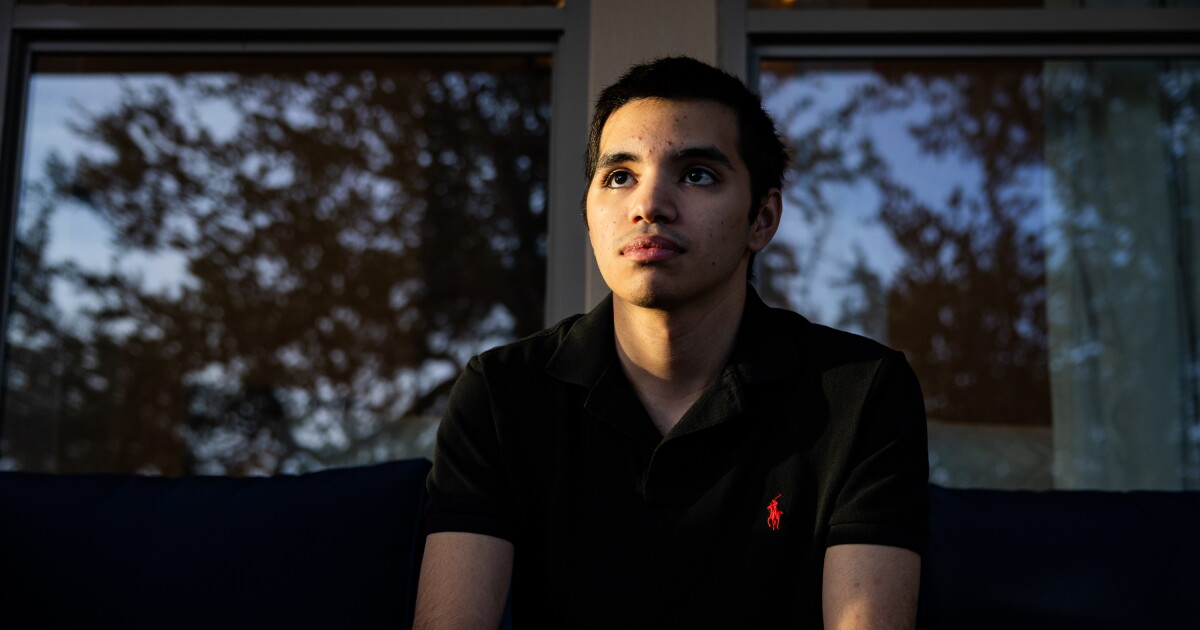
Rodolfo “Rudy” Garza Jr. spent four months in and out of the hospital after he was shot in the head in the mass shooting at Buford’s. Now, he’s finally returned home.
Garza was studying mechanical engineering at the University of Texas at Austin and was two months shy of graduating when he was shot on March 1 while celebrating two friends’ birthdays. After months of intensive care and multiple surgeries, Garza is trying to regain a sense of normalcy through rehabilitation and therapy.
Garza was one of 14 people injured in the shooting on West Sixth Street that left three people dead. Police fatally shot the gunman at the scene.
Garza said he normally does not go out to bars, and the last thing he remembers is spending time with friends. He said he has no recollection of the shooting or what followed.
“All I remember is hanging out with some friends the day of,” Garza said. “I didn’t want to go … that’s all I remember. I don’t remember what happened during [the shooting].”
After being rushed to the hospital and undergoing emergency surgery, doctors were especially concerned about bleeding and swelling in Garza’s brain, his mother Cynthia Hernandez said.
“Seeing my baby go through all of that when he was a healthy young man was very hard,” she said. “He wasn’t able to communicate, and that was also very frustrating for him.”
Lorianne Willett
/
KUT News
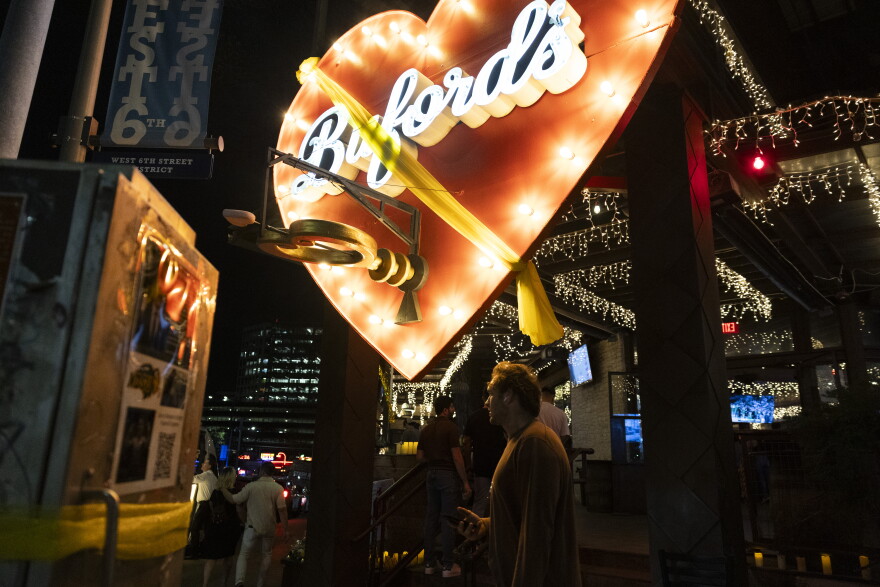
People walk by Buford’s on West Sixth Street on March 6. The bar vowed to donate 100% of their sales that night to the victims of the mass shooting earlier in the week and their families.
Although Garza does not remember what happened the night of the shooting, Hernandez vividly remembers the moment she received the news that her son had been shot and the journey that followed.
Hernandez was hundreds of miles away from Austin when it happened. She works as a travel nurse and was in Iowa on assignment. Even before learning about the shooting or that her son was involved, she said she couldn’t sleep.
Around 2 a.m., she was still awake, trying to fall asleep by listening to music. That’s when she received a call from Rudy’s friends. They told her there had been a shooting, but it was hard to understand what they were saying.
“They said, ‘We can’t find him. He was with us when it all started. We all ran, we thought he was coming with us. We turned around, he was not there,’” Hernandez said.
Hernandez checked her son’s location and saw he was at a hospital. She decided to board a flight immediately, all while trying to call the hospital to get more information. But no one could give her an answer. It wasn’t until after boarding the plane that the hospital finally called.
“I get the call from the hospital, and it was the doctors,” Hernandez said. “They were saying that it was bad, that it was very bad, that he had gotten shot in the head, that they couldn’t take out the bullet.”
Hernandez left her job as a post-anesthesia care unit nurse to take care of Garza full-time. She said she is grateful for the support from the community that has allowed her to comfortably be by her son’s side since the shooting. An online fundraiser, started by her friend, has amassed over $400,000.
“Even though I am familiar with some of the aspects, things that he was going through, it’s still very different [when] I’m on the other side,” Hernandez said about her nursing experience. “When they would come and talk to me, I’m like, ‘forget that I’m a nurse. I’m just a mom.’”
While in the hospital, Garza said doctors helped him relearn how to walk and talk. He used an iPad to communicate before regaining his ability to speak. Now back home, he said he still has problems with stability, his speech and endurance, but is working hard at therapy so he can be “good as new.”
Garza said his friends have been a significant source of support during his recovery process. Although he can’t play, he spends hours on the phone with his friends and watches them play video games. He said he hopes he can join them soon.
“I want my right hand and my leg to heal, so I have no more ataxia,” Garza said. “I want to be more independent and play games and travel.”
Courtesy of Cynthia Hernandez
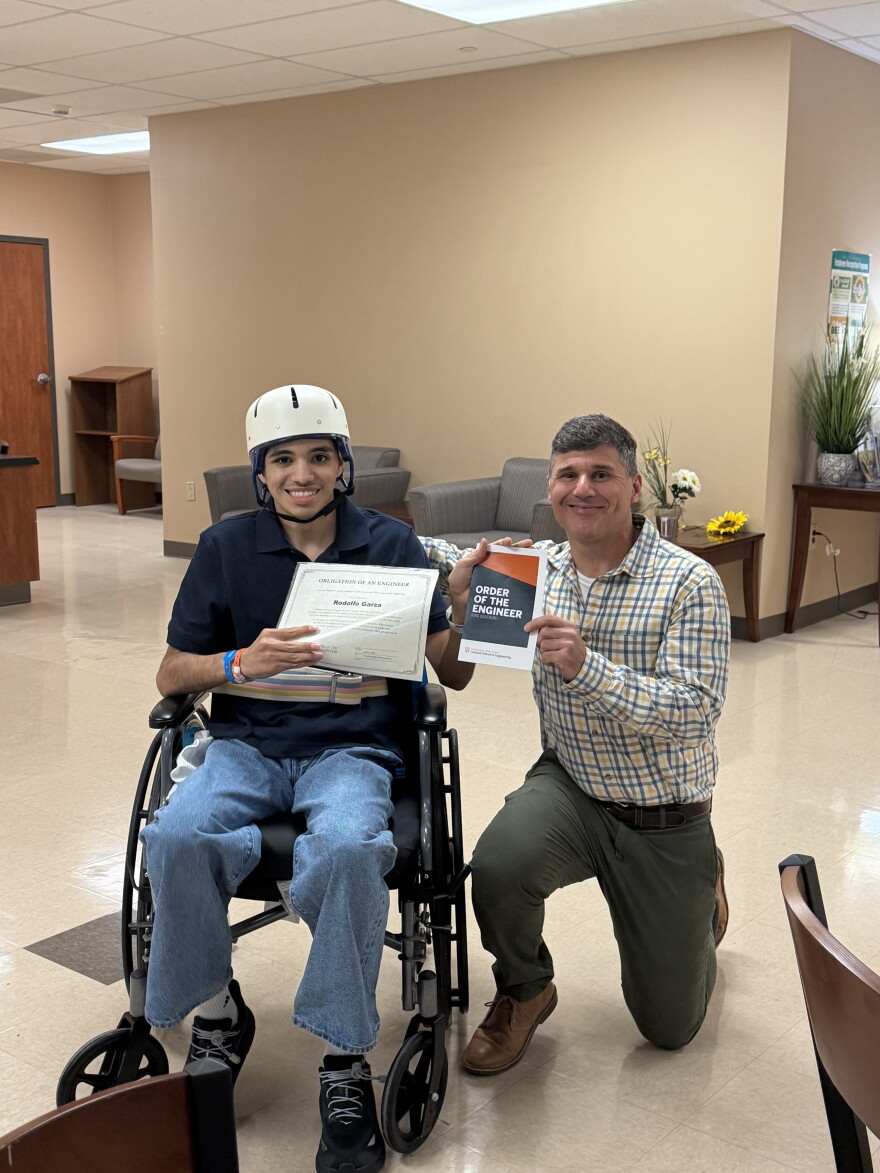
Garza is pictured alongside Joshua Keena, an associate professor of practice in engineering at UT, while holding an Obligation of the Engineer certificate. It is a formal ethical oath taken by engineering graduates during the Order of the Engineer ring ceremony.
Another major source of support throughout Garza’s recovery has been Joshua Keena, an associate professor of practice at UT who taught his senior engineering design course. Before the shooting, Garza and his teammates were working on designing a harness for children undergoing physical rehabilitation as part of their capstone project.
“When I first heard of the incident, we met with his team, and we let them know that collectively, we were going to develop a path forward that allowed us to best help Rudy and his family, but also allowed them to have a fulfilling end to their senior year,” Keena said.
Garza’s classmates designed a device to help him with his stability in collaboration with his rehabilitation specialists. Keena said Garza was also able to join his teammates at the capstone project showcase in April.
“It was great to see how asynchronous he was able to contribute to the project and be present,” Keena said. “If you’ve ever met Rudy, he just has a wonderful smile, so just seeing him smile was just awesome.”
Keena plans to teach the capstone course again this fall and has earmarked several design projects for future students to develop in support of Garza’s rehabilitation.
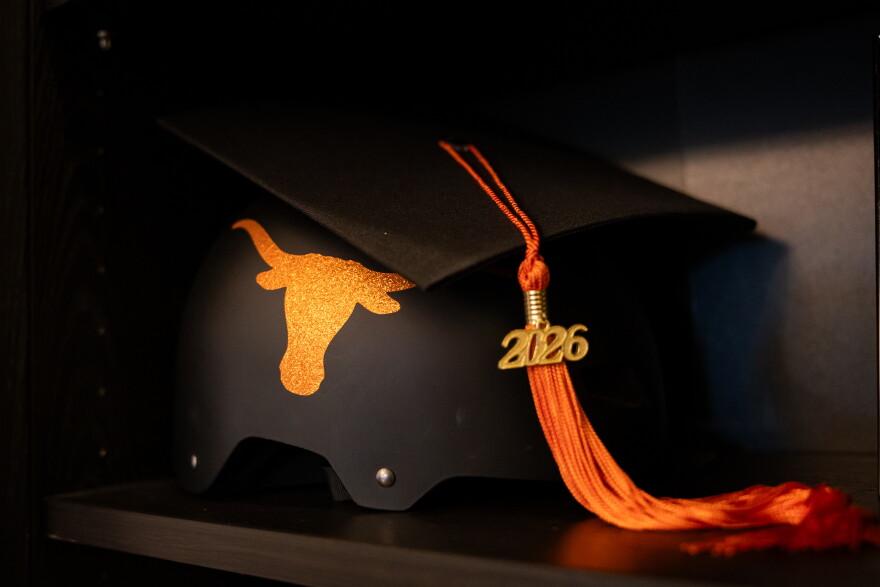
Two months after his critical injury, Garza walked the stage at his graduation, alongside his mom. He said he is happy to be done with school and grateful for his professors and family.
“It was truly inspirational to know where he was not that long before,” Keena said. “He was committed to [graduating] very early on … and he held to his word.”
Michael Minasi
/
KUT News
Garza walked across the graduation stage just two months after he and 14 others were shot in and around Buford’s. He wore this helmet during the graduation ceremony.
Garza left the hospital on April 13 and returned in June to undergo a second major surgery. But then he suffered a brain bleed, which caused him to be rushed into another surgery and stay in the hospital longer than intended.
“It felt like it was starting all over again, going through the same thing,” Hernandez said. “But he was blessed. He came out of that third surgery and woke up pretty fast. He was talking, and it was just like right where he had left off.”
These days, Garza said he has been able to get back to the things he missed most, like eating his favorite dumplings and Korean barbecue. To ensure he can continue receiving treatment and rehabilitation, Garza, his mom, his brothers and his grandma all relocated to Austin from Mission, Texas.
“[The boys] will be going to a new school. They have left their home behind and their friends behind,” Hernandez said. “But we’re happy because we’re together with him, supporting him, and we’ll be here with him for as much time as he needs us.”
Hernandez said she doesn’t know how long her son’s recovery will take, but he will need lifelong health monitoring, as fragments of the bullet are not able to be safely removed. She said the best decision for her and her family was to relocate to Austin, close to all of the “doctors and specialists who saved his life.”
Garza said the experience has taught him not to take anything for granted. Hernandez said she often reminds her son how far he has come.
“I tell him, look at all the good things: You’re able to eat now. You’re talking. Your speech still is going to be improving slowly, but you’re able to communicate, and you’re walking,” Hernandez said. “Your eyesight, your hearing, everything is good. You’re here with us. Look at that. We’re so blessed.”