
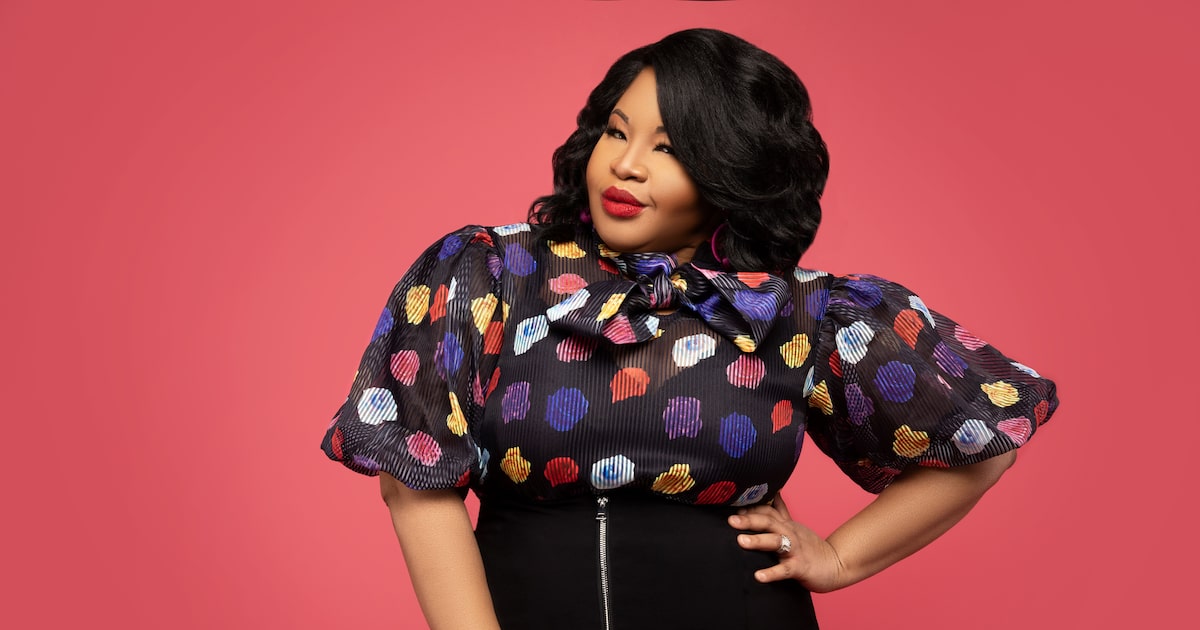
Saturday night’s Dallas Symphony Orchestra program was the third in a row including a new or recent work by a woman composer. Yet another is scheduled for the Nov. 20-22 concerts, along with a new clarinet concerto by a male. Is this too much of a good thing? Talk among yourselves.
The Nov. 7-9 program, led by guest conductor Marin Alsop, included the world premiere of Drag, by American composer Kathryn Bostic. (Because of the Friday conflict with the opening of the Dallas Opera’s Dialogues of the Carmelites, I heard the DSO on Saturday.) Also on the program were Strauss’ Don Juan and the Brahms Second Symphony.
Strauss’ tone poem portrays a legendary libertine, and, well, Bostic’s piece does, too. Soprano Karen Slack suggested Bostic create a work evoking the once-famous but largely forgotten Harlem Renaissance singer-pianist Gladys Bentley.
A Bentley remembrance seems especially apt in a present day oddly obsessed with gender fluidity. A self-identified Black lesbian, until later claiming heterosexuality, Bentley early on performed in male drag in gay speakeasies, belting out sometimes racy lyrics.
News Roundups
Conceived for Slack, with words by Lorene Cary, Drag evokes the entertainer’s Harlem heyday, but also her subsequent fall from fashion, move to California and reinvention as “a woman again.” It celebrates “more sex and fun and money, more life,” while also acknowledging racial and gender struggles and Bentley’s troubled relationship with her mother. At the end, it suggests artificialities we all assume: “This is my last drag./What’s yours?”
It’s quite a showpiece for Slack, who delivers the wide-ranging vocal part with aplomb and enormous power. Active as a composer of film and TV scores, Bostic evokes Bentley’s times with music alternately jazzy and atmospheric, adding her own piquancy to idioms familiar from Gershwin and Copland.
But even with Slack’s big, sumptuous tones, with some subtle amplification, and with Alsop’s careful attentions, voice and words were sometimes swamped by the orchestration. It’s a fun piece, and one to make us think. I hope the balance problems can be fixed.
The Strauss, a great orchestral dazzler, got a first-class performance. In the glorious acoustics of the Meyerson Symphony Center everything from randy horn calls to full-orchestra explosions to almost whispered sweet nothings had a visceral impact unmatched in any other concert hall I’ve experienced.
Both here and in the very different Brahms, Alsop evinced an impressive grasp of structure and overview, of timing and dynamic nuance. We’ve had a lot of Brahms symphonies around here lately, mostly too loud and too thick. Alsop opened up the textures and shone light into them.
There were real pianissimos, breathtaking from trumpets, trombones and tuba, although horns were occasionally a bit too forward. Fortissimos, which Brahms deploys sparingly, were more impressive for the sonic subtleties along the way. People sometimes think of Brahms as cold and stodgy, but Alsop captured the symphony’s tenderness as well as passion.
Among the concert’s many fine solo contributions, those from interim principal oboe Mark Debski were particularly beautiful.
Details
Repeats at 2 p.m. Nov. 9 at Meyerson Symphony Center, 2301 Flora St. $33 to $174. 214-849-4376, dallassymphony.org.