
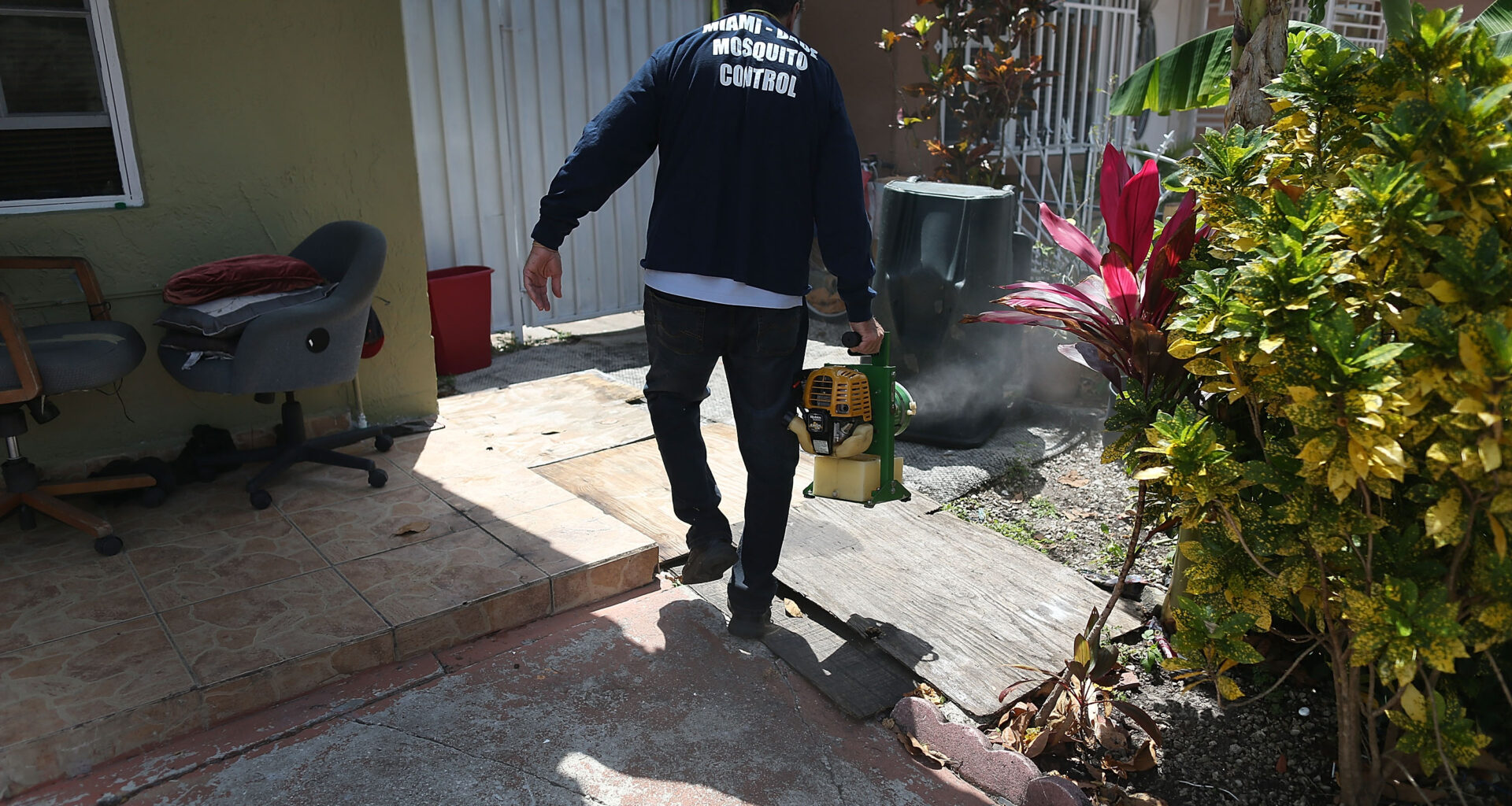
Arlington scheduled two consecutive nights of targeted ground spraying on September 1 and 2, 2026, after Tarrant County Public Health notified the city that one of its mosquito trap samples tested positive for West Nile virus. Crews work between 9 p.m. and 5 a.m., weather permitting, within a half-mile radius of the positive trap, near the intersection of Caliente Drive and Commander Court.
The scale here is worth stating precisely, because the framing around mosquito spraying often outruns the facts. This was a single positive trap sample, not a cluster of human cases, and the response covers a defined half-mile area rather than the city. No new Arlington human case was announced alongside the spraying.
What makes the timing meaningful is the calendar. August and September are historically the peak West Nile transmission months across most of the continental United States, and the Dallas Fort Worth metro has been among the hardest hit regions in the state’s worst seasons. A positive trap in early September signals the virus is circulating locally at the point in the year when human risk is highest.
The Rules That Decide When a City Sprays
Arlington traps mosquitoes from May through October and sends samples to Tarrant County Public Health for testing against West Nile and St. Louis encephalitis viruses. Weekly results tell the city where to send its mosquito control contractor.
The city’s published standard is three consecutive weeks of positive results from the same trap, which then triggers two nights of spraying within a half-mile radius. The city can also act after only one or two weeks of positives when additional risk factors are present. Those factors, as the city lists them, are mosquito abundance meaning a positive result alongside more than 50 mosquitoes in a trap, proximity to any recent human West Nile case, scheduled outdoor events during dusk or nighttime hours near the trap, and a high infection rate in the collected sample.
The city’s notice did not state which of those thresholds was met in this case, saying only that the spraying followed guidance from Tarrant County Public Health and was intended to reduce the known virus-infected adult mosquito population as quickly as possible. That gap is worth noting for residents trying to gauge local risk, because the difference between a three-week persistent positive and a single early positive with high mosquito counts describes two different situations.
The County Picture Behind the Local Response
Tarrant County confirmed its first human West Nile case of 2026 on July 24, and the county said it was the neuroinvasive form, the more severe presentation that can involve fever, neck stiffness, disorientation, tremors, convulsions, muscle weakness or paralysis and can be life-threatening. No further patient details were released.
At that point, the county had identified 86 mosquito pools testing positive across its surveillance program. For comparison, Tarrant County recorded its first human case on June 25 in 2025 and logged 17 human cases across that season. In 2024, the county saw 28 human cases and 24 hospitalizations, and that year included its most recent West Nile death.
The Texas Department of State Health Services reported the state’s first case of the season in a Harris County resident in May. Statewide, Texas had reported 31 human West Nile cases to the Centers for Disease Control and Prevention as of August 18, against 127 cases in all of 2025. Those counts are provisional, lag actual illness, and the CDC updates its surveillance data every one to two weeks.
The structure of the response explains why residents in neighboring suburbs may see different actions. Tarrant County Public Health runs the testing laboratory, but abatement is carried out by the 36 cities the county works with. Sabrina Vidaurri, associate director of health protection and response at Tarrant County Public Health, told county commissioners in May that the county tests samples while cities run their own programs, and that the county had purchased $20,000 worth of mosquito dunks for participating cities.
“The best way to protect yourself from mosquitoes is to reduce the breeding cycle,” Vidaurri said.
Reasonable Steps for Residents
Arlington uses a water based permethrin product applied at ultra low volume, which the city says the EPA has determined does not pose an unreasonable risk to human health when applied as directed, with no special precautions required and little residual effect once it dissipates. The city notes that people concerned about pesticide exposure, including those with chemical sensitivity or breathing conditions such as asthma, can reduce exposure by staying indoors during the nighttime application window.
Spraying reduces adult mosquitoes in a small area for a short time. It does not substitute for the two measures that actually shrink risk over a season, which are avoiding bites and eliminating breeding sites.
Tarrant County Public Health urges residents to routinely dump standing water on their property, use EPA approved insect repellent, and wear loose fitting long sleeves and pants outdoors, particularly at dawn and dusk when the Culex mosquitoes that carry the virus are most active. Standing water becomes a breeding site after three or four days, which covers flowerpot saucers, clogged gutters, old tires, wading pools and birdbaths, as the county’s mosquito prevention page explains. Arlington residents can report standing water or infestations through the city’s Action Center at 817-459-6777.
Symptoms Worth Knowing Before the Season Ends
Roughly one in five people infected with West Nile develops symptoms. West Nile fever brings headache, fever, muscle and joint aches, nausea and fatigue, and most people recover without treatment, though symptoms can persist for weeks.
The neuroinvasive form is rare but serious. Warning signs include high fever with severe headache, neck stiffness, disorientation or confusion, tremors, convulsions, muscle weakness and vision changes. Those symptoms warrant urgent medical evaluation rather than watchful waiting.
Risk is not evenly distributed. Adults over 60 and people with cancer, diabetes, kidney disease, hypertension or weakened immune systems face substantially higher odds of severe disease. There is no West Nile vaccine for humans and no specific antiviral treatment, so care for severe cases is supportive. That absence is precisely why prevention carries the weight it does. MedicalDaily has tracked the unusually early start to this year’s season since the spring.
Key Questions Answered
What happened in Arlington? The city scheduled targeted ground spraying on the nights of September 1 and 2 within a half mile of a mosquito trap near Caliente Drive and Commander Court that tested positive for West Nile virus.
Was a person infected in that area? The city did not announce a new local human case alongside the spraying. Tarrant County confirmed its first human case of the season in July without releasing a location.
What triggers spraying? Arlington’s standard is three consecutive weeks of positive results at a trap, or fewer weeks when factors such as high mosquito counts, a nearby recent human case, or scheduled evening outdoor events are present.
Is the pesticide safe to be around? The city uses water based permethrin at ultra low volume and says the EPA determined it does not pose an unreasonable risk when applied as directed. People with asthma or chemical sensitivity can stay indoors during the overnight application.
How many cases has Texas had? Texas had reported 31 human cases to the CDC as of August 18, compared with 127 in all of 2025. Counts are provisional and lag actual illness.
Who is most at risk? Adults over 60 and people with diabetes, cancer, kidney disease, hypertension, or weakened immune systems face the highest risk of severe disease.
When does mosquito season end in North Texas? Tarrant County runs surveillance from April through mid-November, and Arlington traps from May through October, so risk continues well past Labor Day.