
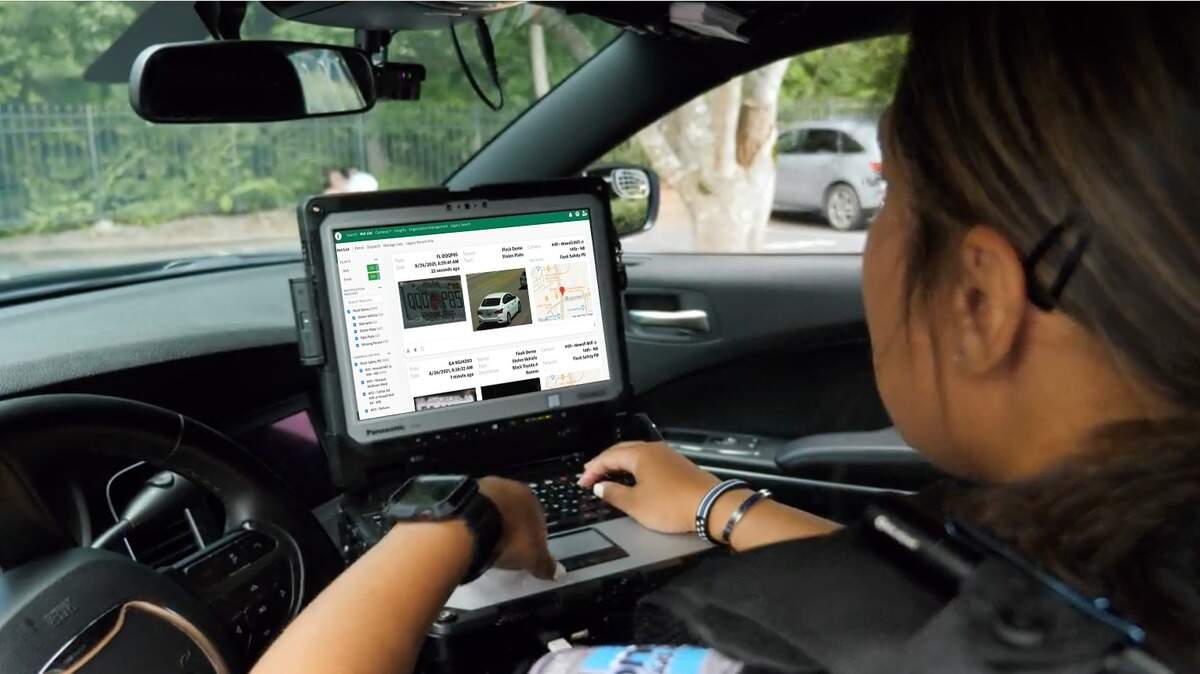
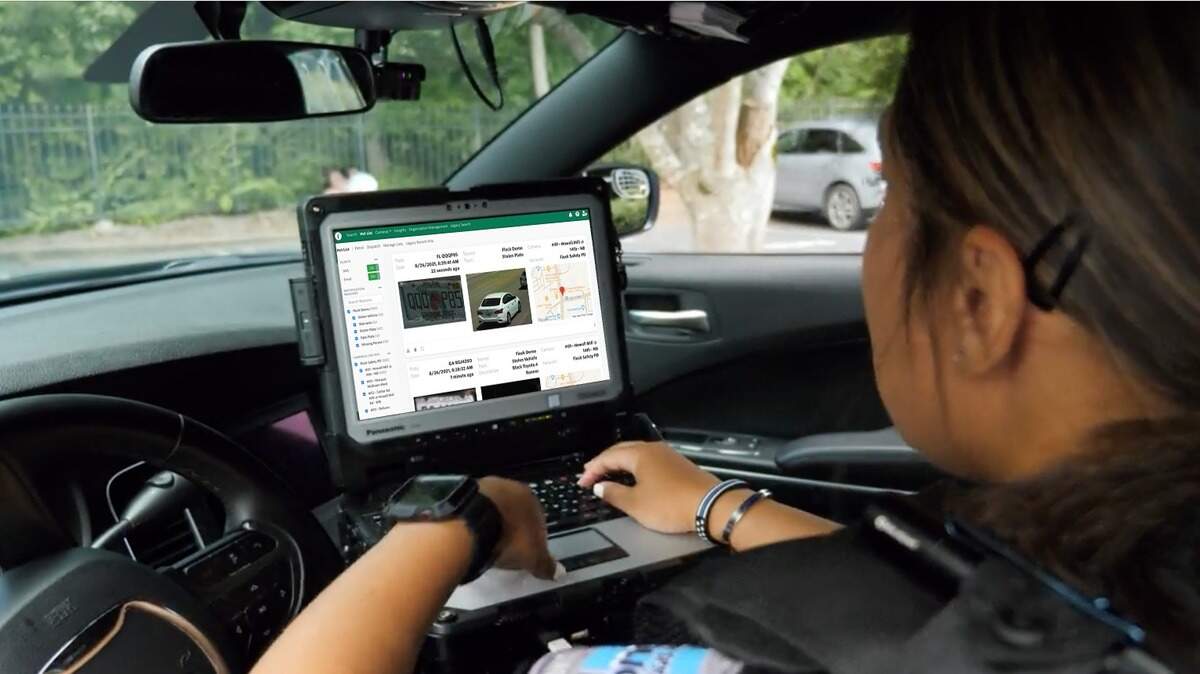
Flock Safety’s technology gives officers real time data that the company says can aid police in solving crimes.
Flock Safety
Sheriff Bill Waybourn lauded Flock Safety’s license plate readers as the best tool in the county’s law enforcement arsenal.
Flock cameras have recently replaced data centers as the lightning rod of local government. In response, Republican Commissioner Matt Krause asked Waybourn to brief the Commissioners Court about how they are being used in Tarrant County.
Invasion of privacy is the primary concern over Flock cameras collecting photos of license plates on public roads. A handful of people spoke in opposition to Flock cameras during public comment at Tuesday’s meeting.
The Republican Liberty Caucus of Texas, which had a representative at the meeting, put out a statement saying the surveillance is a threat to constitutional liberties. The group was concerned with accuracy as well as privacy.
Waybourn pushed back, citing legal decisions, and said Criminal Justice Information Services has far more personal information than Flock provides.
“Courts have constantly recognized that there is a general no reasonable expectation of privacy in a license plate displayed on a vehicle traveling a public road,” Waybourn said early on in his presentation.
Waybourn said technology like Flock’s has been around since 2000 and flourished after the 9/11 attacks.
Tarrant County owns six cameras, but there are 949 total across the county owned by cities and homeowners associations. Any law enforcement agency using Flock Safety is able to access the database by searching for a specific license plate number with a valid reason for search.
Data procured by Tarrant’s cameras is deleted after 30 days unless there’s reasonable cause to keep it longer. There is a seven-day retention option, but Waybourn said the county opts for the longer retention to give crime victims more time to come forward. The only thing that isn’t deleted is the search records, which are public government records.
Other guardrails include limited access within the Sheriff’s Office, training requirements and artificial intelligence and manual audits. If someone is suspected of misusing the resource, the system will flag it for administrative review. If validated, Waybourn said that officer would be put in jail.
While notable examples of misuse have surfaced in recent weeks, no one in the Tarrant County Sheriff’s Office has used it for a purpose beyond law enforcement, Waybourn said.
About 130 people in the Sheriff’s Office have access to the Flock camera database, mainly in the patrol, fugitive and undercover divisions. In contrast, over 1,200 officers have access to the Criminal Justice Information Services.
From January 2025 to August 2026, the Sheriff’s Office has recovered 259 stolen vehicles, caught a capital murder suspect and had multiple instances of intervening drug trafficking, Waybourn said. The Fort Worth Police Department has made about 2,200 serious arrests in six years thanks to Flock cameras, he added. Tarrant County has had about 800, he said.
Krause suggested putting in a best practices policy like the commissioners did for body worn cameras in July. He said it would provide an official safeguard until the Texas Legislature takes on the issue.
Related Stories from Fort Worth Star-Telegram

Fort Worth Star-Telegram
Rachel Royster is a news and government reporter for the Fort Worth Star-Telegram, specifically focused on Tarrant County. She joined the newsroom after interning at the Austin American-Statesman, the Waco Tribune-Herald and Capital Community News in DC. A Houston native and Baylor grad, Rachel enjoys traveling, reading and being outside. She welcomes any and all news tips to her email.