
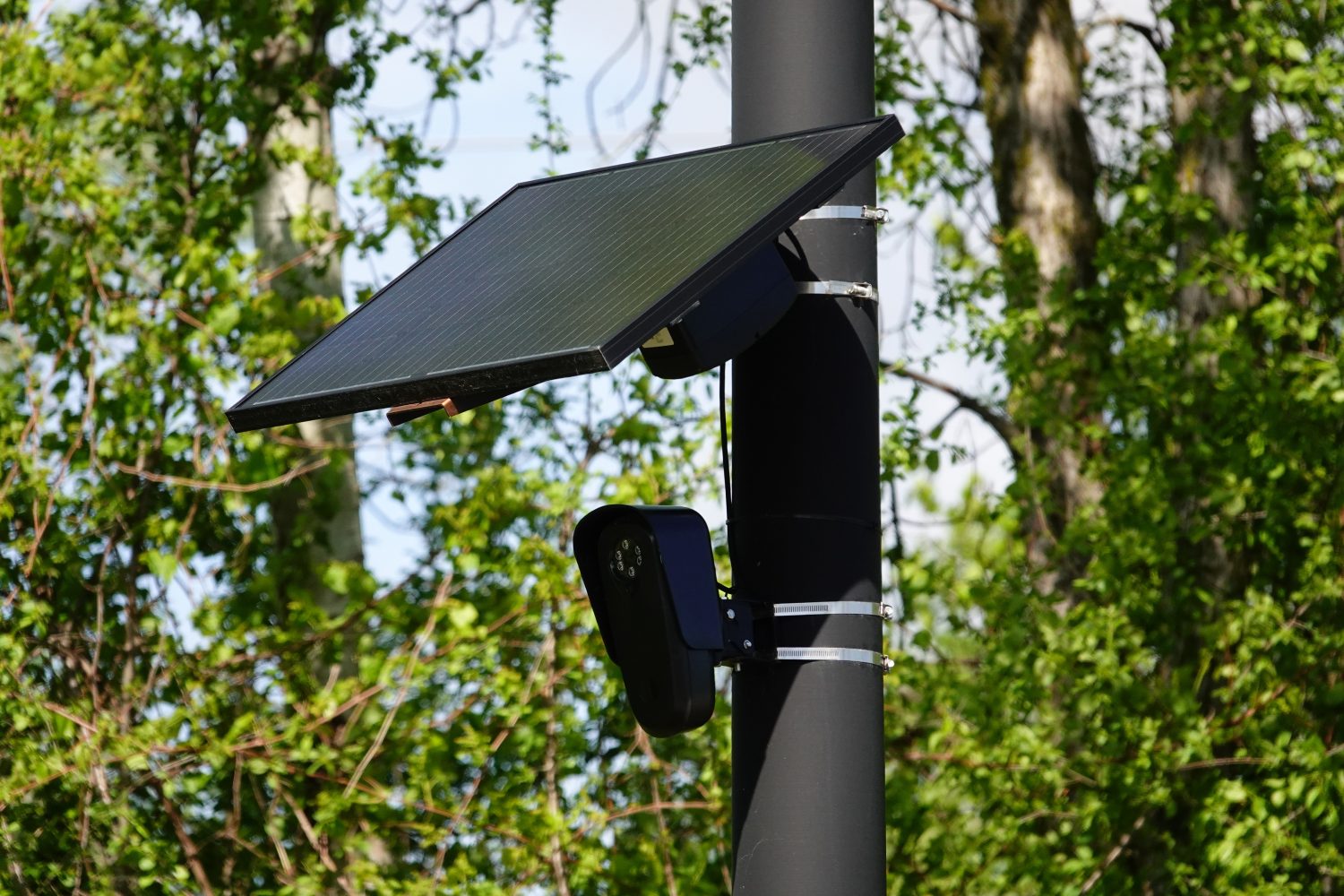
Dallas City Council members overwhelmingly supported maintaining funding for Dallas police Flock cameras at a Wednesday briefing.
Council members debated proposed revisions to preliminary budget changes made at last week’s meeting, along with additional amendments submitted to the city manager. One new amendment proposed by Adam Bazaldua would have stripped $1.5 million in funding for DPD’s Flock camera system — effectively eliminating the program — and redirected the money to an eviction advocacy program and infrastructure improvements.
The council strongly opposed the proposed measure. Only Mayor Pro Tem Jaime Resendez, council member Paula Blackmon and Bazaldua voted to support. As the council has yet to adopt a final budget, the straw votes are nonbinding and do not represent definitive budget decisions.
“At the end of the day, it’s a great tool, but we do have to make sure that those who abuse the tool get held accountable, and that’s something that we do need to tighten and make sure that we’re doing,” council member Jesse Moreno said.
Sign up for the This Week’s Top Stories newsletter to get the latest stories delivered to your inbox
THANK YOU!
You’re all set.
CLOSE
Chad West withdrew another amendment that would have eliminated funding for AI-powered cameras mounted on Dallas sanitation trucks. Instead, staff will brief the city council’s Quality of Life, Arts and Culture committee before the end of the year.
Funding for the eviction advocacy program was tentatively restored, in part, through an amendment that redirected $500,000 in homeless street outreach funding to the program. The program was originally approved to receive roughly $1 million in annual funding when council passed last year’s budget, although those funds never materialized.
‘Every camera I can get’
Flock cameras, specifically automated license plate readers (ALPRs), have drawn increasing public scrutiny in recent months. The cameras face oncoming traffic on public roadways and scan license plates as vehicles pass. Police can then search the cloud database for plate numbers tied to ongoing investigations, which DPD officials argue have had an invaluable effect on investigative work.
The system also lets Dallas police access other law enforcement agencies’ databases through the company’s cloud network, which includes more than 120,000 automated license plate readers and video cameras operating across 49 states. The department has 684 ALPRs in operation, according to a Flock transparency website. However, Dallas police officials announced Tuesday that they would shut down 321 cameras by the end of the month due to changes in Austin.
The announcement came after Texas Gov. Greg Abbott last week ordered a pause in state funding for Flock Safety systems amid ongoing public backlash. An investigation by Texas Monthly has found that the state has disbursed at least $30 million in grants to local law enforcement agencies for Flock Cameras, with some of the funding coming from $1 fees added to insurance registrations.
Dallas police have used Flock cameras since the council approved the first contract in 2022. In May 2025, the city council approved a five-year, $5.5 million extension with the Flock Group. Of that funding, roughly $1.7 million is tied to state Department of Motor Vehicles-tied grants.
As they have previously, DPD representatives pushed back on the recommendation to eliminate funding for Flock ALPRs, which they said allow the department to track a vehicle throughout the city. They cited the investigative benefit and its role in solving homicide cases. The department has used Flock technology to solve 14 homicide cases this year, according to the transparency dashboard.
Like several other council members, Kathy Stewart cited anecdotal evidence about using the cameras to investigate and deter crime in her district. She said while there are concerns, the investigative potential is apparent.
“I don’t believe the potential for misuse outweighs the public safety value of this tool,” Stewart said. “It helps our officers identify suspects and locate vehicles and solve crimes, as you all have just said, significantly faster. The answer to misuse is stronger safeguards, not eliminating an effective tool.”
DPD representatives said they use the technology daily, and Sgt. Adam Reinhart told the council that the department runs its database for 2,100 unique plates each week. The AI-powered technology has drastically cut down on the man-hours needed to sort through information, and Flock ALPRs were cited as effective tools to police motor theft, business robberies and missing persons cases by DPD officials.
Council member Lorie Blair said that the Flock cameras have had a marked effect on public safety in her district, especially in high-crime areas and in animal cruelty investigations.
“Every tool that you guys can get is a tool that we need,” Blair said. “Every camera I can get, I’m going to ask for it. If I had money in my budget, I’d buy some for you, and I would have strategic locations that I would ask you to place them.”
A controversial vendor
Backlash against the technology has built nationwide and in Texas in recent months. Dallas police have reported more than a dozen vandalism cases involving Flock ALPRs, while cities including Austin, San Marcos, and, as of last week, Wylie have ended their Flock contracts in the last two years.
Concerns over Flock technology are far-reaching and cross party lines. Some worry that state or federal agencies will have access to the databases, especially in a city like Dallas that has received federal grant funding for its Flock Contract. Dallas Police representatives told the Observer in July that few federal agencies, including the US Postal Inspection Service, have access to the department’s Flock database, with immigration enforcement not among them.
The cameras have also drawn scrutiny over concerns about misuse and overreach. In 2025, it was reported that North Texas authorities had tapped into 83,000 Flock cameras to locate a woman suspected of having an abortion. The Barbed Wire reported on data collected by 404 Media in June 2025 and found that at least 180 immigration-related Flock searches had been made by five Texas law enforcement agencies. Stalking is also a major issue, with numerous cases of local law enforcement using the technology to surveil past romantic partners or strangers.
“This isn’t because I want to prevent DPD from doing anything,” Bazaldua said after introducing the amendment. “This is because it’s been done across the country, and there are a lack of controls for this to have been abused, and I would hate for that to be something that we heard happen within our own department. “
DPD representatives highlighted guardrails the department has put in place to prevent abuse of the technology. Sworn officers do not automatically have access to the database; instead, only those (DPD estimates around 1,900, or more than half the force) who have completed training and have responsibilities that overlap with the technology’s function can access it. Furthermore, the department compiles weekly audit logs which show exactly who accesses the system and for what reason, police representatives said.
Cara Mendelsohn asked department representatives questions regarding the safeguards in place and the benefits of Flock cameras in investigative work. She strongly opposed the proposed amendment, which she said amounted to “defund the police 2.0.”
“This seems to be the most important investigative tool that I’ve seen,” she said. “I think, although our violent crime plan is great, part of our violent crime plan has been using Flock to help solve cases.”
While she acknowledged the potential for issues, council member Gay Donnell Willis said the safeguards appear to be at the forefront of industry standards, and that Dallas residents should take some reassurance in the robust measures the department has put in place.
“So I would say it sounds like ‘Dallasites, your city is leading in the preventive measures around how Flock is used,’” Willis said. “However, if they can be strengthened further, if we learn more, I think we need to be open to doing that.”
Bazaldua criticized the length of time the department retains Flock data. According to the transparency dashboard, DPD retains Flock data for a full year before discarding it. Data is needed for that duration, department representatives said, because certain investigations are prolonged. Having raised concerns about immigration enforcement’s use of the Flock cloud system, the District 7 council member also questioned whether the dozens of agencies with access to Flock data had to comply with DPD regulations governing its use, to which department officials said they did not.
The issue, Bazaldua said before the amendment was struck down, is not the technology itself, but rather the highly controversial company behind it. He called for the city to find a different vendor with more localized control and without connection to a national cloud database.
“It’s whether or not we’re going to let a private company build the rules for it, or we’re going to build our own,” Bazaldua said. “And we can only build our own for our own officers. And we know that it’s been misused, and it will continue to be misused. And y’all cannot guarantee that us being a part of that network is not going to contribute to the misuse of officers or others.”
What’s next
Wednesday’s meeting marked the last time council members will meet to discuss the budget before its final adoption on Sept. 16. Funding is still tight amid surging costs and declining revenues, and further amendments will almost certainly require cuts to other general fund departments.
Officials and council members said more information about the Flock system would be provided at a Public Safety Committee meeting next Tuesday.
“This tool is something that we really need to keep everyone safe,” DPD Chief Daniel Comeaux told the council.