
With the upcoming battle against Texas State looming, Texas football has done what it can to get its team into top-caliber shape. Ahead of the game on Saturday, some areas of the team look especially stacked, while others may be in danger of running thin. Here’s a look at some of Texas’ strengths and weaknesses going into its first game of the season.
Strength: Loaded Wide Receiver Room
Texas won’t be short on options when senior quarterback Arch Manning looks downfield this season.
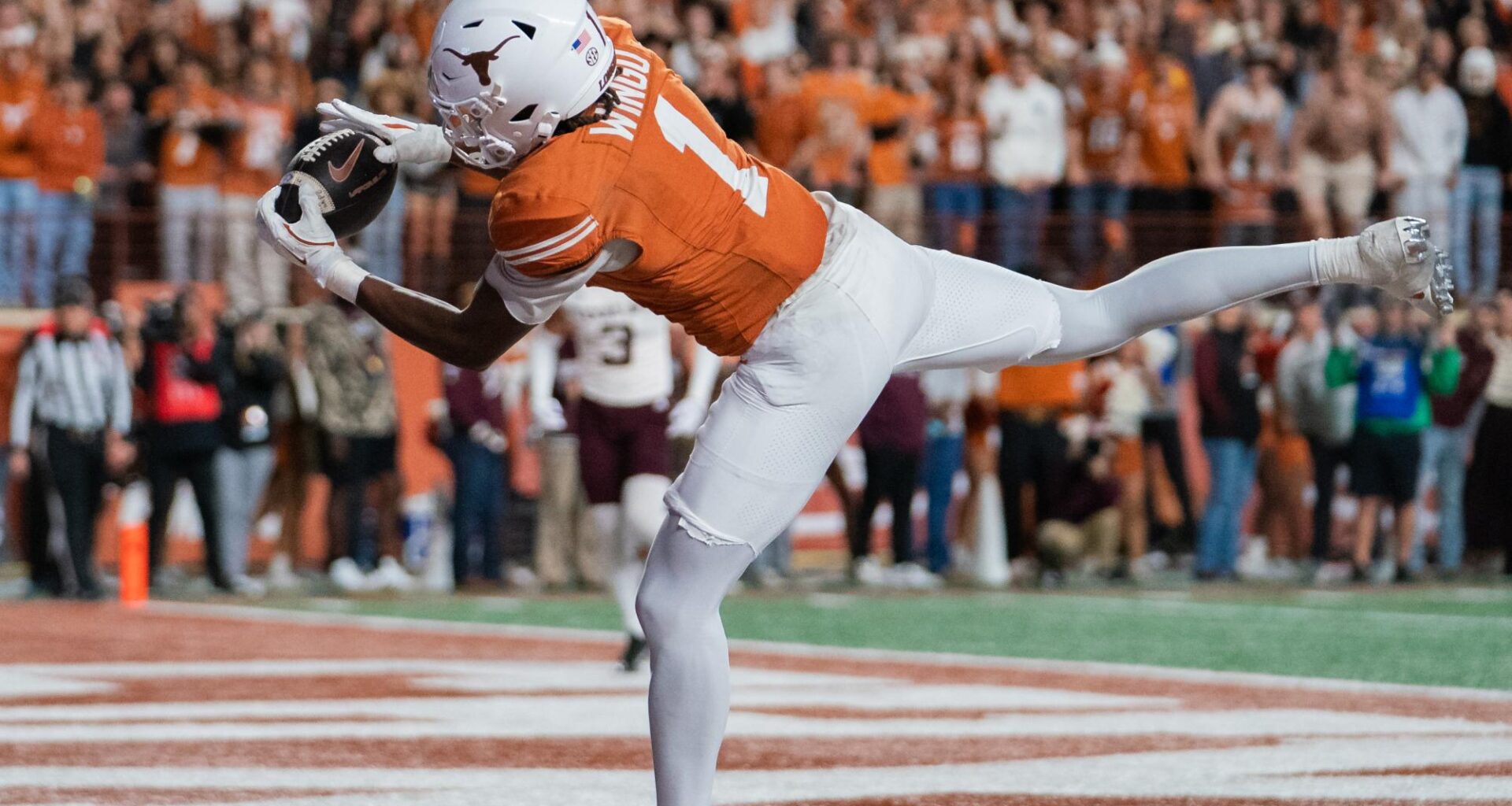
The wide receiver corps could be one of Texas’ biggest strengths, as the Longhorns combine proven players with a star transfer. Junior wide receiver Ryan Wingo returns after leading Texas with 834 receiving yards and seven touchdowns in 2025, while junior Emmett Mosley V added 408 yards despite appearing in just nine games. The addition of Auburn junior transfer Cam Coleman, who totaled 13 touchdowns across his two seasons with the Tigers, raises the ceiling even further.
“Ryan and Arch, and Emmett and Arch, they’ve got banked reps,” head coach Steve Sarkisian said. “Cam, I give him a lot of credit. He’s been very intentional to be close to Arch, and I think Arch has been intentional with him as well because they know they’ve got some ground to make up.”
Coleman joins Wingo and Mosley V as the starting trio, giving Manning three targets before Texas dips into a second group that includes sophomores Kaliq Lockett and Daylan McCutcheon and five-star freshman Jermaine Bishop Jr.
Weakness: Linebacker Depth in Doubt
Linebacker was already one of Texas’ thinner position groups — losing junior Ty’Anthony Smith only magnified the concern.
Smith’s dismissal removed an experienced piece from a room that could have used exactly that. After recording 60 tackles, 5.5 tackles for loss and two interceptions last season, Smith could have taken an even larger role in 2026.
The Longhorns did effectively add to the group through the portal and high school recruiting, like with senior Rasheem Biles, a preseason first-team All-Southeastern Conference player. But even with the newcomers, statistics don’t necessarily promise depth. There’s little room for injuries or underperformance. And while defensive coordinator Will Muschamp may have pieces to work with right now, the situation may not be the same when Texas is battling late in the season against SEC opponents.
Strength: The Muschamp Effect
Simultaneously, however, Muschamp’s return to Austin is bringing a lot of excitement.
He is entering his second stint on the Forty Acres after holding the same role from 2008–10. Since then, he’s held head coaching jobs at Florida and South Carolina, and most recently served as Georgia’s co-defensive coordinator, helping the Bulldogs win back-to-back national championships.
Sarkisian has already been vocal about Muschamp’s immediate impact on the defensive scheme, promoting relentless and aggressive play.
The relationships that Muschamp has built with players speak volumes to the importance he can have this season. Junior edge Colin Simmons was asked what the strength of the defense is, and he had a simple answer.
“(Our) defensive coordinator,” Simmons said. “I feel like the coaches set the tone, and I feel like (when) Muschamp comes in each and every day, he’s setting the tone.”