
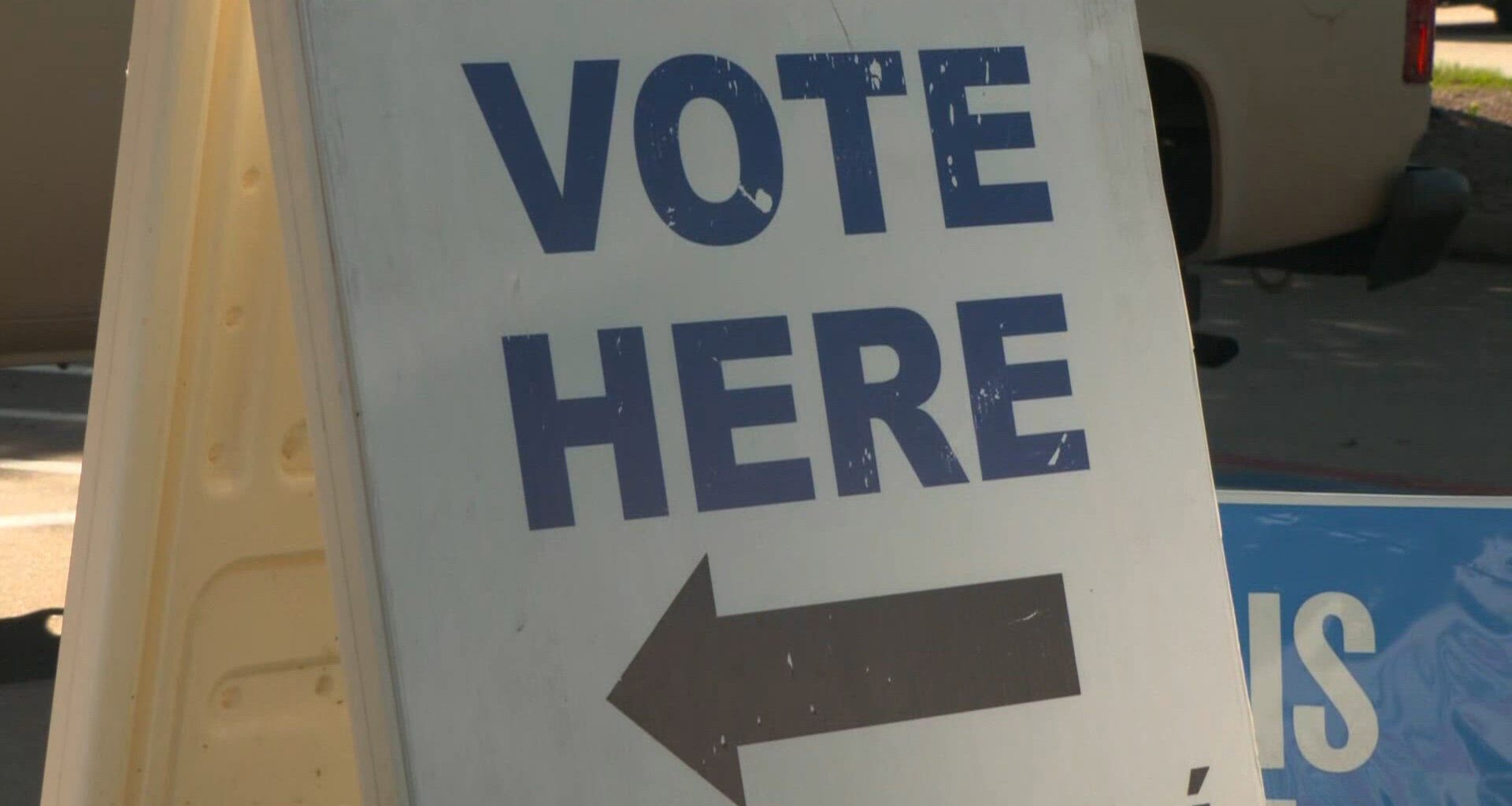
UT-Arlington loses its voting location as officials reduce midterm options, raising turnout and access concerns among students and residents.
TARRANT COUNTY, Texas — Tarrant County commissioners voted 3-2 to cut 92 polling sites for Election Day in the upcoming midterms, a decision that will eliminate the University of Texas at Arlington as a voting location and cut nearly 100 options compared with the 2022 midterms.
The vote, approved by the county’s Republican majority Tuesday, came after more than a month of debate and protests. Democrat Commissioners, and dozens of community members had objected that fewer polling places could depress voter turnout, especially in underserved communities, but the measure passed anyway.

This story continues below.
Under the newly approved list, UT-Arlington will no longer serve as a polling site. The campus was used as an early voting location in 2022 and a general election site in 2024. The nearest polling place for students now is the Tarrant County sub-courthouse in Arlington, about a mile away — a roughly 25-minute walk.
While that distance is a short drive for some, community members told commissioners Tuesday it could pose another barrier for people without reliable transportation.
Noah Rosillo, a UT-Arlington student, said he believes the decision was intentional.
“I wholeheartedly believe it was done purposely to take away a younger population vote because Texas being a red state is afraid of becoming a blue state,” Rosillo said.
Other students said the change would keep them from voting at all. Koby Dunne, another UT-Arlington student, said the extra distance isn’t worth it to him.
“It’s just not worth it for me,” Dunne said. “Like I said, if I’m here it’s going to happen.”
Not all students agreed that proximity was the deciding factor. Dawson Printz said he would rather spend more time researching candidates than worry about how close a polling site is.
“I would actually rather research things a little more thoroughly regardless of whether it’s close or not,” Printz said. “I would actually want to have intention to go out and know who I’m voting for.”
RELATED: Tarrant County votes to cut nearly 30% of polling sites after hours-long meeting ends in outburst
The county elections administrator told commissioners the new list of 224 polling locations was compiled using turnout data and information on facilities with confirmed availability, and that polling sites are on average less than two miles apart. Some residents questioned why the county would reduce polling locations as its population grows.
Some commissioners described the reduction as a cost-saving measure, and several people who spoke in favor of the plan Tuesday praised the county for fiscal responsibility. However, when asked what the projected savings would be county official said they were still gathering that.
Matthew Wilson, a political science professor at Southern Methodist University, said the fight over polling locations reflects a broader national pattern.
“This is something we’ve seen happen in some other locales around the state, too,” Wilson said. “There’s often a battle, sometimes for partisan reasons, sometimes for efficiency and cost reasons.”
Wilson said the dispute is unfolding against an already polarized backdrop.
“We know that Democrats and Republicans are deeply polarized, deeply hostile to each other, trying to use every trick in the book to gain an advantage over the other,” Wilson said. “That’s a phenomenon that’s playing out across the country. So, it’s not surprising that people who have suspicions about partisan motives in this case.”
But Wilson cautioned that the political calculus behind such changes isn’t as clear-cut as it once was.
“It’s not really clear anymore who easier or more difficult voting really benefits,” he said. “Once upon a time it was pretty clear that strict restrictions would help Republicans. Now, in a lot of cases, stricter voting regulations are kind of a wash. They don’t really confer a major advantage on one party or another.”
Wilson added that consolidating polling places could create longer lines, which he said may pose a bigger obstacle to voters than the distance to a polling site.
“Really, crowding is the more serious issue in terms of limiting voter opportunities than distance is,” he said.
He also said the elimination of some sites could, in some cases, motivate people to vote rather than discourage them.
The full effect of the reduced polling sites on turnout will not be clear until Election Day.