
Dallas city leaders are crediting the city’s mobile blood program with helping to save the life of a local police officer who was wounded last month during a patrol.
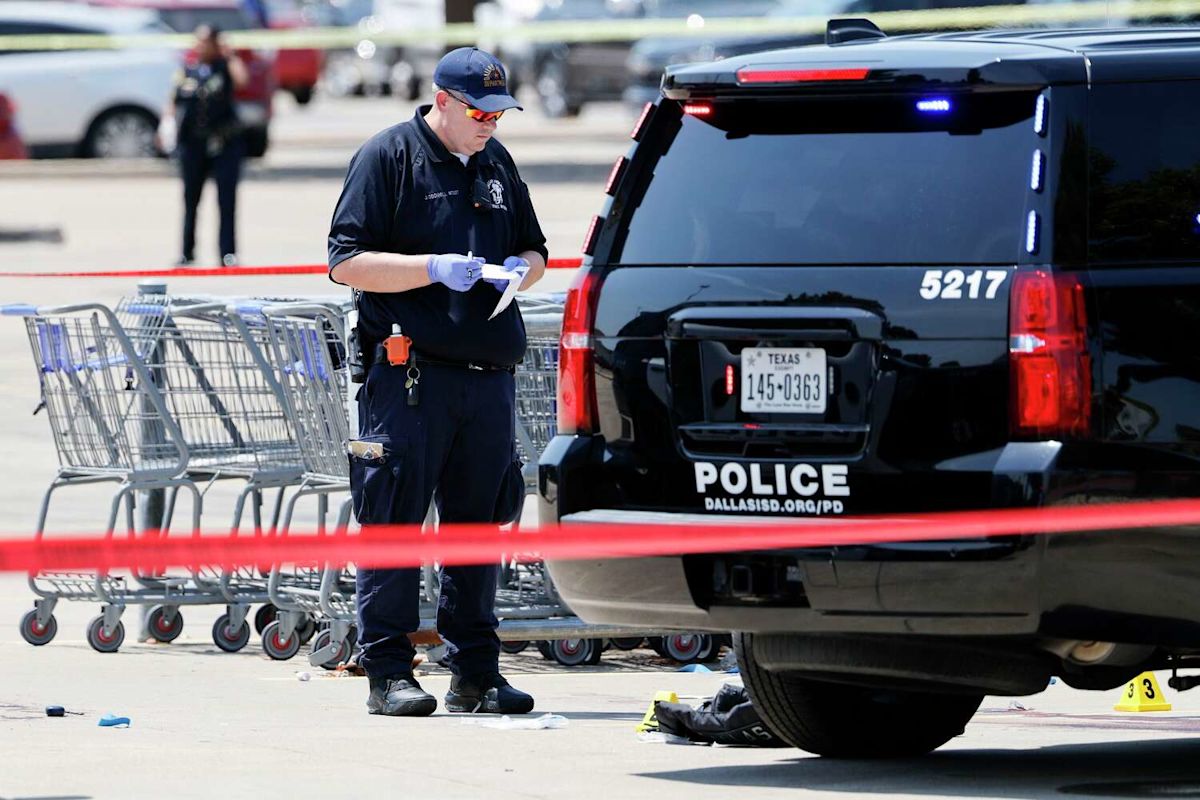
Justin Jones, a police officer with the Dallas Independent School District, was shot in the leg with his service weapon on August 6 after an altercation with a man in a Sam’s Club parking lot in northwest Dallas, according to an arrest warrant affidavit.
The resulting wound on Jones’ leg led to life-threatening blood loss, said City Manager Kim Bizor Tolbert at a Dallas City Council briefing on Wednesday. Tolbert said a pair of rapid interventions stabilized Jones’ condition before he was taken by ambulance to Parkland Health, where he underwent surgery.
Related: Thirty-four lives saved: One year later, Dallas Fire-Rescue blood program marks successes
The first was the decision by a fellow Dallas ISD police officer who responded to the scene to apply a tourniquet. The second was the transfusion of two pints of blood by Dallas Fire-Rescue paramedics, who last year began carrying blood with them on calls to hasten the replacement of blood in hemorrhaging patients.
The Dallas Morning News’ attempts to reach Jones for comment were unsuccessful.
Jones is among more than 75 patients who have benefited from the blood program, Tolbert said, since it was launched in February 2025. Since then, similar programs have debuted in Fort Worth and other cities across D-FW as a way to reduce fatalities.
Related: Paramedics in North Texas want to carry blood. Who’s going to pay for it?
“This is what innovation looks like,” Tolbert said at the city council meeting, “when the stakes could not be higher.”

Read “Bleeding Out,” a new series examining how gaps in the American health system fail to address preventable deaths. This series was produced in partnership with the San Antonio Express-News and with support from the USC Annenberg Center for Health Journalism. (michael-hogue)
The fire department’s blood program was created in response to a 2023 investigation by The News that found that paramedics across Texas and the rest of the country were unequipped to provide the best possible care to bleeding patients. Without prompt access to blood products, paramedics often watched helplessly as patients bled to death from injuries they could have otherwise survived. That resulted in thousands of potentially preventable deaths each year.
Medical research has found that mortality rates increase with each minute that rapidly bleeding patients wait for blood transfusions. It’s a particularly acute problem in rural areas, where ambulance response and transport times are longer, but similarly impacts patients in larger cities.
The News’ investigation highlighted an innovative program in San Antonio and the surrounding region that has equipped ambulances and medical helicopters with blood since 2018, a level of care that at the time remained out of reach for North Texas patients. The success of that program — which has saved the lives of victims of shootings and traffic collisions, along with those bleeding from medical causes — persuaded Texas legislators to allocate $10 million in funding toward the creation of a statewide blood program.
Related: She was bleeding to death. A new treatment on Dallas ambulances helped save her life
In addition to Jones, the Dallas blood program has also been lauded for saving the life of a local emergency medicine physician who was bleeding profusely from a postpartum hemorrhage. In the program’s first year, she was among 34 patients who survived after receiving prehospital transfusions.
“This is service first, now, in its literal sense,” Tolbert said at the city council meeting. “Having the right people, the right training and the right resources in places that save lives, right now.”
Subscribe
This article originally published at ‘Save lives, right now’: Dallas city leaders credit blood program with sparing life of school police officer.