
Texas’ history is littered with heinous crimes. Among them is the time a man tried to murder a tree.
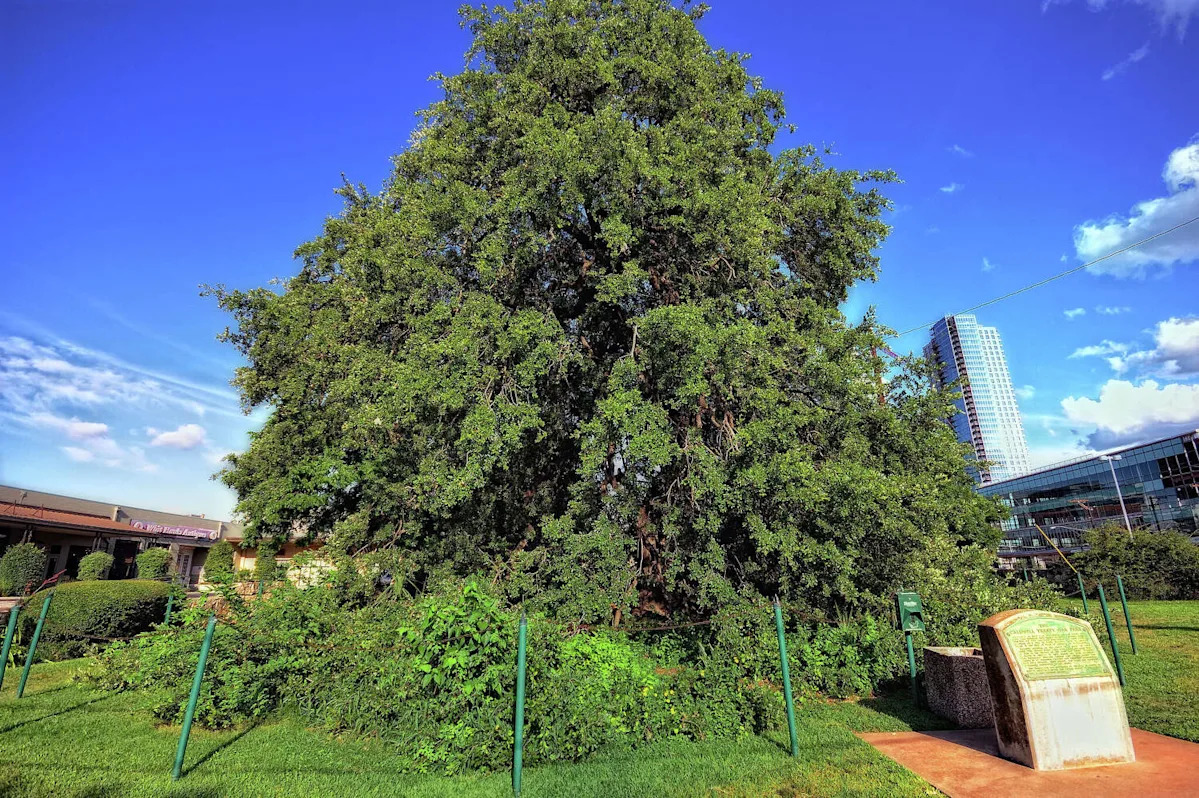
This isn’t just any tree. The Treaty Oak stands at 507 Baylor St. in Austin, Texas, just a few blocks north of the Colorado River in the oldest section of the city. The 600-year-old sentinel remains there, alive and well, despite one individual’s determined efforts to end its life decades ago.
Criminally Texas
Criminally Texas is a regular series from Chron detailing the true stories of some of the Lone Star State’s most notorious incidents, unsolved or otherwise.
It’s May 1989, Memorial Day weekend. Paula Abdul’s “Forever Your Girl” is atop the Billboard Hot 100. Hippie Hollow just hosted Splash Day with scores of LGBTQ+ bars participating. And Austinites started to notice something strange with the Treaty Oak, reporting to the city’s forester that it may be suffering from oak wilt, a condition that kills the veins of leaves. But it was something far more alarming … even sinister.
An unusual crime
“The veins were alive, but between the veins the leaves were dead,” Austin forester John Giedraitis told the Washington Post in June 1989. He was dumbfounded by the plant’s condition.
“I’ve talked to colleagues in forestry, and no one’s ever heard of anything like this before,” Giedraitis told the Post. “Why would someone maliciously poison such a tree?”
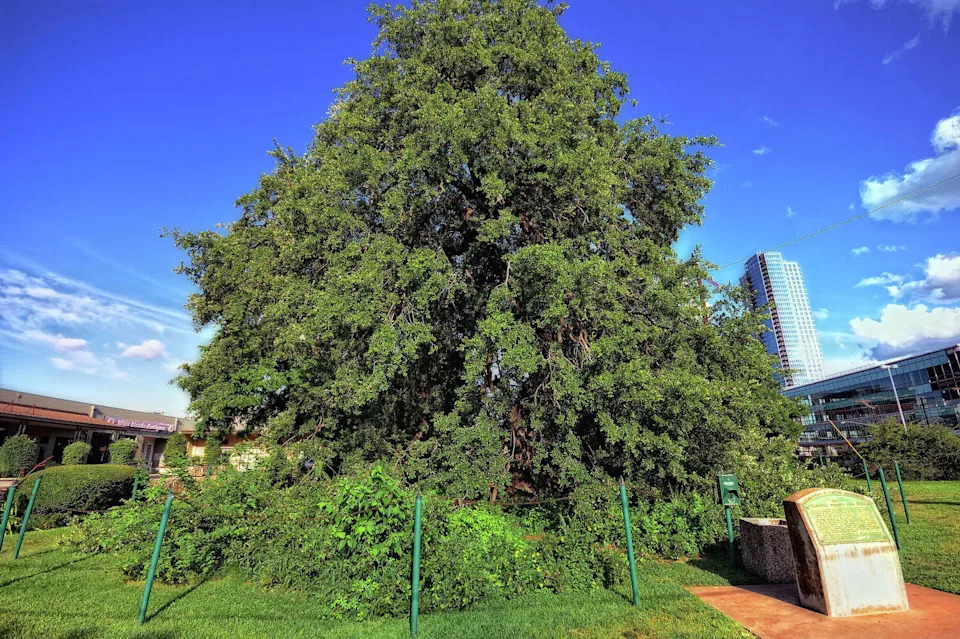
The Treaty Oak in Austin, Texas, one of the oldest trees in the Lone Star State’s capital city. (Mark Stevens / 500px/Getty Images/500px Unreleased)
To Giedraitis’ point, the Treaty Oak was such a tree. At the time of Giedraitis’ remarks, the oak had lived for approximately 600 years and boasted 120-foot-long branches. Its historical marker notes its birth being somewhere around 1390. The marker also mentions that it holds a special place in Texas history, as it’s reputed to be the place where Stephen F. Austin “signed the first boundary line agreement between Indians and whites,” or in other words, Native Americans and colonizers. It’s never been proven whether this actually happened, and historians over time have disputed this claim.
Nevertheless, the Treaty Oak is part of several other legends, according to the Texas A&M Forest Service. Its leaves may have been used by Native American maidens in brewing something called “love tea,” which, when sipped during a full moon, could’ve spelled a specific fate for the women and their lovers. The tree also was purportedly revered by Apache, Comanche and Tejas tribal members. Whatever is true about the Treaty Oak’s past, it’s clear it’s a very old tree, and one of the oldest remaining markers of Indigenous Texas.
In the 1920s, the longtime owner of the land on which the Treaty Oak stands sought to sell her property for $7,000, but Austinites were worried a developer would buy the lots and remove the tree. Therefore, in 1937 the city of Austin purchased the property for $11,000. And for more than 50 years it stood unperturbed. That is, until May 1989, when the mighty oak suddenly and alarmingly showed signs of rapid deterioration.
The Texas Department of Agriculture (TDA) launched an investigation into the tree’s condition and found a chemical residue in the soil at its base. The TDA extracted soil samples and sent them away for testing; meanwhile, crew members feverishly tried to remove the residue from around the tree by using activated charcoal and a microbe mixture.
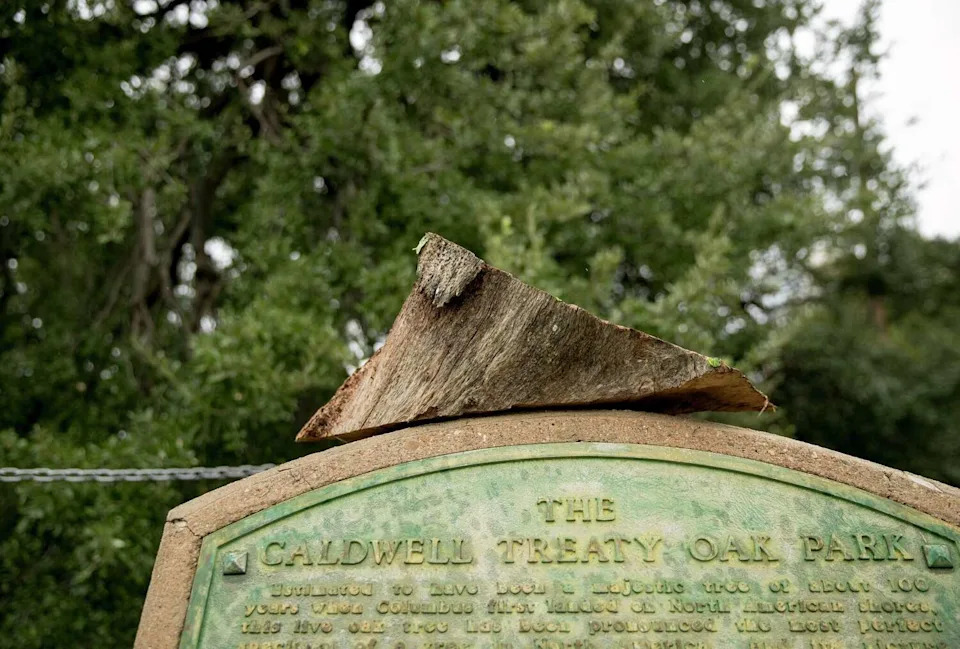
The historical marker of the Treaty Oak in Austin, Texas, a more than 500-year-old tree that was poisoned in 1989. (Jay Janner/Statesman.com)
In June, the soil sample returned and showed substantial amounts of the herbicide Velpar, made by E.I. du Pont de Nemours & Co.-also known as DuPont-in Laporte. In large doses, Giedraitis told the Post, Velpar could be incredibly harmful to a tree.
“Properly applied, it can be very useful,” Giedraitis said. “But misapplied, it’s a nasty chemical.”
Austin police began investigating how someone could get their hands on so much Velpar, digging enough into the herbicide trade that they got some leads. Sources pointed police to one person and a “revenge” motive. Revenge … on a tree?
The suspect
His name was Paul Cullen. He lived in California in the 1960s before coming to Texas and residing in Elroy, close to the current-day Circuit of the Americas. Cullen worked at a feed store, read books on the occult and apparently was a member of the Aryan Brotherhood. Those who say they knew Cullen told police he poisoned the tree as a spiritual ritual of sorts to rid him of the pain he felt over an unrequited love.
The Council of Tree and Landscape Appraisers had to determine the tree’s monetary value in order for authorities to charge Cullen. In the end, Cullen was charged with second-degree felony mischief. His lawyer told Texas Monthly in 1989 that this was all ridiculous.
“In my opinion, Paul is a political prisoner,” attorney Richard C. Jenkins told Texas Monthly. “People have really jumped off the deep end on this one. Usually this kind of treatment is reserved for murder victims. Rape victims! Child molestation victims! But a tree? Come on! I mean, it’s a tree.”
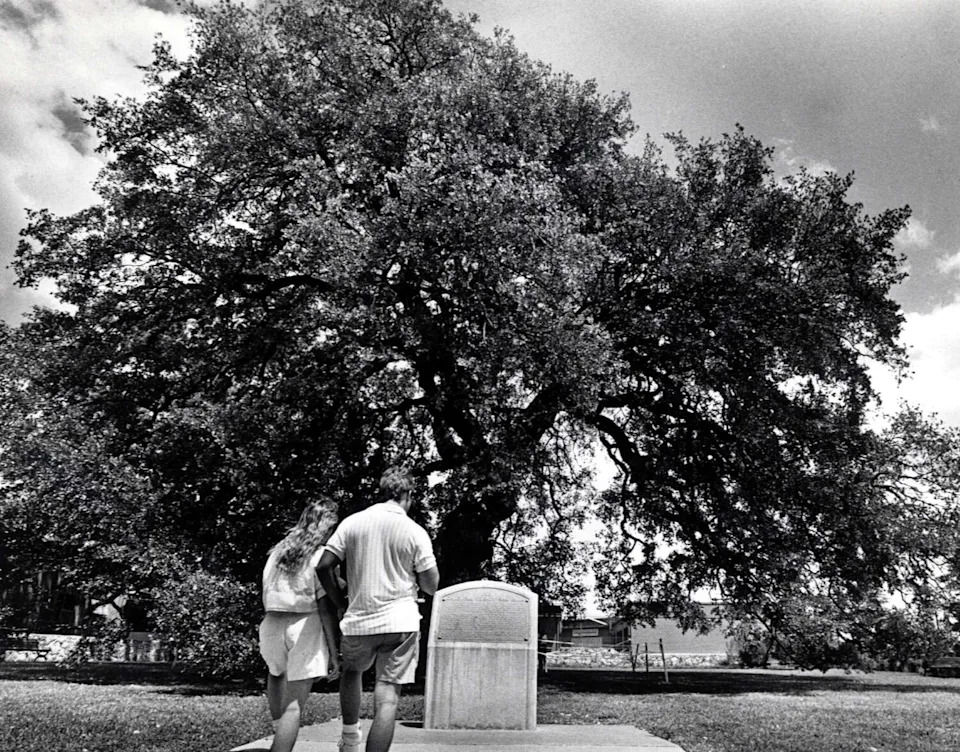
Folks pay respects to the Treaty Oak in Austin, Texas, after it had been poisoned in summer 1989. (File photo)
Unfortunately for Cullen, the Treaty Oak was and is more than just a tree. Hippies, environmentalists and all kinds of folks from across the country converged on the Treaty Oak in 1989, desperately attempting to save it simply by showing up. Folks tried to transfer their own energy to the tree, others felt the tree dying within them. Billionaire businessman Ross Perot, later a presidential candidate, wrote a blank check to cover whatever necessary to fund the tree’s rescue. DuPont, which made the herbicide that was killing the tree, sent over $10,000. The Treaty Oak became network news fodder; Giedraitis spoke to outlet after outlet as a live oak expert thrust into the national spotlight.
Somehow, in time, the Treaty Oak didn’t die. At least not completely. About 25 percent of the tree remains alive. As for Cullen, he died in 2001, a few years after ending a nine-year stint in prison. For a tree. But not just any tree: Such a tree.
Criminally Texas
About the series
A series detailing the true stories of some of the Lone Star State’s most notorious incidents, unsolved or otherwise.
The life of Dean Corll | Behind the Houston man who killed at least 29 boys
The mystery of Roberta Mumma | How did a Pennsylvania woman turn up dead 1,500 miles away?
The story of Maria Mendez and Janet Gregston | Two women lost and gone over one hazy month in Odessa
The double slaying of Karen and Frederick Cremean | How the grisly discovery unearthed Texas’ drug underbelly
The unsolved case of Tara Breckenridge | A car was found on Houston’s 610, and its driver has been gone for decades.
The murder of Joey Fischer | What led a mother to orchestrate the slaying of a teen boy
This article originally published at Why a Texas man attempted to kill a 600-year-old oak tree.