
SAN ANTONIO – A deadly fungus that spreads most often in healthcare settings has infected 459 people in Texas since mid-August, the third-highest total in the country, according to the Centers for Disease Control and Prevention.
The CDC has reported more than 4,500 cases of Candida auris nationwide since Aug. 15. Texas trails only California and Nevada in reported infections, and experts say the numbers are underreported.
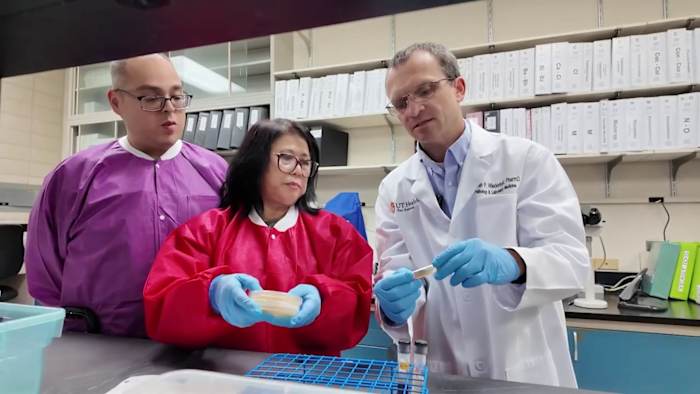
Researchers at UT Health San Antonio say the growing concern is not only the spread of Candida auris, but that it and other fungi are becoming resistant to common medications.
Candida auris can cause severe illness in vulnerable patients, especially those already sick or receiving care in hospitals or long-term care facilities.
“Once it gets into a setting like a hospital room, you can find it on bed rails, doorknobs, mobile medical equipment,” said Dr. Nathan Wiederhold, who runs the fungus testing lab at UT Health San Antonio. “And then if those aren’t cleaned appropriately, it then can spread to other rooms and to other patients.”
Dr. Wiederhold is also a professor in the Department of Pathology and Laboratory Medicine at UT Health San Antonio and the academic health center of the University of Texas at San Antonio.
Wiederhold has studied fungus for 20 years and said healthy people often do not get sick from Candida auris, but for those who do, the outcomes can be serious.
Depending on a patient’s overall health, between 30% and 60% of those with serious infection die.
Researchers are now hyper-focusing on a major issue with this: antifungal resistance, which can make infections harder to treat.
“One of the major antifungals that’s used throughout the world called fluconazole, about 90% of the isolates are resistant to that drug,” Wiederhold said.
That resistance can develop when patients are given the wrong medication or incorrect doses, he said.
Wiederhold said curbing the problem will require more awareness among clinicians, better access to testing, more clinical trials and the development of new drugs.
His team is part of that effort. Wiederhold and a group of researchers across the globe recently published research about the threat of resistance and the need for new treatment development.
In the meantime, Wiederhold said basic prevention remains critical in healthcare settings.
Patients, visitors and workers should wash their hands often with soap and water for 20 seconds. He said alcohol-based hand sanitizer can also help improve hand hygiene.
Researchers at UT Health San Antonio will continue studying antifungal resistance as health officials track the spread of Candida auris in Texas and across the country.
Read also:
Copyright 2026 by KSAT – All rights reserved.