
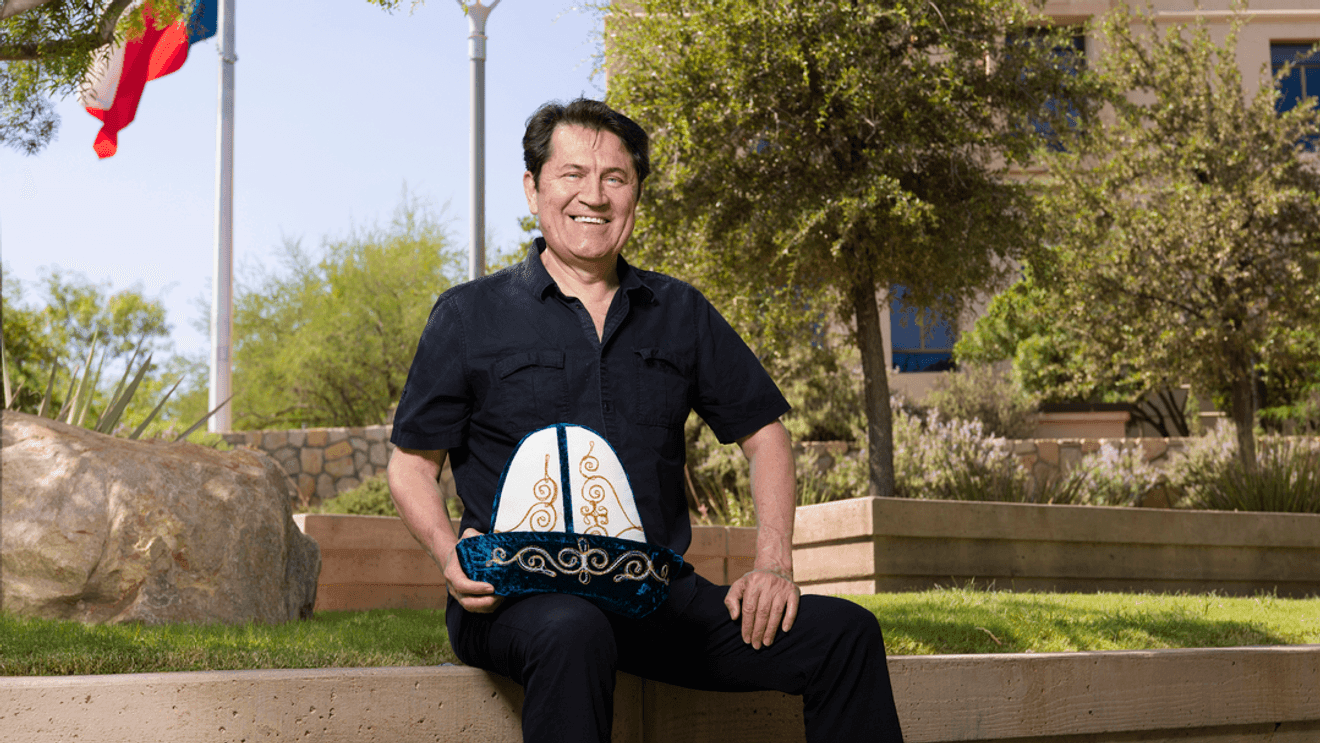
EL PASO, TEXAS (KFOX14/CBS4) — A University of Texas at El Paso professor has been selected for a Fulbright Specialist engagement in Kazakhstan, where he plans to lead a seminar focused on STEM education and the responsible use of artificial intelligence.
Mourat Tchoshanov, Ph.D., a professor in UTEP’s College of Education, will travel to Kazakhstan in November 2026 to conduct a two-week seminar at the Eurasian Humanities Institute in Astana, according to the university.
The Fulbright Specialist Program sends U.S. educators and professionals to serve as expert consultants to academic institutions abroad and is part of a program with the U.S. Department of State.
According to the program, participants engage in two- to six-week, project-based exchanges at institutions across the world.
Tchoshanov, a two-time Fulbright Scholar, will partner with higher education institutions in Kazakhstan to share his scientific expertise and foster international research collaboration. His project is titled “Crossing boundaries with STEM Education in the era of AI.”
“During the seminar, I plan to help the faculty at the host institution build expertise in digital STEM education with the effective and responsible use of generative AI. This will involve such aspects as designing effective digital learning environments, constructing digital assessments, and, overall, assisting local faculty in systemic implementation of digital technologies,” Tchoshanov said.
The project builds on Tchoshanov’s previous Fulbright experience with Kazakhstan in 2023-24. During that visit, he went to the Eurasian Humanities Institute to meet with administrators, faculty and students and found interest in continuing collaboration and strengthening the partnership with UTEP, the release said.
According to the university, Tchoshanov’s latest project is aimed at preparing educators to effectively use digital tools and empowering teachers to engineer effective learning environments, while keeping teaching grounded in human-centered design.
“The core claim of human-centered design is that no tool, no matter how intelligent it is, will ever replace a human. So, what should never change about teaching is the presence of a human in this process. Remember the first stage in human-centered design – empathy. This critical socio-emotional component is irreplaceable in teaching,” Tchoshanov said. “Moreover, humans should control tools, not the other way around.”
Tchoshanov added, “Our collective progress through this change depends on how productively we adapt our thinking to the new situation.”
RECOMMENDED: UTEP convenes Built Here Summit, launching next phase of El Paso AI education partnership
Sign up to receive the top interesting stories from in and around our community once daily in your inbox.