
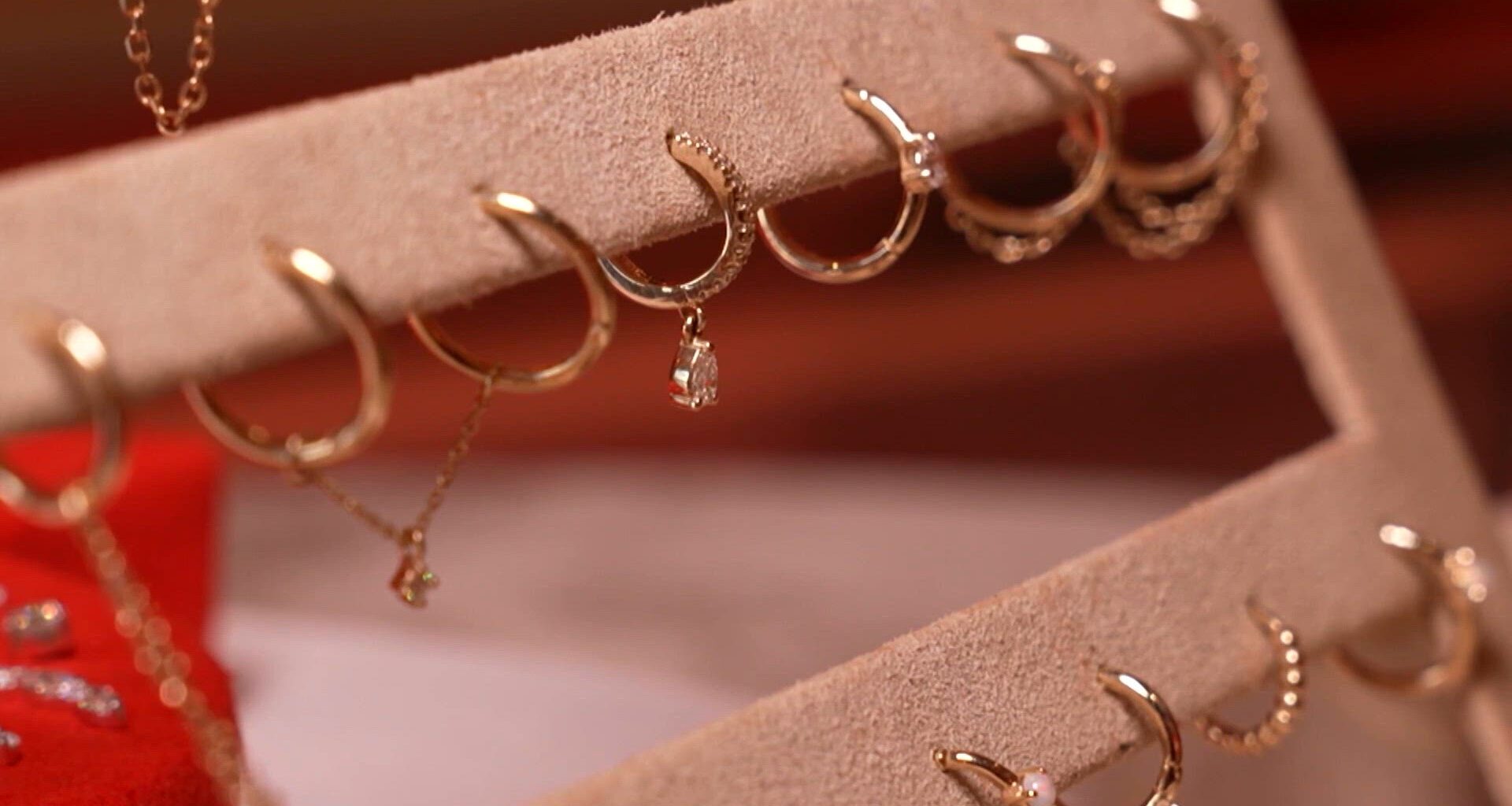
Gold prices have climbed dramatically. One Dallas jeweler says lab-grown diamonds are helping offset some of those rising costs for customers.
DALLAS — If you’ve shopped for fine jewelry lately, you may have noticed the price tag getting a little heavier.
One of the biggest reasons is gold.
Gold prices have surged over the past two years, increasing the cost of one of the most important materials jewelers use to make rings, necklaces, bracelets and other pieces.

This story continues below.
More in Shopping
Lab-grown diamonds become more popular as the price of gold skyrockets
For Dallas jewelry store Wildlike, that has meant looking for savings elsewhere — and now, the business is turning to lab-grown diamonds.
“We’re really excited about this launch because prices as a result are a lot lower,” Wildlike owner Alysa Teichman said.
Teichman, who is celebrating five years of owning Wildlike, recently added lab-grown diamonds to the store’s offerings. She said the decision gives customers another option at a time when many household expenses — including jewelry — have become more expensive.
“Life is really expensive,” Teichman said. “So we kind of feel like for this category, diamonds don’t necessarily have to be.”
Despite the name, a lab-grown diamond isn’t an imitation diamond like cubic zirconia.
Lab-grown diamonds are diamonds.
According to the Gemological Institute of America, laboratory-grown diamonds have essentially the same chemical, physical and optical properties as natural diamonds. The primary difference is their origin: Natural diamonds form deep within the Earth over millions or billions of years, while lab-grown diamonds are created using technology that replicates the conditions under which diamonds form.
That difference can be difficult — or impossible — for a consumer to spot just by looking at the stones.
“To the naked eye, you cannot tell a difference,” Teichman said.
GIA similarly notes that laboratory-grown and natural diamonds can be indistinguishable by eye, although trained gemologists and specialized equipment can identify differences in their growth characteristics.
But for shoppers, however, there can be a much more noticeable difference at the register. The price gap between natural and lab-grown diamonds has become substantial.
J.P. Morgan data cited by the Financial Times showed that in May 2026, the average retail price of a one-carat round lab-grown diamond was about $768. A comparable natural diamond averaged about $4,553. That means the lab-grown stone cost roughly 83% less.
The exact price of any diamond varies based on factors including its cut, color, clarity, carat weight and retailer, so consumers shouldn’t expect every lab-grown diamond to be 83% cheaper than its natural counterpart.
At Wildlike, Teichman said switching some jewelry to lab-grown diamonds allowed the store to substantially reduce prices on certain pieces.
“In some cases, our prices went down by over 30% when we repriced them with lab-grown diamonds,” she said.
For shoppers, paying less for the stone can also create more flexibility within a jewelry budget. Someone might choose a larger diamond, for example, or put more of their budget toward the gold setting or design.
That has become especially important as the price of gold moves in the opposite direction.
“All the jewelry that we carry is solid 14-karat gold,” Teichman said. But that means the business can’t avoid the impact of higher gold prices.
In late August 2024, spot gold traded at roughly $2,500 per ounce. Two years later, gold has been trading well above $4,000 an ounce. It reached more than $4,600 per ounce in late August 2026, including a peak of about $4,696 on Aug. 25, according to Reuters.
Prices have been volatile, though. By Aug. 31, spot gold had fallen to about $4,429 per ounce amid changing expectations about Federal Reserve interest rates. Even after that decline, Reuters reported gold was on track for a 9.6% gain in August alone.
For jewelers, higher gold prices can leave a handful of choices: raise retail prices, absorb some of the additional cost or find savings in other parts of the jewelry.
Wildlike — which specializes in piercings — is trying the latter.
Price isn’t the only consideration when choosing between a natural and lab-grown diamond.
Lab-grown diamonds generally have a much different resale market than natural diamonds, particularly as the cost of producing new lab-grown stones has fallen. Consumers buying jewelry as an investment or with future resale in mind should consider that distinction.
For many shoppers, though, jewelry isn’t purchased with the intention of eventually selling it.
That means the decision may ultimately come down to what an individual customer values most: the natural origin and potential resale characteristics of a mined diamond, or the ability to get more diamond for the money with a lab-grown stone.
For Teichman, offering both is about giving customers more choices.
“Accessibility really is important to us,” she said.
And with the price of one of jewelry’s biggest components — gold — increasingly difficult for retailers to control, the declining cost of lab-grown diamonds gives jewelers another place to find savings. For customers, that could mean a lower price tag, a larger stone or simply more room in the budget to find a piece that feels like them.