
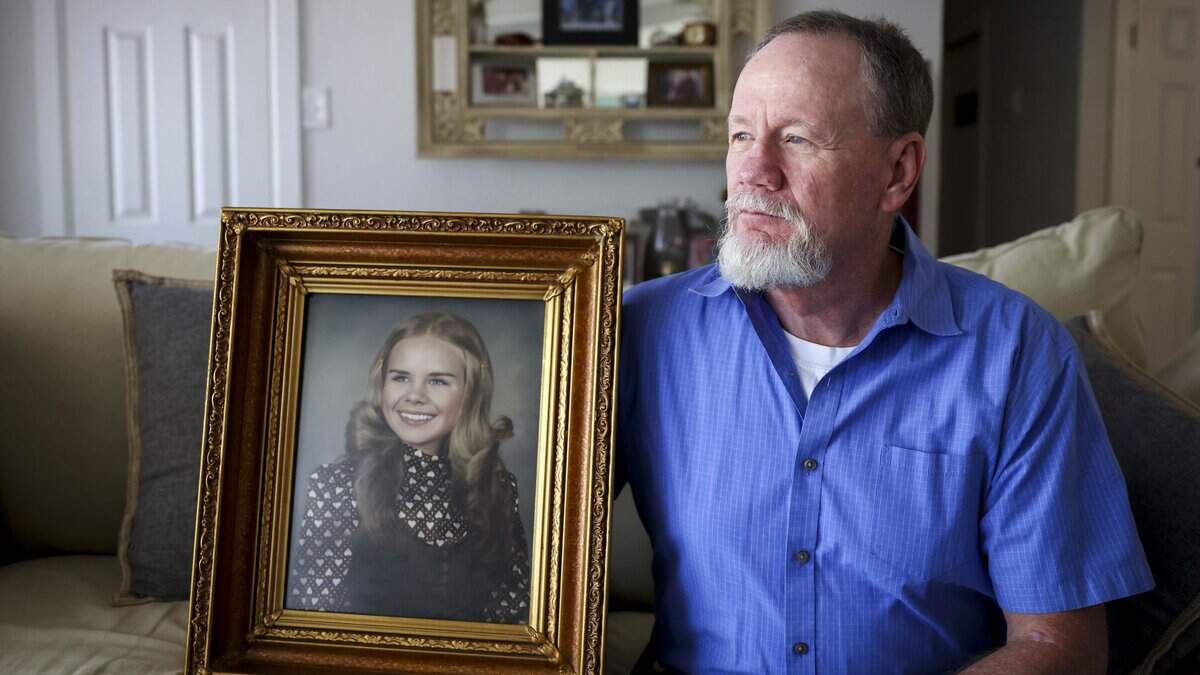
Carla Walker was murdered in 1974, but a bill expected to pass the U.S. House of Representatives and become law later this year will carry on the Fort Worth-area teen’s legacy.
On a Tuesday morning in early July, Jim Walker sat near a framed photo of his older sister and shared a message for other cold case families.
“Don’t give up, don’t lose faith,” he said. “This bill is going to make a difference.”
The Carla Walker Act would make a total of about $40 million in federal grants available for forensic genetic genealogy testing nationwide. This advanced DNA testing helped bring Carla’s murderer to justice in 2021. Jim Walker believes increased access to FGG technology will provide answers for other families as well.
“I don’t think anybody’s fooling themselves saying, ‘Hey, we’re going to get everybody, all these (suspects),” he told the Star-Telegram. “No, we’re not, but what we are going to do is get a lot of them, and as we prove this technology to be absolutely useful and viable, funding will increase.”
Who was Carla Walker?
Today, Jim Walker owns the same Benbrook home where his family lived at the time of Carla’s murder.
“The last time I saw my sister alive, (she) was standing in front of this fireplace to my left,” Walker recalls.
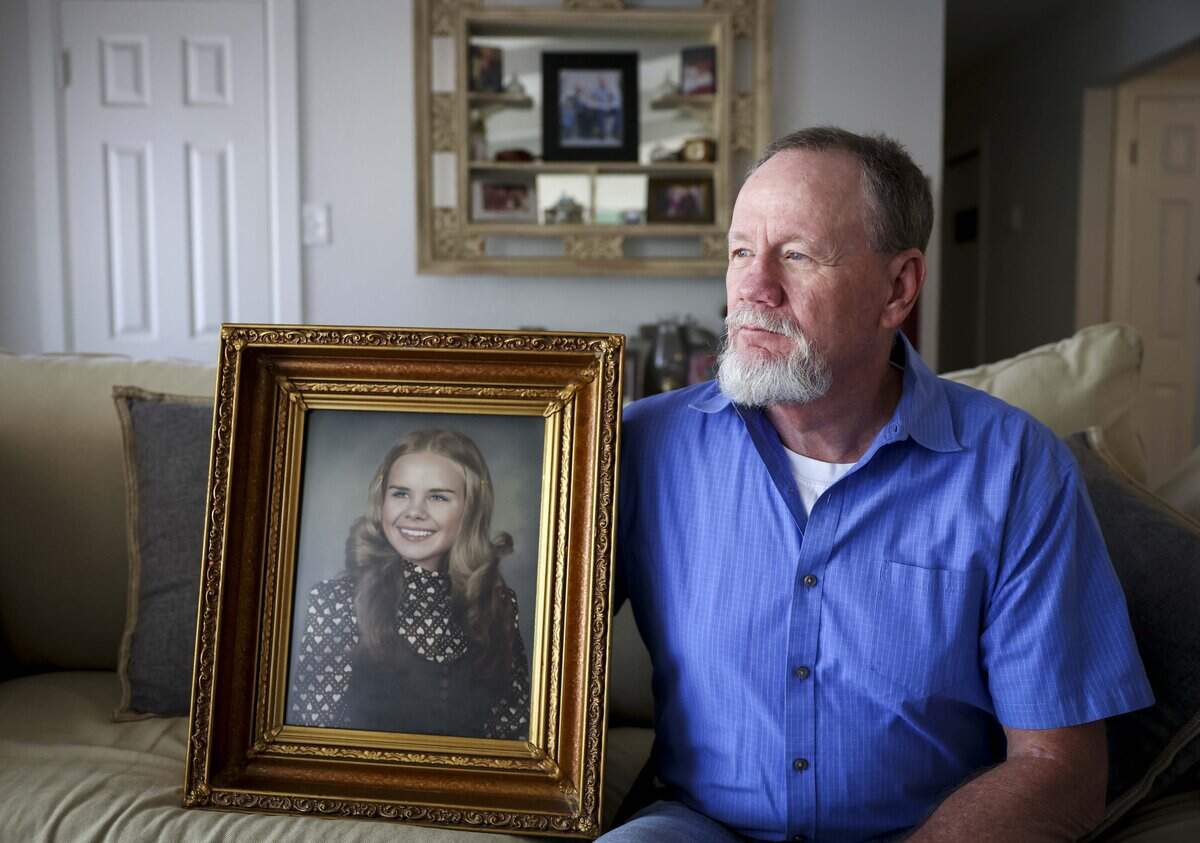 Jim Walker, brother of Fort Worth cold case victim Carla Walker, advocates for the Carla Walker Act, which would establish funding for the use of Forensic Genetic Genealogy DNA analysis for unsolved crimes and to identify human remains, on Tuesday, July 7, 2026 in Fort Worth. Carla Walker’s 1974 murder remained a cold case until 2020, when DNA evidence recovered from her clothing was tested using the technology. Abigail Dollins Fort Worth Star-Telegram
It was Feb. 16, 1974. The Western Hills High School cheerleader was preparing to attend the school’s Valentine’s Day dance with her boyfriend, football team quarterback Rodney McCoy. Hours later, as the couple sat in a car outside a west Fort Worth bowling alley, an unknown man yanked open the passenger door. He pistol-whipped McCoy and dragged 17-year-old Carla away.
On Feb. 20, the teen’s body was found in a culvert near Benbrook Lake. Police said she’d been raped and strangled.
Jim Walker was 12 at the time. His parents hardly ever talked about what happened to Carla, but Walker still remembers the pain it caused his family.
“When you lose a loved one to a murder, like my sister’s, it’s absolutely a feeling of total loss,” he said. “You have no control over what had happened. There’s no good resolution.”
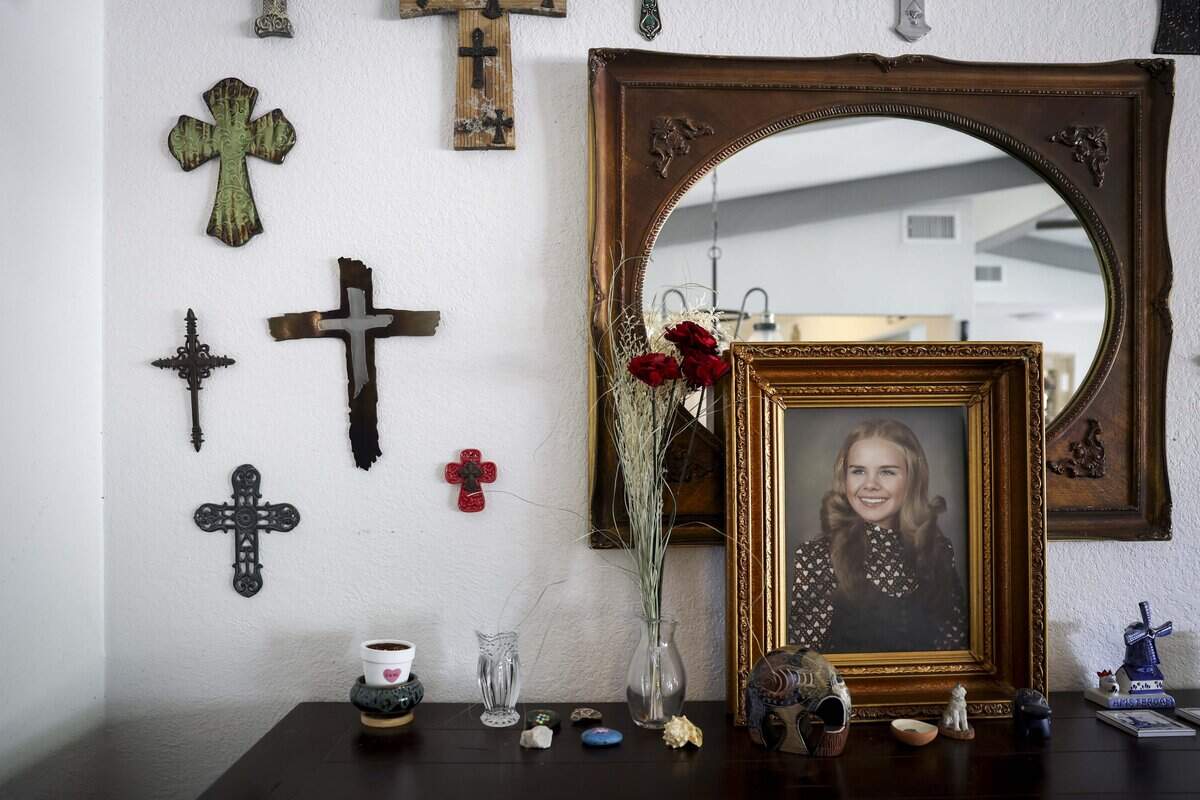 A photo of Carla Walker honors her memory at the home of her brother, Jim Walker, on Tuesday, July 7, 2026 in Fort Worth. Jim Walker is advocating for the Carla Walker Act, which establishes funding for the use of Forensic Genetic Genealogy DNA analysis to solve crimes and identify human remains. Abigail Dollins Fort Worth Star-Telegram
Walker carried his anger for decades. He prepared for a career in law enforcement, hoping for a chance to investigate Carla’s case. But failing eyesight due to a genetic disorder forced him into another line of work.
By 2017, he had reached a crisis. His eyesight was almost gone, his parents and two older brothers had died, and there was no movement on his sister’s case. He said everything changed when he got into fellowship with God and started to realize how much unforgiveness he had in his heart.
He still remembers the day he told God he didn’t want “an eye for an eye” anymore. According to Walker, it felt like a ton of weight had just come off his back and shoulders.
“When that started happening in my life in 2017, everything started moving,” Walker said. “And there’s no way it’s just a coincidence.”
In July 2017, Carla’s story was the first episode on Vincent Strange’s “Gone Cold — Texas True Crime” podcast. The coverage brought the case back into the public eye, and in 2019, Fort Worth police revisited the investigation.
A major breakthrough occurred when Paul Holes, a retired investigator who helped identify the Golden State Killer, featured Carla’s case on his show, “The DNA of Murder.” Holes reviewed the case files, talked to Fort Worth homicide detectives and interviewed McCoy. The show also agreed to pay for DNA testing.
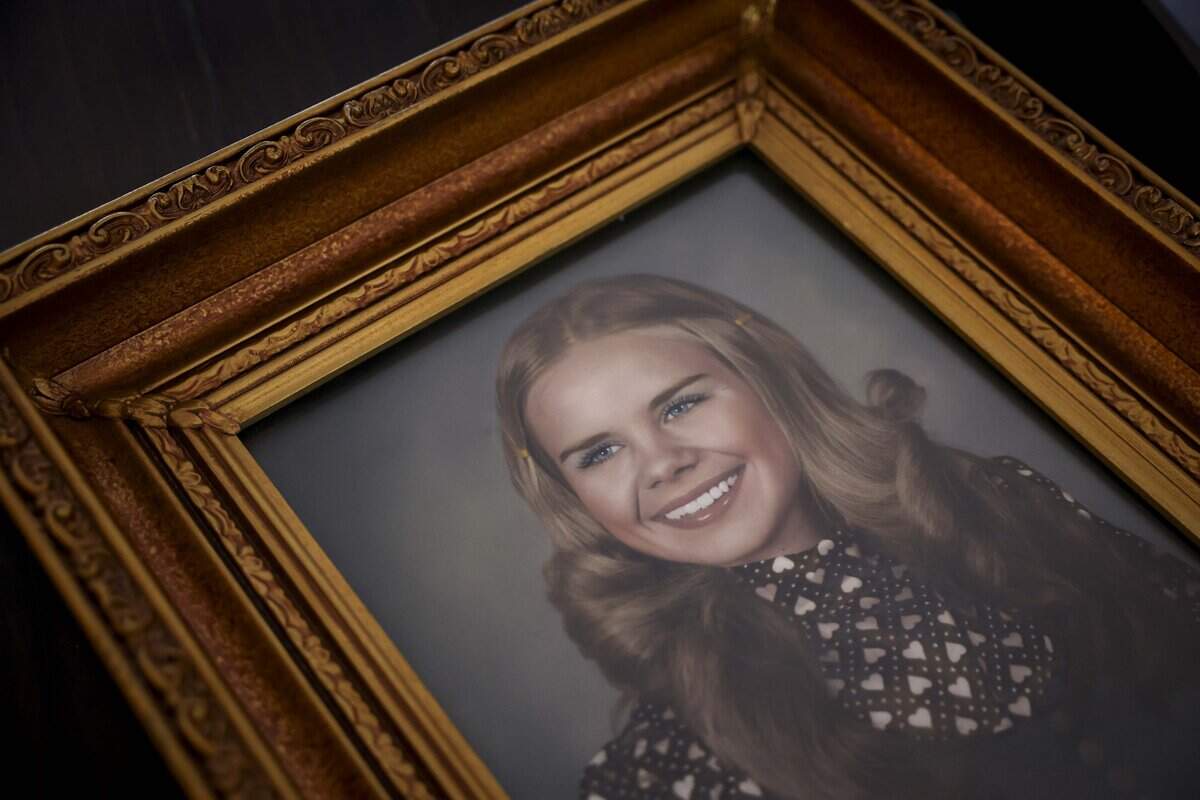 A photo of Carla Walker honors her memory at the home of her brother, Jim Walker, on Tuesday, July 7, 2026 in Fort Worth. Jim Walker is advocating for the Carla Walker Act, which would establish funding for the use of Forensic Genetic Genealogy DNA analysis to solve crimes and identify human remains. Abigail Dollins Fort Worth Star-Telegram
A forensic laboratory in California identified two potential DNA sources on Carla’s clothing. One of the spots yielded a full DNA profile, but there was no match in CODIS, law enforcement’s national database of offenders. The rest of the sample was sent to a lab that had the technology to create a genealogical profile of the suspect.
Unfortunately, the lab consumed the entire sample but wasn’t able to get a genetic profile of the killer, Holes recounted in 2025 on the true-crime podcast “Small Town Dicks.” That’s when he recommended that Fort Worth police send the second, inferior sample to Texas-based forensic laboratory Othram.
“Within months … the words we hadn’t heard for over 40 plus years, we heard, ‘Hey, we know who did it,’” Walker said.
Glen McCurley was arrested in September 2020 and charged with Carla’s murder. The then 77-year-old husband and father had lived in Fort Worth since 1972. Other than stealing a car in his late teens, McCurley had appeared to be an upstanding citizen.
McCurley changed his plea to guilty on the third day of his trial in August 2021. He was sentenced to life in prison and died from natural causes in 2023.
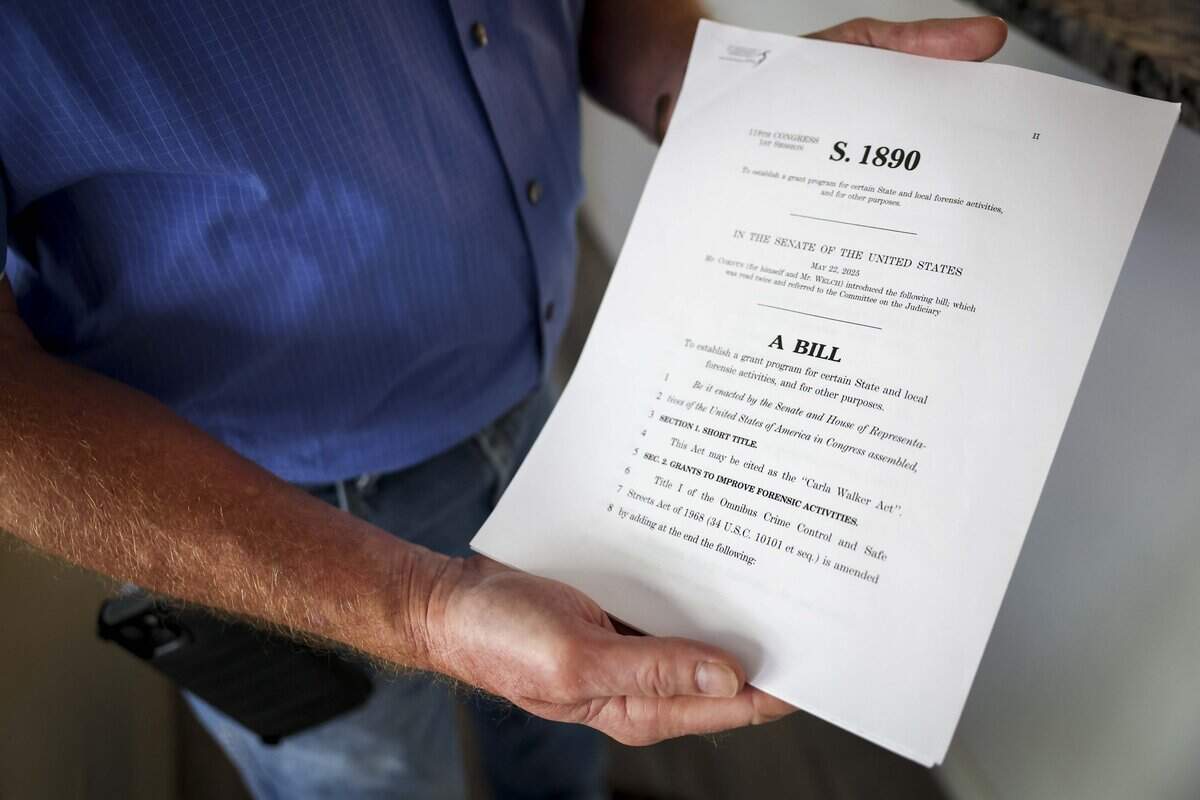 Jim Walker, brother of Fort Worth cold case victim Carla Walker, holds a copy of the Carla Walker Act on Tuesday, July 7, 2026. The legislation would establish funding for the use of Forensic Genetic Genealogy DNA analysis to solve crimes and identify human remains. Abigail Dollins Fort Worth Star-Telegram
Walker said he was waiting outside the courtroom after learning that McCurley had confessed, and he had a strong sense that God was speaking to him.
“I had such a powerful impression on my spirit that said, ‘To whom much is given, much is expected,’ and at that very moment I said, ‘Well, my work’s not done, and I want to help other families,’” Walker remembers.
Thaw The Cold Cases
On a rainy afternoon in mid-April 2026, Walker gathered with friends and family members of cold case victims. Dozens of people lined the bleachers at the Charles H. Haws Athletic Center on Congress Street, right down the road from the Fort Worth Police Department’s Homicide Unit.
Many of the attendees wore T-shirts and carried signs with photos of missing and murdered loved ones. More photos, including those of Fort Worth’s Missing Trio, Cheryl Springfield, June Ward and Elsha Rivera graced the memorial tables and posters by the entrance.
The group had planned to carry their signs from the athletic center to the Tarrant County Courthouse for the Thaw The Cold Cases fourth annual walk, but the weather kept everyone indoors. Walker led the group in prayer and offered words of encouragement.
“Lean on each other,” he said. “Don’t go off into the darkness and feel like nobody cares.”
Thaw The Cold Cases isn’t connected with the Fort Worth Police Department’s Cold Case Unit, but the group aims to raise awareness about the city’s nearly 1,000 unsolved homicides and call for more resources to investigate them. The yearly walk also allows families and friends of victims to come together and realize they aren’t alone.
Sheryl Buchanan talked about the search for her brother, 21-year-old Thurlow Buchanan, who vanished from Fort Worth on Nov. 9, 1987. His new Nissan truck was later found in Houston, but his family doesn’t think he drove it there.
“We have no idea what happened to him,” Sheryl Buchanan said. “No one has heard from him.”
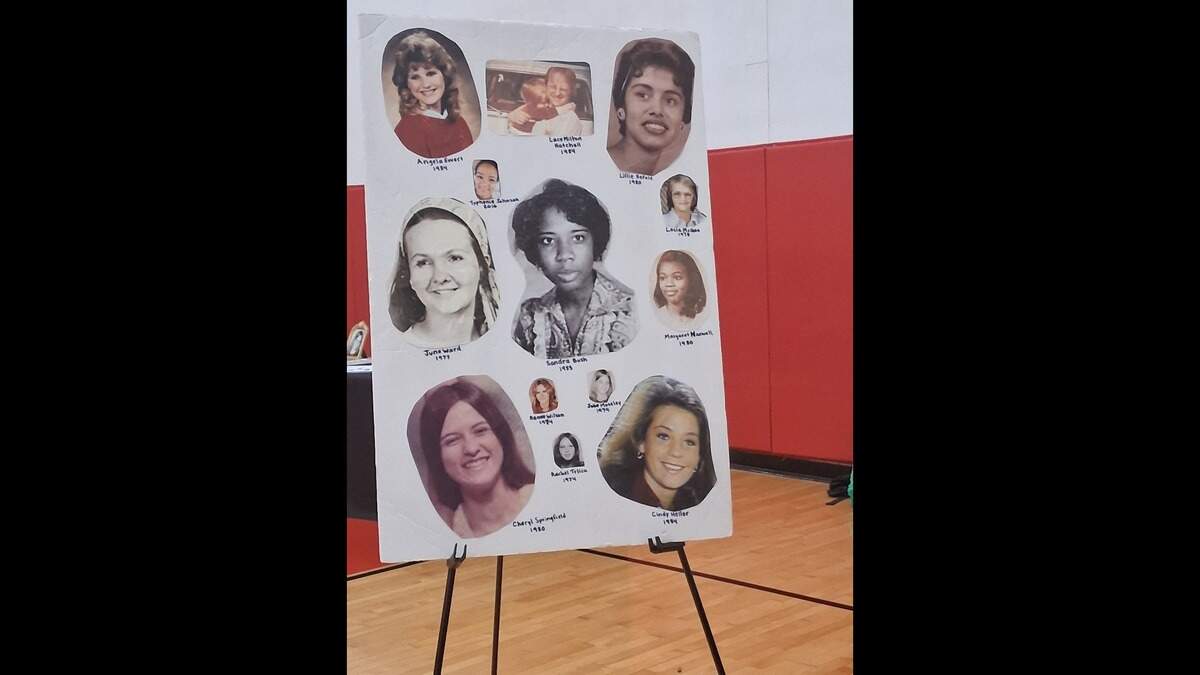 Photos of murdered and missing cold case victims are displayed at the fourth annual Thaw The Cold Cases awareness event on Saturday, April 18, 2026. Friends and family members gathered at the Charles H. Haws Athletic Center near downtown Fort Worth to share about their loved ones. Cristina Ramos FORT WORTH STAR-TELEGRAM
Jana Gibson, a family friend, spoke about 25-year-old Typhenie Johnson, who went missing while talking with her ex-boyfriend the night of Oct. 10, 2016. Johnson’s loved ones refuse to stop looking for her.
“We’re still doing searches,” Gibson said.
Paula Myers Hamilton lost two siblings to murder — brother Robert Myers Jr. on Nov. 13, 1987, and sister Denise Myers Hunt on Dec. 3, 2000.
“This has been taxing on our family for years and years,” Myers Hamilton told the group. “My sister was the sunshine of our family.”
Robert Jacobs, a classmate of Angela Ewert at Eastern Hills High School, said she was one of the nicest people he’d ever met. The 21-year-old disappeared on Dec. 10, 1984, shortly after leaving her fiancé’s house in the Wedgwood area. Her remains were found in 1993.
“Keep bugging these detectives,” Jacobs said. “Keep bugging everybody.”
The mother of Calvin Camacho, a 23-year-old who was fatally shot near Arlington’s Sam Houston High School on March 8, 2016, said she’s praying the people who killed her only son would come forward.
“I’m dying inside,” she said.
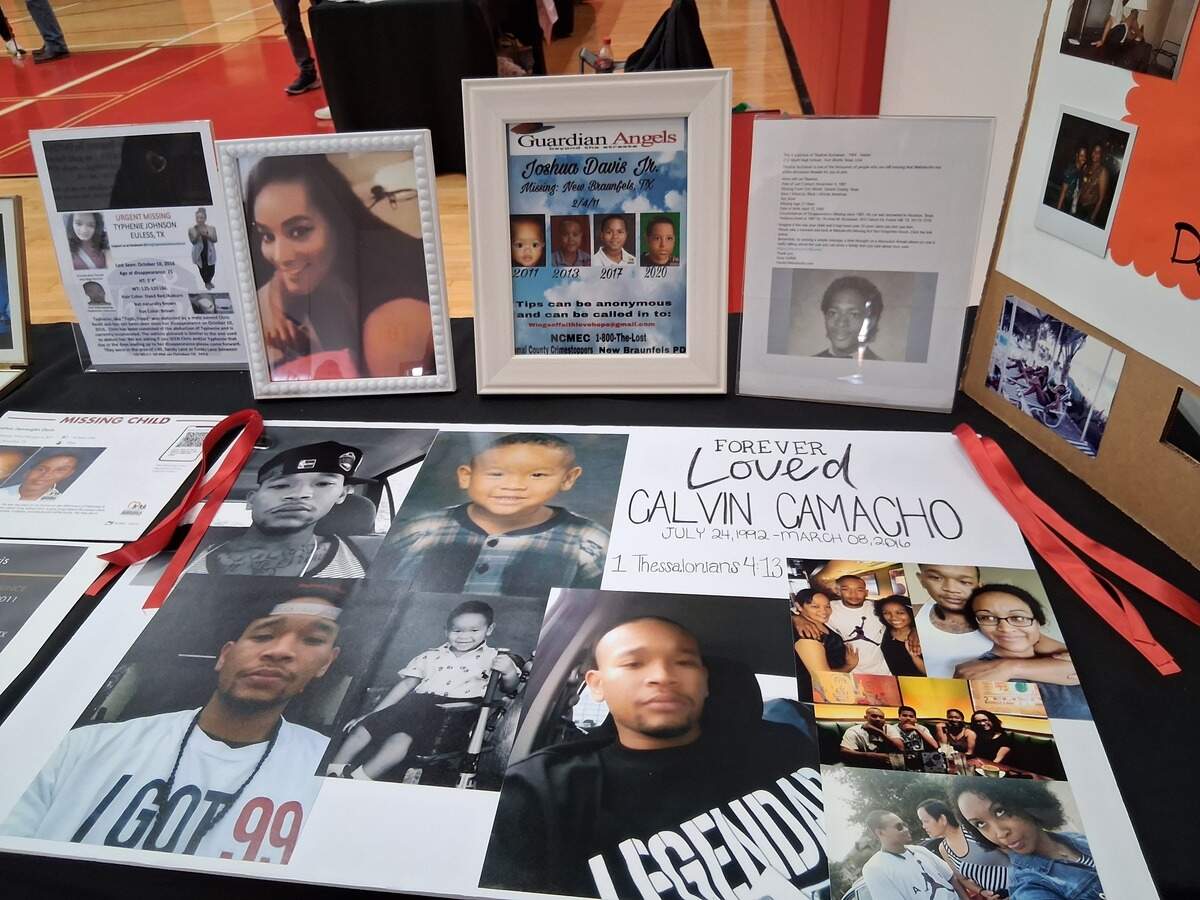 The family of Calvin Camacho says they are still hoping and praying that the person who fatally shot the 23-year-old in Arlington on March 8, 2016, will come forward. Photos of Camacho and other missing and murdered cold case victims are displayed at the fourth annual Thaw The Cold Cases awareness event on April 18, 2026, at the Charles H. Haws Athletic Center near downtown Fort Worth. Cristina Ramos FORT WORTH STAR-TELEGRAM
The family of Gloria Choice, a 57-year-old mother and grandmother who was found beaten to death in a vacant apartment in the Woodhaven area on Dec. 9, 2005, still hopes to see her murderer brought to justice.
“We just really want answers,” Choice’s niece Tomeka Hillery told the Star-Telegram.
Back at the table in his home during the July 7 interview, Walker says these families are in a club none of them wanted to join.
“There is no closure,” Walker said. “The … seat at the table is always empty: Christmas, Thanksgiving, Easter, birthdays — it’s always empty. But at least you know you didn’t go into the dark without a fight, and you know, that’s what I encourage people: fight, be the voice for your loved ones.”
Forensic genetic genealogy success
Walker said a lot of things are coming together right now that he’s optimistic will lead to “an explosion of activity” in cold cases being solved. A major factor is the forensic genetic genealogy testing that the Carla Walker Act will fund.
Traditional DNA testing works if the suspect’s DNA is already in CODIS, but DNA from first-time perpetrators wouldn’t show a match in the system. But thanks to the advent of consumer genetic testing, more than 20% of the general population has submitted DNA samples to private companies. When DNA collected from crime scenes is compared to these samples, investigators can build a family tree of the perpetrator.
From there, experts say it’s not difficult to determine who in that family would’ve known the victim or had access to the murder weapon. Once investigators narrow down the options, they obtain a DNA warrant, collect the suspect’s DNA and compare it to what was found at the crime scene to see if it’s a match.
Earlier this year, FGG testing led to the arrest of Larry Brown, a suspect in a 1981 cold case killing out of Grapevine. On June 29, a Tarrant County grand jury indicted Brown on a murder charge in the killing of flight attendant Beverly Bruneau.
FGG is also used to identify human remains. In July, the Tarrant County Medical Examiner’s Office announced it had identified the remains of a homicide victim who was found in a Fort Worth park in 1986.
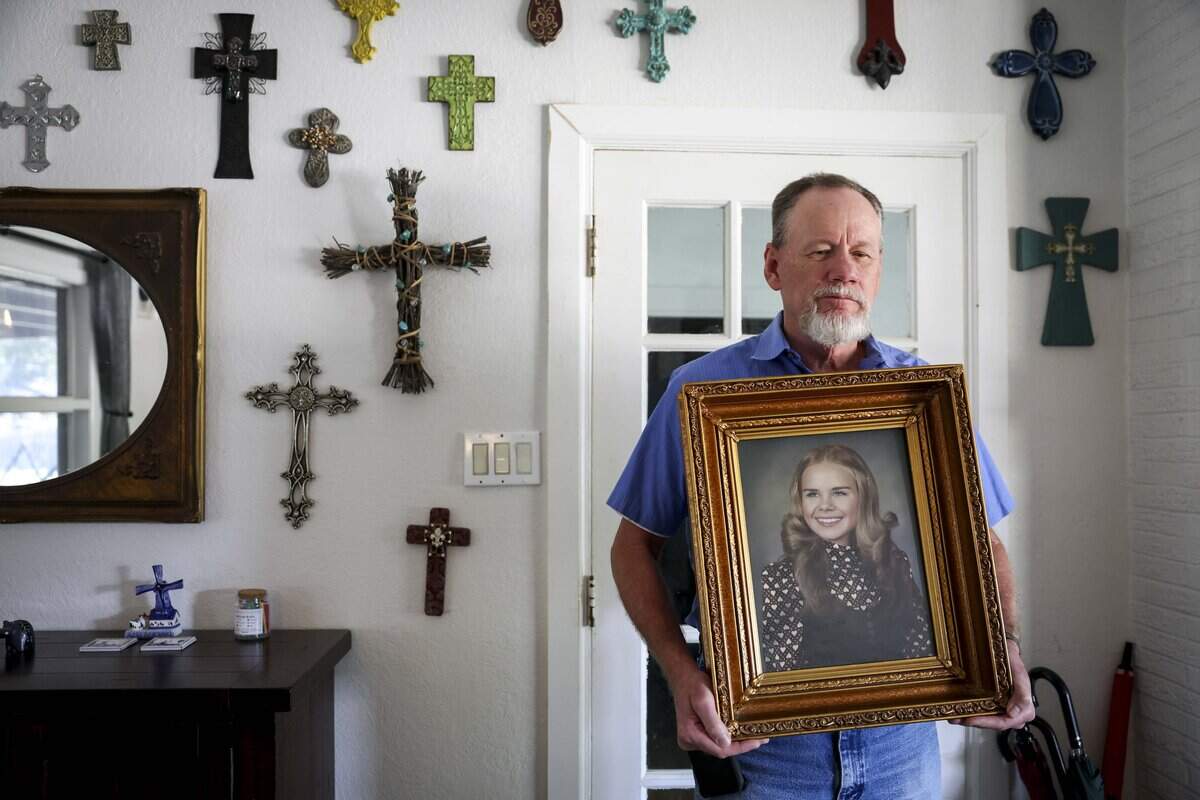 Jim Walker, brother of Fort Worth cold case victim Carla Walker, advocates for the Carla Walker Act, which would establish funding for the use of Forensic Genetic Genealogy DNA analysis to solve crimes and identify human remains, on Tuesday, July 7, 2026 in Fort Worth. Carla Walker’s 1974 murder remained a cold case until 2020, when DNA evidence recovered from her clothing was tested using the technology. Abigail Dollins Fort Worth Star-Telegram
Walker described the technology as “a double-edged sword.”
“We’re going to catch these bad guys, men and women,” Walker said. “But also, too, it can be used to exonerate people who have been wrongly incarcerated, which is justice cuts both ways.”
The Carla Walker Act passed the U.S. Senate in June and has been introduced in the House of Representatives.
“I tell people often, the train has left the … railroad station, it’s almost starting to go downhill, and once that train gets going downhill, there’s nothing’s going to stop it,” Walker said. “We’re excited.”
Related Stories from Fort Worth Star-Telegram
Fort Worth Star-Telegram
Harriet Ramos covers crime and other breaking news for the Fort Worth Star-Telegram.