
Rod Williams sees engaged scholarship efforts, like bringing the hellbender salamander
to Minecraft, as a means to strengthen trust in higher education.
CREATORS
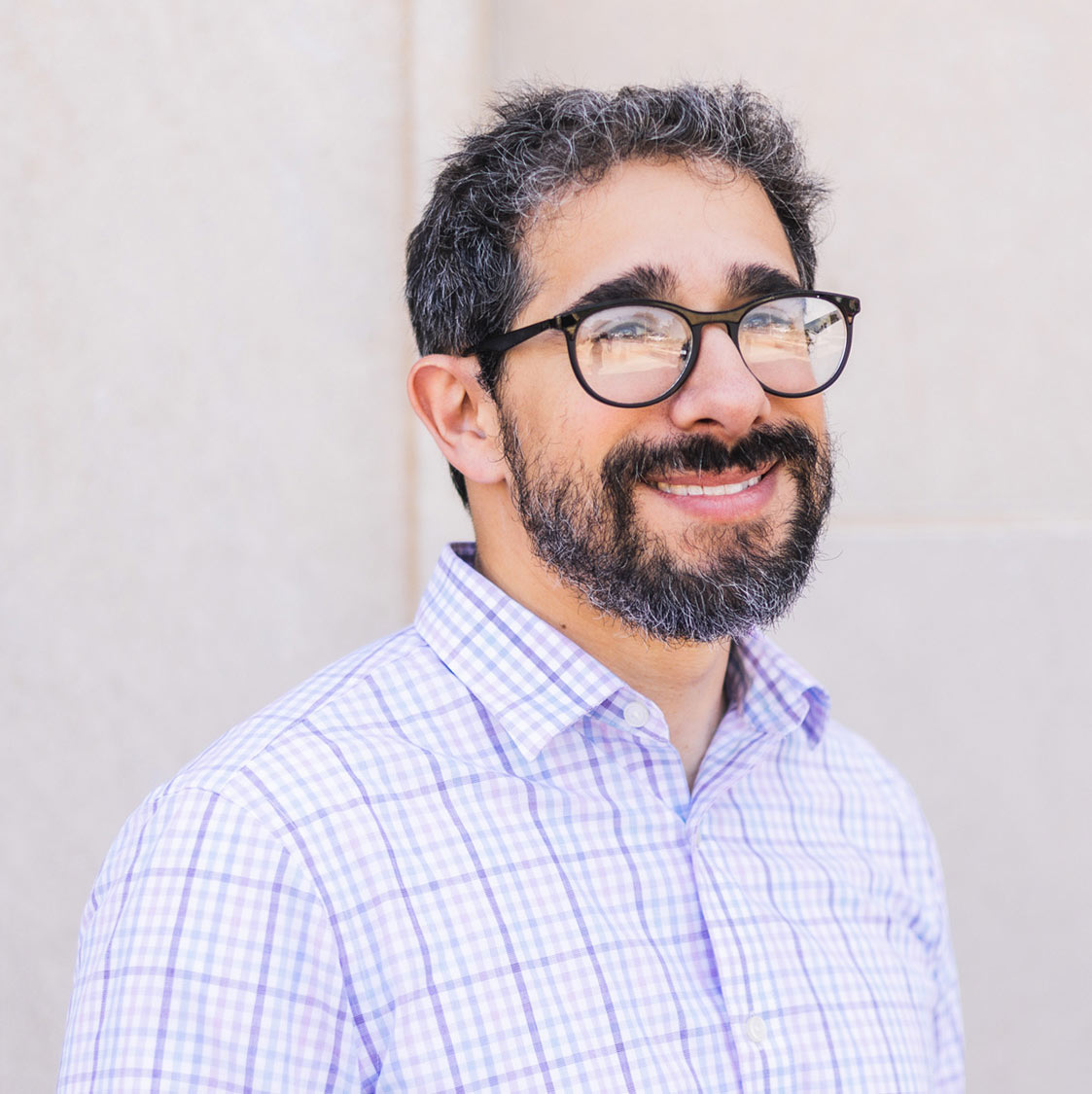
When Rod Williams joined Texas Tech University as its first-ever vice provost of Outreach & Engagement in January 2024, he did so
with the goal of making engagement a core part of the university’s culture.
“What was really exciting to me was that this position would allow me to build programs
that were so much bigger than me,” he said. “I really wanted to serve this university.”
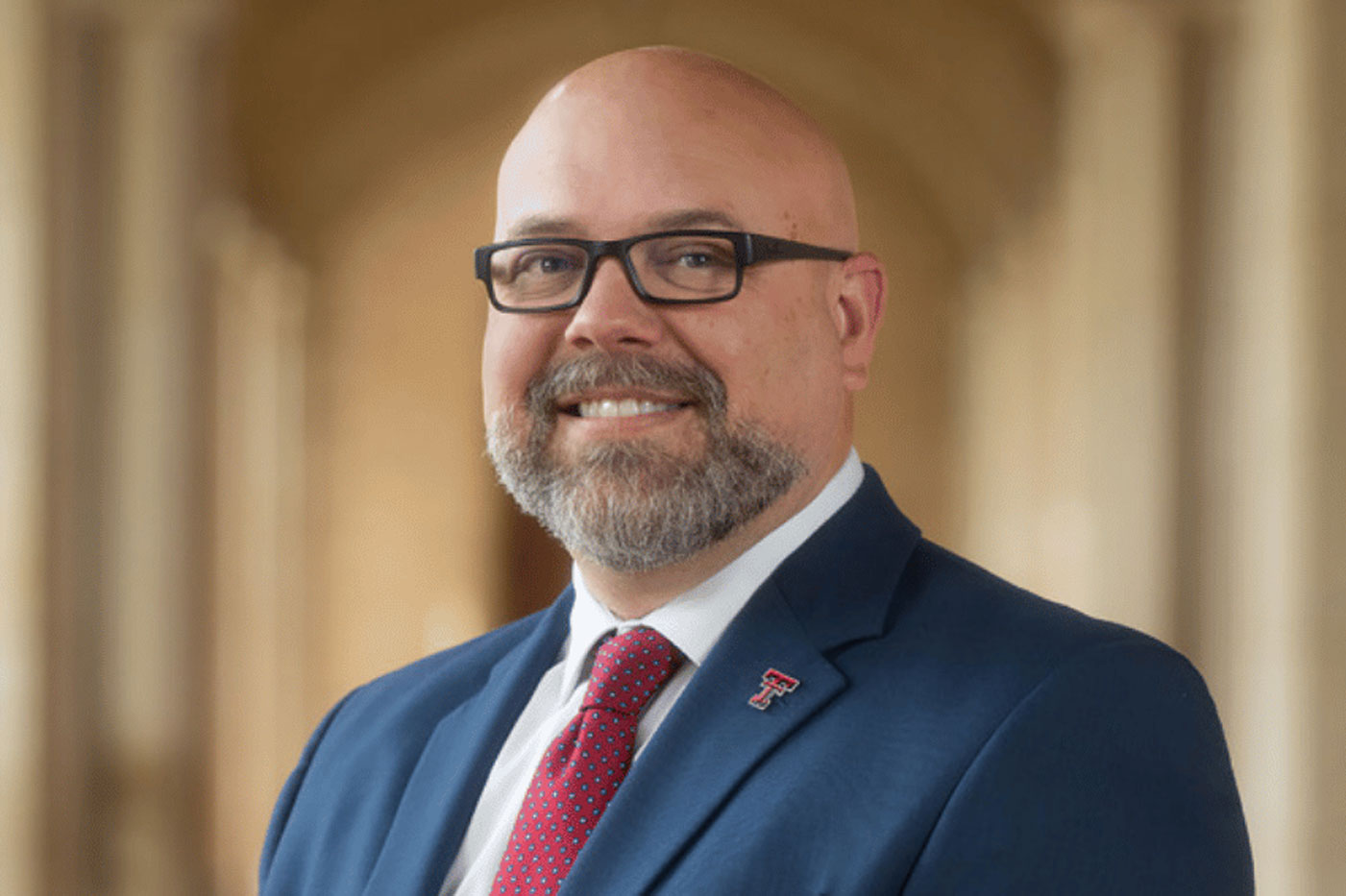 Rod Williams (photo courtesy: Artie Limmer)
Williams has been intentional about engaging communities with his research since his
days as an evolutionary genetics doctoral student at Purdue University in the early
2000s.
“When I started graduate school, I knew I wanted my research to have an influence
and an impact beyond my discipline and the academy,” he said. “I knew, as a researcher,
if you’re trying to restore an animal on the landscape and nobody knows about it,
they can’t appreciate it or help protect it.”
After graduating with his doctorate, Williams remained at Purdue for 17 years, first
as an assistant professor and eventually as assistant provost for engagement.
His primary research interests centered on the eastern hellbender salamander. The
eastern hellbender is the largest salamander in North America – Williams has a life-size
model in his office that is nearly as long as his arm – and is primarily found in
the central and eastern parts of the U.S.
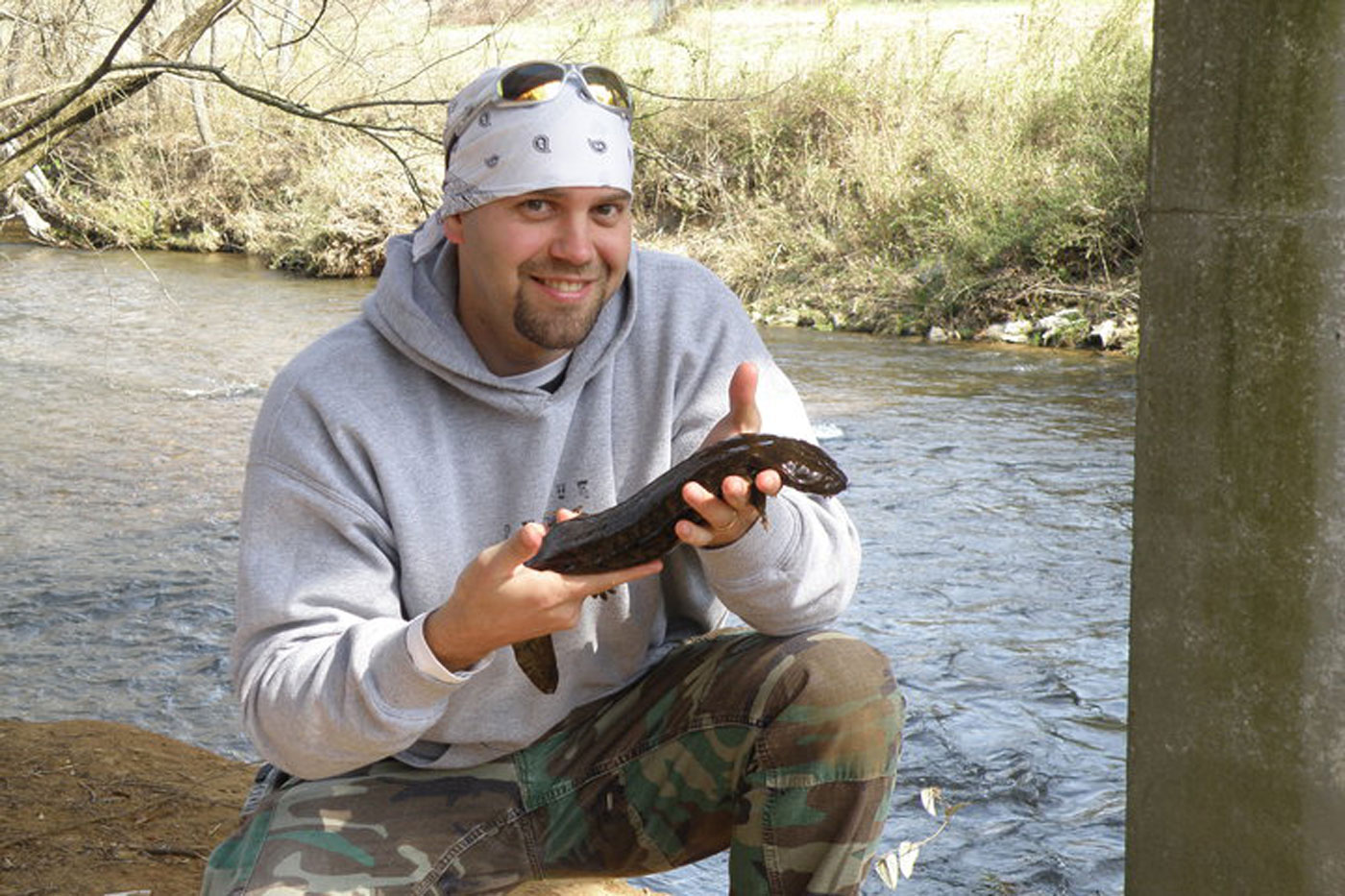 Rod Williams holds a hellbender salamander.
Williams assisted in establishing Purdue’s Help the Hellbender Center in 2008 after
talking with the Indiana Department of Natural Resources (IDNR). The center researches
eastern hellbender salamanders and spearheads conservation efforts. At the time Williams
first met with the IDNR, the salamander’s population numbers had been decreasing for
several decades.
“That work was really an engaged approach,” he said. “IDNR reached out to me and was
my first community partner. Then I reached out to the Indiana State Parks, my next
partner, and they allowed me to have my research hub there since the only river where
the hellbender occurred at the time was in a state park.”
Williams and the Help the Hellbender Center’s efforts over the last 17 years have
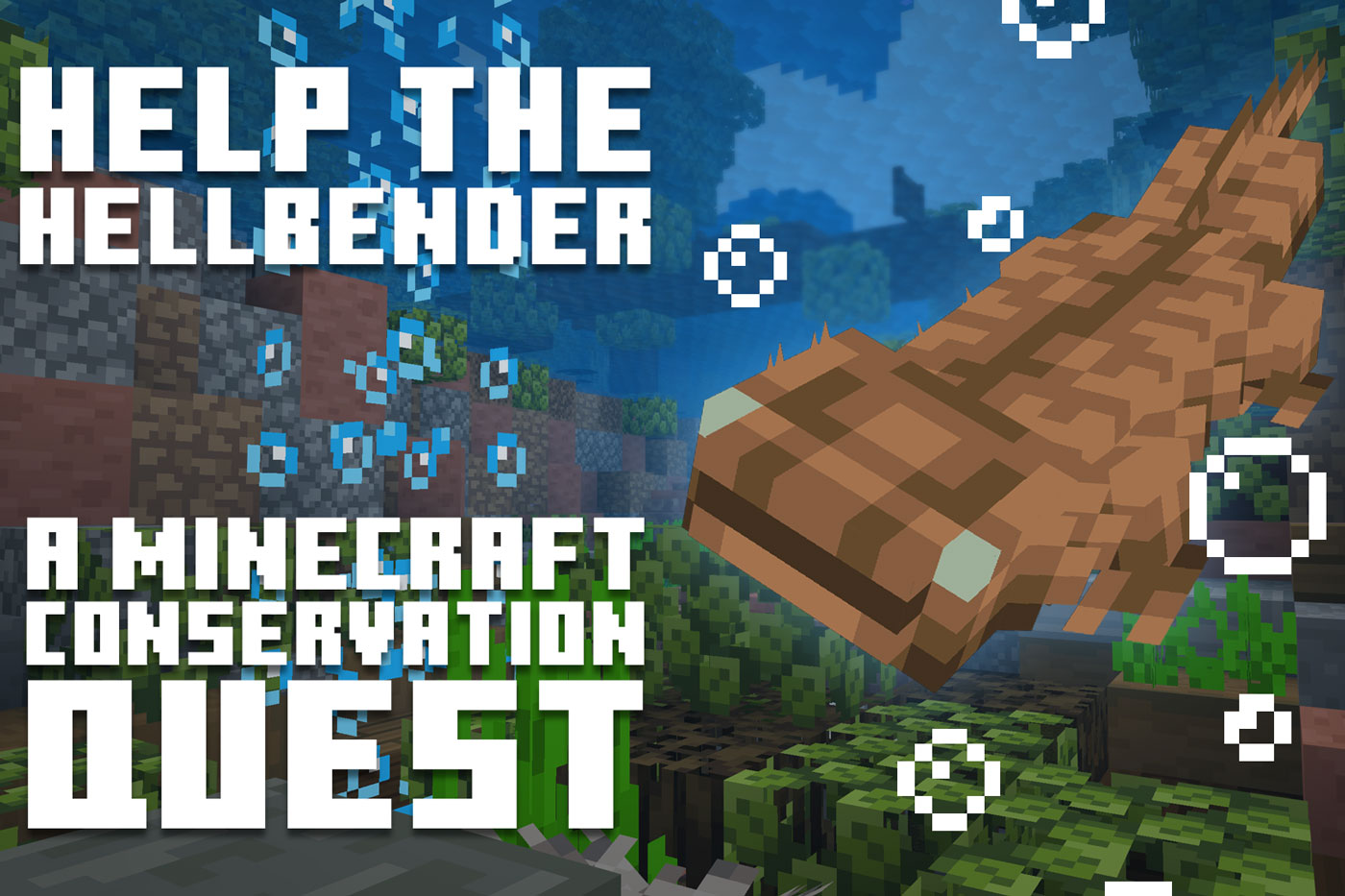
culminated with bringing the eastern hellbender salamander to Minecraft with “Help the Hellbender – a Minecraft Conservation Quest.”
 Courtesy: Microsoft
Since launching in 2011, Minecraft has been played by more than 200 million users
across mobile, PC and console-based platforms. It is a sandbox-style game that gives
players a large degree of creative freedom to interact with the game’s world. Minecraft:
Education Edition allows educators to meld the world of Minecraft and learning spaces
into one.
Through game-based learning, players explore Minecraft’s open world as an eastern
hellbender salamander while learning about the ecological challenges the salamander
faces. Players will also be introduced to a variety of conservation and wildlife management
principles as they complete various tasks.
Williams hopes these efforts aimed at younger audiences create a lasting impact on
improving the eastern salamander’s population.
“That’s the power of working with communities: to not only help inform the message
but how you deliver it,” he said. “When you’re thinking about working with communities
and translating your research into something that is easily understood, it also leads
to adoption and changes of behavior.”
Engaged Scholarship
Now at Texas Tech, Williams hopes to build the necessary support and infrastructure
to encourage other faculty to become engaged scholars. He recalls his first step was
simply to observe and listen.
“I needed to hear from faculty and from deans what challenges they were facing,” Williams
said. “The very first challenge was that we weren’t even speaking the same language.”
Words like “engagement” and “outreach” were either being used interchangeably or had
completely different definitions based on whom was asked. Some people used “community”
in place of one or the other.
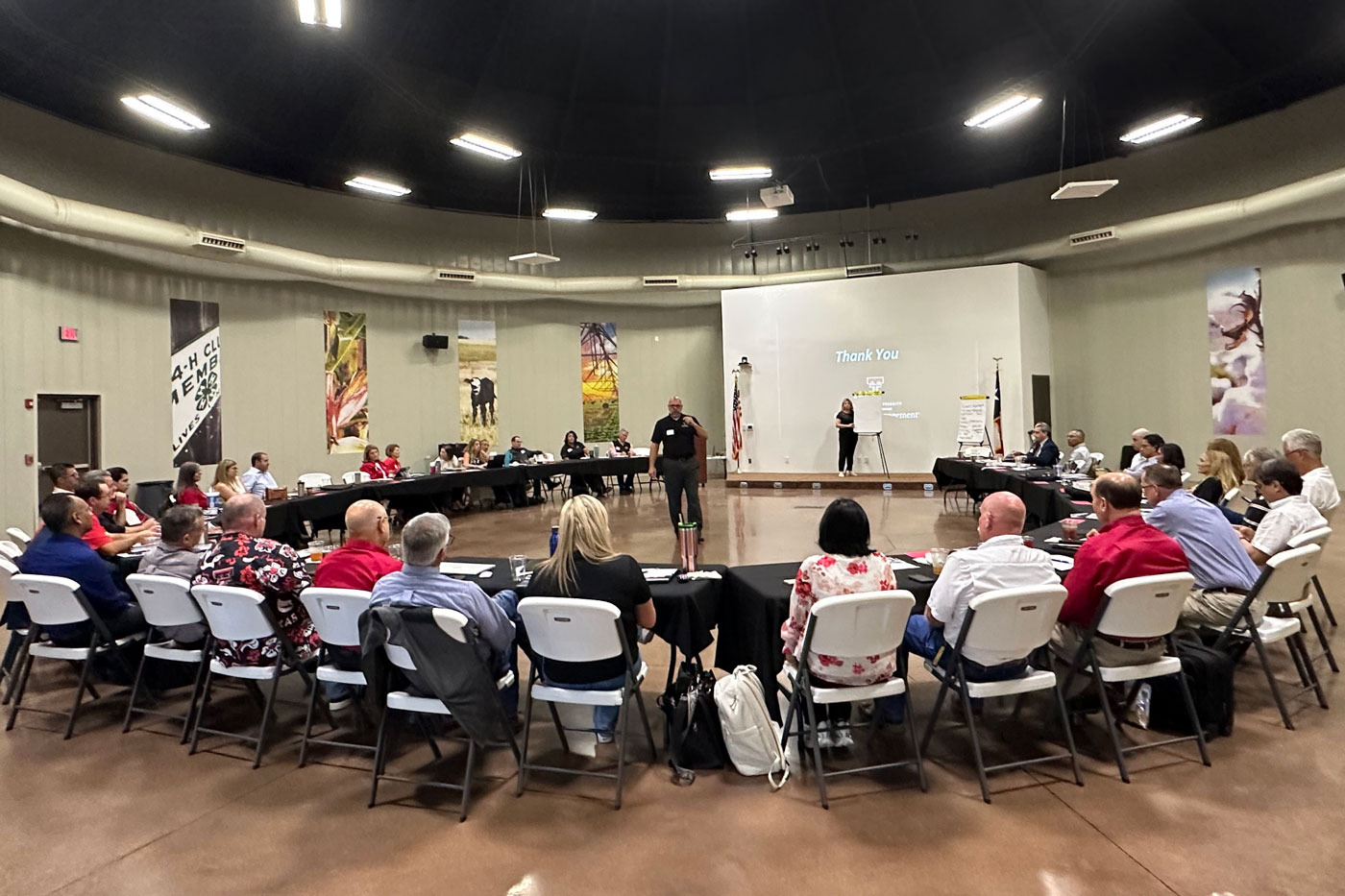 Williams gives a presentation on engagement and societal impact to the Davis College
of Agricultural Sciences & Natural Resources leadership team.
(Photo Courtesy: Scott Longing)
Williams set about creating institutional definitions to get everyone at Texas Tech on the same page.
Outreach, Williams explains, is a one-way delivery of information. Researchers provide
knowledge to a community – perhaps in an academic article, book, presentation or
workshop – and then leave.
Engagement invites the community to be partners in a mutually beneficial exchange
of information. The community informs the research, and the research educates the
community.
Williams was excited to highlight an in-progress example of engaged scholarship. The
Families in Ranching Succession Toolkit (FIRST) program is being spearheaded by Anish Quenim, director of the Alderson & Griffin Center for Family Business & Entrepreneurship at the Jerry S. Rawls College of Business.
Quenim is working with faculty from eight areas across Texas Tech and with the National Ranching Heritage Center, a division within the Office of Outreach & Engagement, to help West Texas families
develop succession plans for their ranches.
At each step of the program’s development, the FIRST team has actively engaged with
the community of family ranchers and sought their input.
At one point, the families reviewed drafts of the chapters for the toolkit.
“The families said, ‘It’s pretty heavy jargon to us. We hope that’s not how you’re
writing the book,’” Williams recalled with a few laughs. “So, the team went back and
pivoted, saying, ‘If we write this as an academic journal, they’re not going to read
it and we’ve missed the mark.’”
The FIRST team also asked the families if there were other deliverables they needed.
There are plans to now include workshops and succession planning sessions led by remediation
and counseling groups. The program will launch in full by fall 2026.
“What I’m so proud of is every single step of the way, they’ve reached out to the
ranching families and asked, ‘Are we still headed in the right direction? What else
is needed?’” Williams said. “It started with the ranching families, and it’s ending
with them.”
Building Public Trust
Emphasizing engaged scholarship is what Williams believes can lead Texas Tech researchers
to having a greater societal impact and, in turn, strengthening the public’s trust
in higher education.
“If you think about why public institutions were created, it was to help solve societal
issues,” he said. “Engaged scholarship is bringing us back to our roots and focusing
on those societal issues. Those should be the drivers of why we do research in the
first place.”
In July 2025, Gallup conducted a public opinion poll and found 42% of Americans have
“a great deal” or “quite a lot” of confidence in higher education. As low as that
number may be, it is actually the first time the number has increased in over a decade
and is six points higher from 2024’s 36%, which was the lowest since Gallup began
tracking the data.
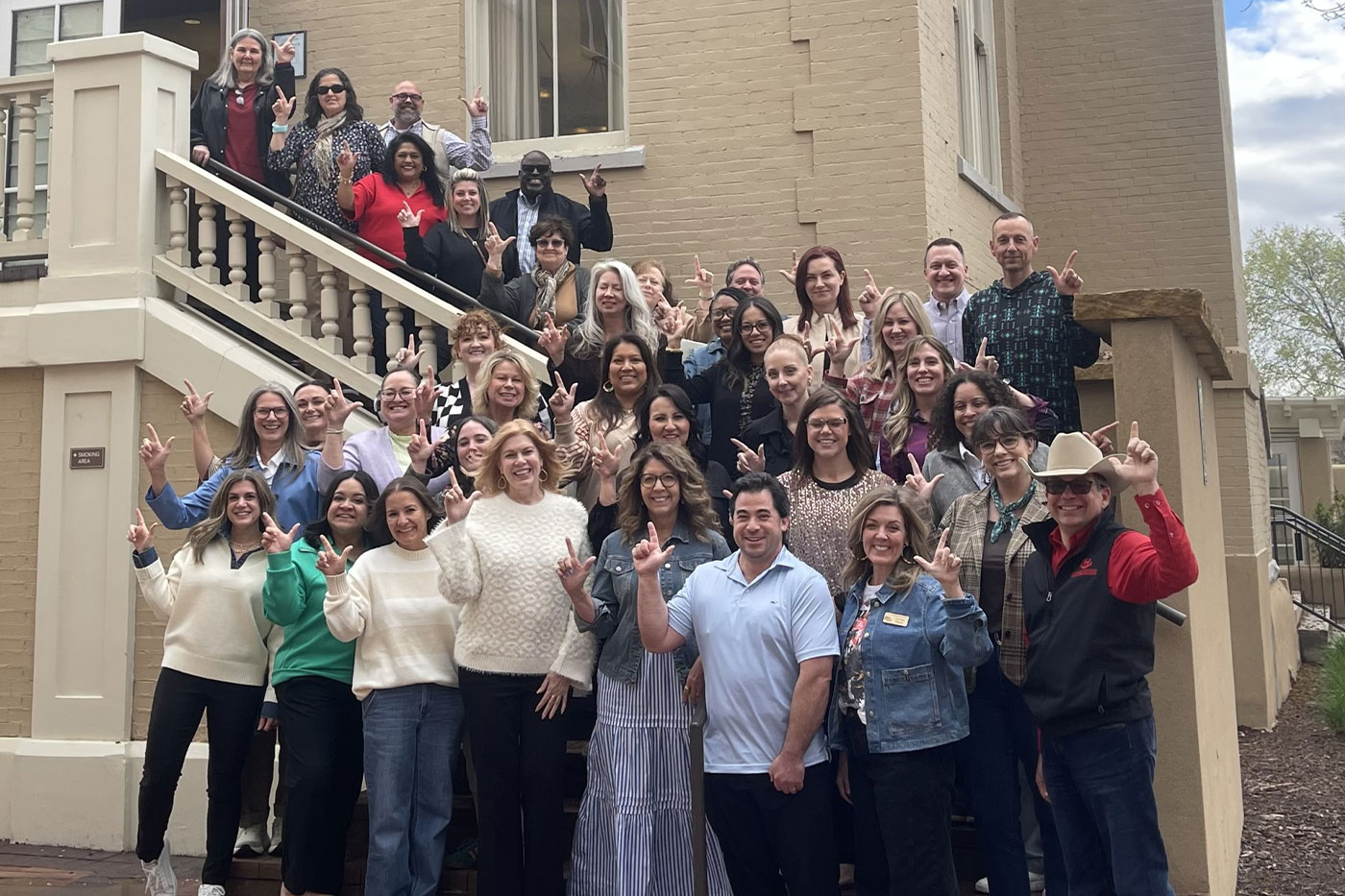 The Office & Engagement leadership poses after a team retreat.
Strengthening the public’s trust, Williams says, can be done by increasing knowledge
and changing behaviors, but the knowledge needs to come in ways the general public
wants to receive it.
Williams also is quick to say that peer-reviewed work, like publishing in academic
journals or books, is still important, but it may not resonate much with the people
outside of academia.
“Having a diversified portfolio of scholarship – thinking about presentations, workshops,
podcasts or game-based learning – is what’s probably going to yield the most societal
impact,” he said. “It’s important for faculty to know you can use your research impact
to help develop your societal impact.”
This process results in what Williams calls amplified impact.
Williams has his eyes set on making engaged scholarship a key component of graduate student education. He has helped launch the recent Graduate Engagement Microcredential Program, an eight-course series designed to help graduate students connect their academic
work to real-world impact.
“That is a glaring hole in higher education across the United States,” he said. “No
university has figured out a way to really focus on graduate students and give them
the skill set to be an engaged scholar. It’s one of my top priorities. From here,
it’s possible for Texas Tech to be a leading institution to foster the next generation
of engaged scholars.”