
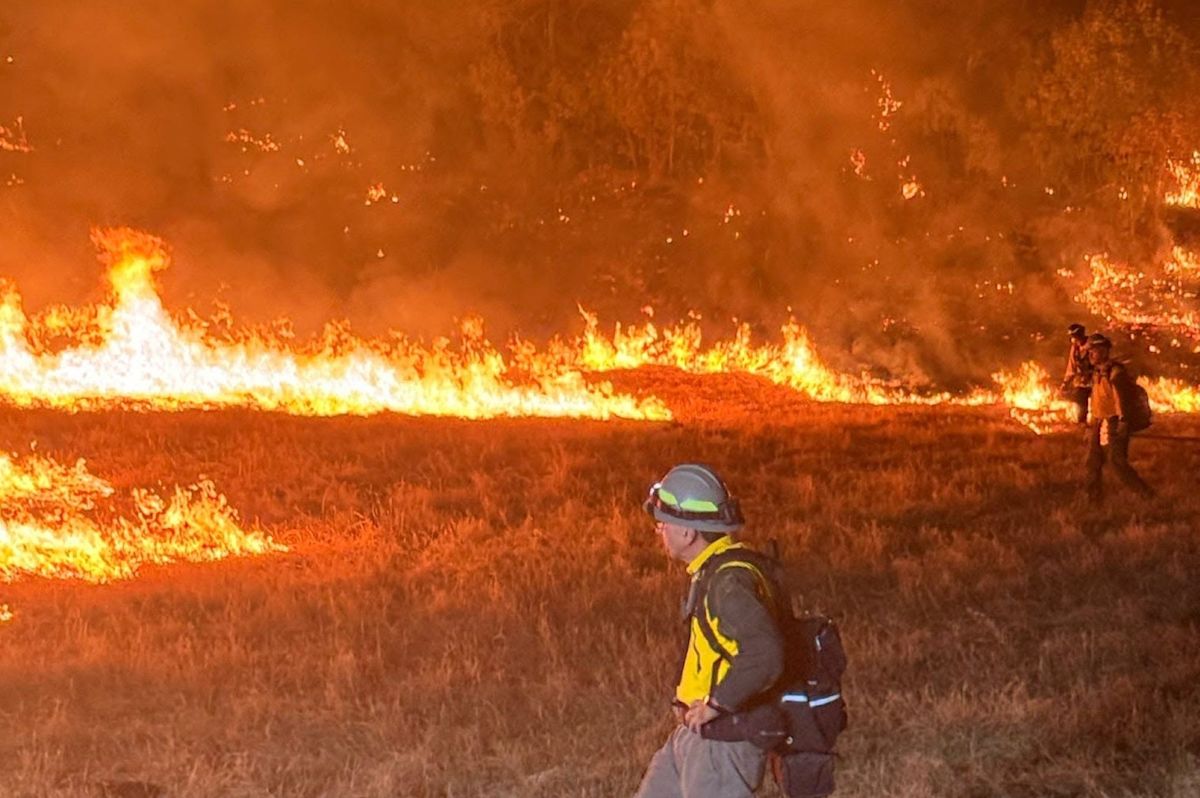
Five wildfires burning across North Texas are drawing help from well beyond the immediate fire zone, with Central Texas crews deployed to protect communities and reinforce fire lines in Palo Pinto and Sutton counties.
The response underscores how quickly major wildfire outbreaks can escalate into a statewide emergency, requiring engines, aircraft, and specialized teams from multiple regions.
Here’s what to know
Fox 7 Austin reported that Travis County ESD 1 Chief Donnie Norman is leading the 196th strike team assembled by the Texas Forest Service in 2025 after finishing an eight-day assignment on the 90,000-acre Ross Fire west of Fort Worth.
“When I was on the Ross Fire, I was on Strike team 186. And then the strike team that I’m at right now, (Strike Texas 196) which has five engines, a water tender, a strike team leader, which is myself and 21 personnel,” Norman said, as Fox 7 Austin relayed.
Statewide, 634 personnel are part of the deployment. Departments from Austin, Round Rock, Pflugerville, Lake Travis, and Travis County ESD 1 are among those sent through the state mutual aid system.
Norman said Travis County ESD 1 has 15 people assigned across Texas in different roles and locations, including firefighters working a blaze east of where he is now.
Officials have also deployed 34 fire suppression aircraft to assist crews on the ground.
Norman said the state system is designed to let departments send help without creating staffing shortages in the communities they serve.
“Yeah, so minimum staffing is not affected at home at all. So, the state of Texas actually pays us to deploy our personnel, and then they also pay to backfill every one of those positions that we have back at home. So, operations at home are no different today with us having 15 people deployed as it will be in a month from now. Hopefully, when the rain comes in, we will get back to some sense of normalcy,” Norman said.
Texas is continuing to expand its aerial firefighting resources. In 2025, the state added two helicopters and three spotter aircraft, and it is still acquiring four large tankers.
Lawmakers have set aside $257 million to buy and operate the firefighting aircraft, but there is still no official launch date for the fleet. In the meantime, aircraft already in service are playing a major role in helping crews slow active fires and protect threatened areas.
“It is very coordinated, and it’s impressive to be right up against within just a short distance away from a 737 flying low, coming over top of us. And those are very skilled pilots,” Norman said.
Where can I learn more?
As extreme weather patterns increasingly shape emergency response strategies and aerial operations, these Texas deployments coincide with persistent, severe wildfire activity across the region.
• Across the Carolinas, drought and flooding have heightened fire risk for nearby communities.
• In Spain, Portugal, and Greece, crews faced extreme risk for new wildfires during ongoing battles.
Those stories help put Texas’ response in context as agencies add more mutual-aid support and aviation resources. They also show the kind of fire conditions crews could continue dealing with while several blazes remain active.
Get TCD’s free newsletters for easy tips, smart advice, and a chance to earn $5,000 toward home upgrades. To see more stories like this one, change your Google preferences here.