
Digital subscribers can listen to this article.
Subscribe today for unlimited access to Texas Monthly. Already a subscriber? Log in.
Navigating London at rush hour means parting tides of bankers in dark suits. But stepping off the tube at the aptly named Bank station, in the heart of the city’s financial district, I found many of them sitting at the Ned, dirtying their crisp, white shirts and silk ties with Texas barbecue.
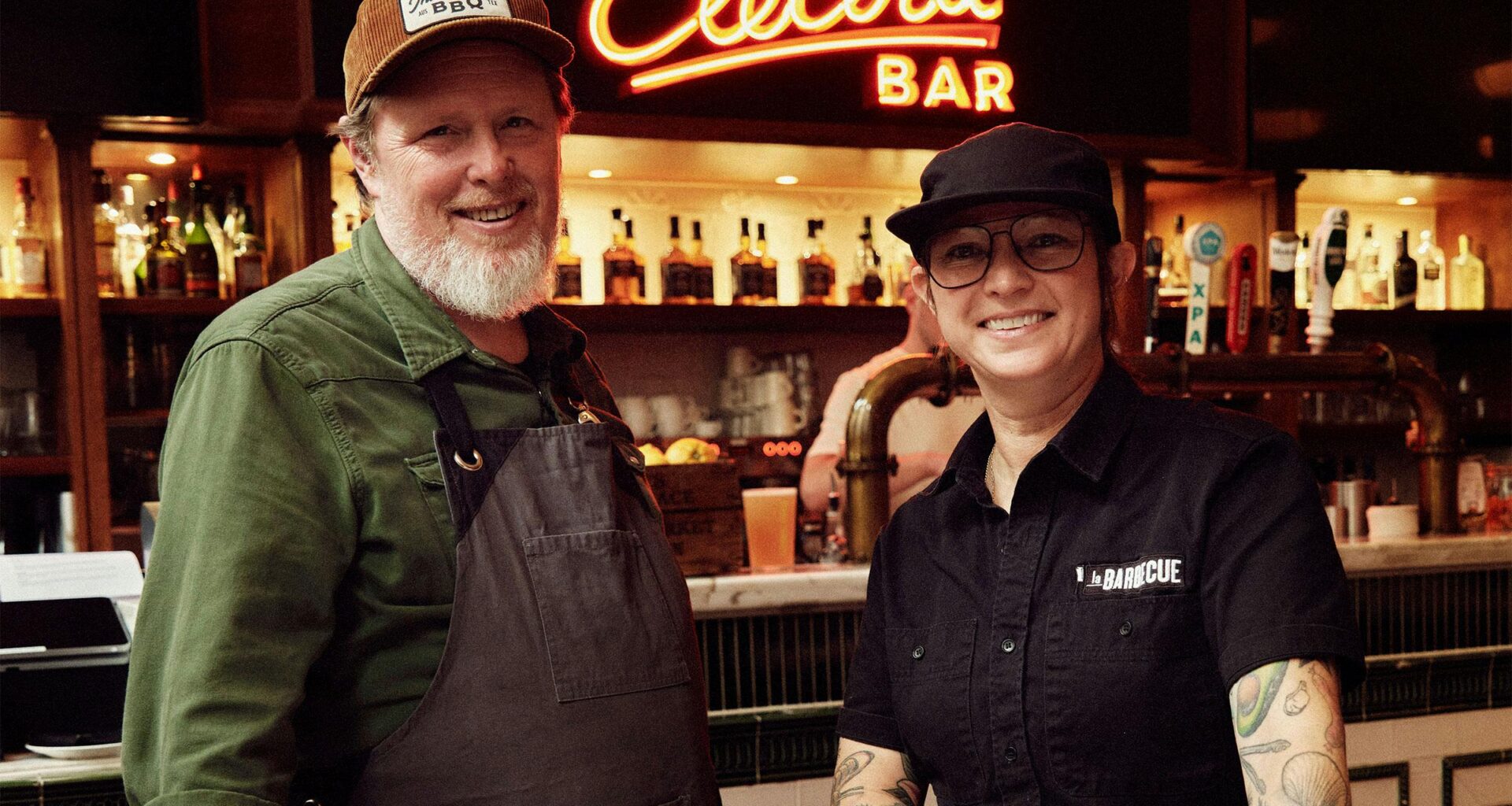
The building, which houses a luxury hotel, several bars and restaurants, and a private members club across the street from the Bank of England, has the Electric Bar & Diner tucked into a corner of its cavernous ground floor. There, two Austin pitmasters, John Bates, of InterStellar BBQ, and Ali Clem, of La Barbecue, are doing a monthlong residency that ends on October 4.
The restaurant is usually the kind of place where asset managers sip martinis at marble tables behind polished walnut partitions that once shielded clerks cashing payroll drafts. A jazz band plays loud enough to drown out the clatter of flatware and the buzz of financial gossip. It’s a surreal place to eat barbecue, which is exactly why I had to come see it for myself. As a Brit whose experience with brisket is shamefully limited to the dry, oversauced versions occasionally found in local pubs, I desperately needed to taste the real thing.
InterStellar and La Barbecue both collected Michelin stars in 2024, when the guide landed in Texas, adding to their international cachet. But neither pitmaster crossed the Atlantic to cater to highfalutin palates. “We didn’t come all the way to London to make watered-down Texas barbecue,” Clem told me. “Hopefully we ruin a few ties. Barbecue is supposed to be a little messy. I think once they get into it, they’ll forget they’re sitting there in suits.”
Watching the diners in the room grapple with their food proved entertaining. Eating with your bare hands is usually restricted to late-night kebabs in England, so tackling a mountain of smoked meat without a fork visibly stressed locals. Many clung to their silver knives, tentatively cutting ribbons of brisket. Braver souls engaged in a cautious two-finger pinch, while the rest, I was pleased to see, went full caveman.
The floor manager assured me that no disasters had occurred yet. “It is early days,” he said, smiling. As I left, I watched as a junior analyst lost his grip on a fat cube of pork belly, sending it tumbling down the front of his shirt from Charles Tyrwhitt, Britain’s answer to Brooks Brothers. I’d wisely skipped the tie, but on my way home, I discovered a dark fleck of barbecue sauce sitting stubbornly on my collar.
Replicating authentic Central Texas barbecue inside a grade I landmark—a status reserved for the UK’s most significant buildings—erected in 1929 took some doing. Strict smoke-emission laws meant that running offset pits on Poultry, the old Wall Street of London, was out of the question. Instead, the cooks are using two custom-built UK Ironbrand offsets at an off-site commissary kitchen. They run constantly with split British white oak instead of the post oak Clem and Bates are used to working with. The goal is to cook roughly a thousand pounds of meat daily.
The pitmasters imported USDA Prime briskets from Creekstone Farms and Black Angus beef short ribs from Australia, but they sourced the pork and lamb locally. “Grass-fed British beef is fantastic for steaks,” Bates said, adding, “When you’re doing what we do, where you need a little more time, you need more inner muscle fat to help those things become tender.”
Clem knows local butchery doesn’t easily translate to Texas barbecue. She recalled an order she once made of massive Irish cuts. “They kept the rib meat on the long end of the brisket, so I was having to kind of cut the rib meat off and season it and cook it separately, and then I was shredding it.”
Seasoning posed another hurdle. Coarse kosher salt, the bedrock of Central Texas–style beef, proved nearly impossible to find in a city where cooks lean heavily on flaky sea salt. “So you figure out the pit, figure out the wood, and make it work,” Clem said. “That’s barbecue. You learn the fire you’re working with and adjust from there.”
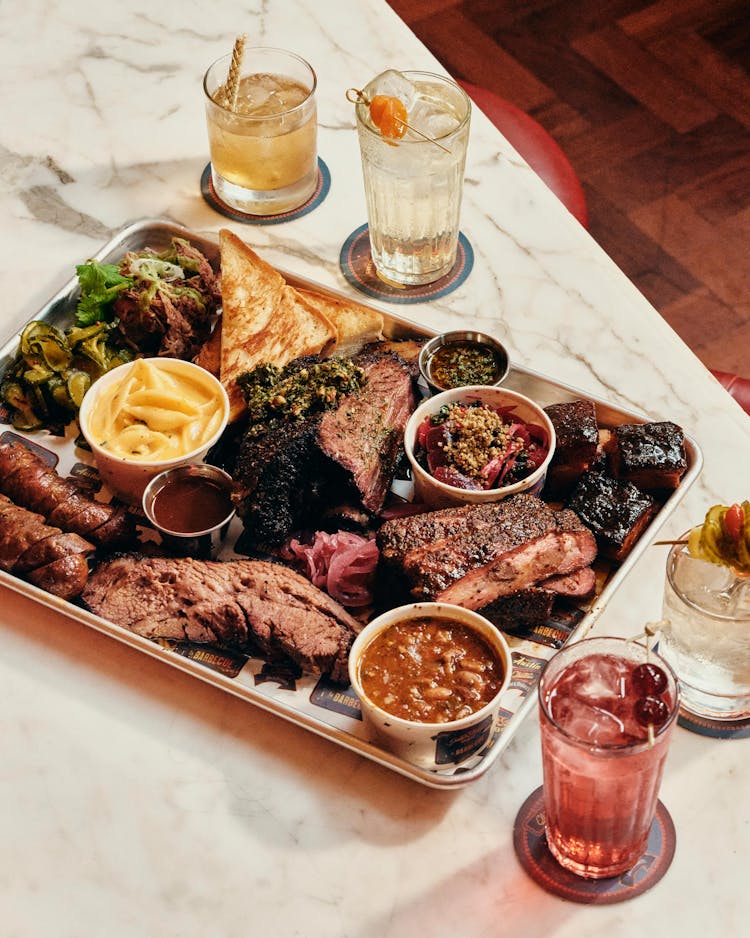 A tray of barbecue at the Ned. Courtesy of the Ned
 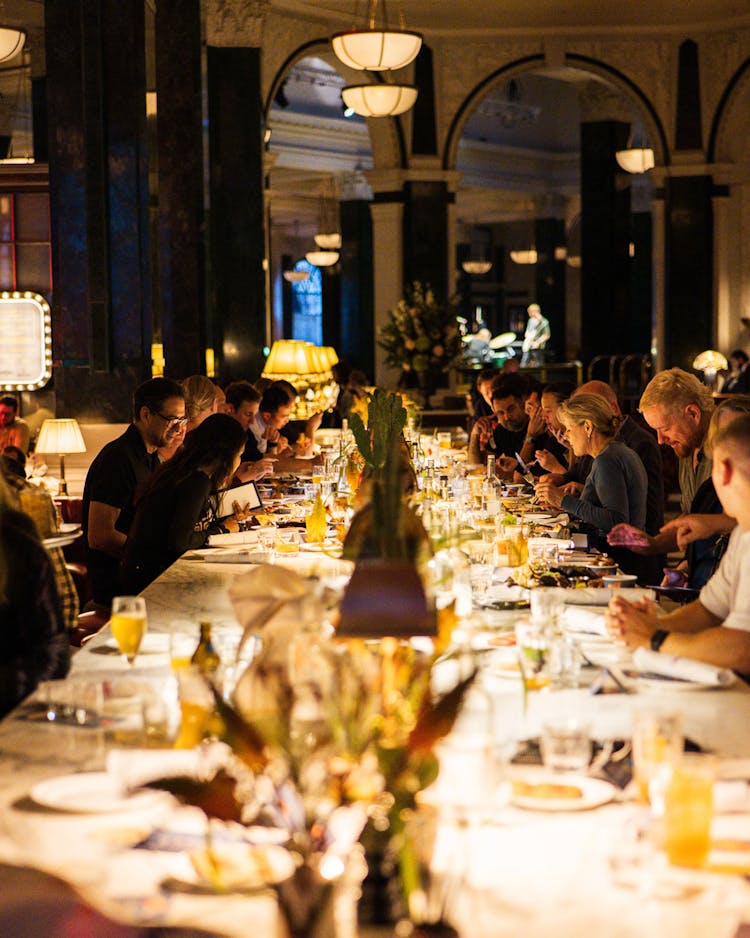 Electric Bar & Diner’s glowing interior Courtesy of the Ned
Each reservation requires guests to prepay £75 ($102) per person, and there’s a two-person minimum. The table gets a huge tray of smoked meats, sides, and fixings—a meal which can be easily shared. La Barbecue’s brisket is an optional £50 ($68) add-on, but it shouldn’t be skipped. The fatty slice I pulled was glossy, with rendered fat beneath a stout, peppery bark. Clem’s pork ribs had a sweet glaze that softened the bark, but the bite came off the bone cleanly. Her sausage delivered a heavy hit of jalapeño heat and melted cheddar.
Bates filled the rest of the tray. His famous twice-smoked pork belly, painted with a sticky peach-tea glaze, melted instantly in the mouth. The Australian-beef short rib carried a heavy pepper crust topped with a bright garlic and vinegar chimichurri that cut cleanly through the rich fat. He also served pulled lamb shoulder, an old-school Texas cut he has been working to revive, topped with a tart avocado salsa and fresh, chopped cilantro. It was earthy, smoky, and surprisingly tender.
The garnishes of sharp onions and sliced pickles balanced the heavy meats, as did a bowl of beet salad hiding crisp ribbons of dried seaweed. InterStellar’s pinto beans are stewed into a thick, peppery sauce. The mac and cheese used the American cheese that we Brits love to hate, but it provided that velvety melt that European cheddar simply can’t replicate. At the bar, diners washed down the feast with £16 ($22) Jack Daniel’s cocktails, such as the Pickle Jack, which mixes whiskey with cucumber, green apple, and pickle soda. Those who somehow have room left can order InterStellar’s banana pudding topped with whiskey caramel for £12 ($16).
Bates told me that British travellers wander into his Austin storefront constantly. “There’s one particular room in our restaurant, a little nook up in the front. It’s kind of become the English room,” he said with a laugh. “I can almost, without fail, walk into that space and find somebody from the British Isles in that room on a daily basis.”
This pop-up is a way to return the favor to those transatlantic tourists, though Bates admits the global reach of his cooking continues to catch him off guard. “I don’t think either one of us went into this thinking that we were going to find ourselves traveling all over the world, sharing our barbecue,” he said. “I think we both just really wanted to pay our bills.”
Read Next