
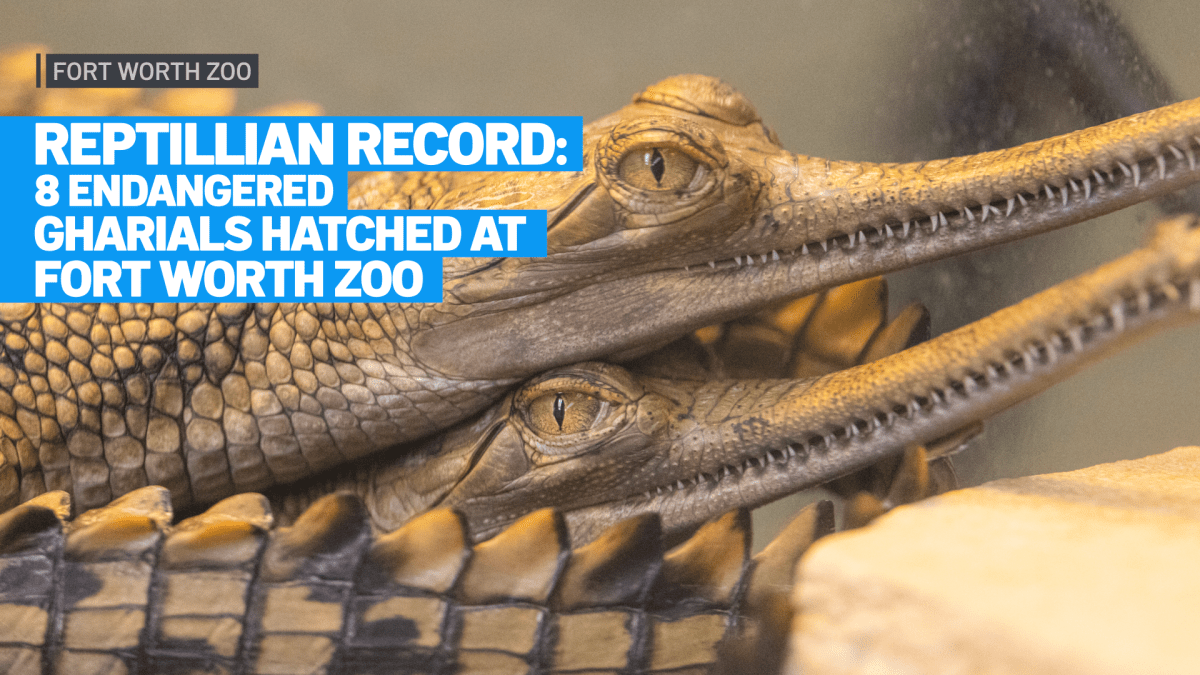
Fort Worth Zoo has a few more snouts to feed after a record-breaking summer for one of the world’s most endangered crocodilians.
The Zoo announced Wednesday that eight critically endangered gharials hatched this summer, marking its fourth consecutive year of successful hatchings and bringing its juvenile gharial population from five to 13.
The Fort Worth Zoo says it remains the only institution in North America to have produced multiple gharial offspring and successfully repeated the achievement in consecutive years.
The latest hatchlings emerged between June 3 and June 26 from clutches representing two different females.
Zoo staff have spent years fine-tuning breeding and incubation techniques. This year, the Zoo added more heated nesting logs to the adults’ outdoor habitat and continued adjusting egg incubation temperatures, which can influence the sex of gharial offspring.
“Every successful hatch gives our team another opportunity to refine our techniques and deepen our understanding of this remarkable species,” associate curator of ectotherms Vicky Poole said in the Zoo’s announcement.
The eight newest arrivals are currently being kept behind the scenes while staff monitor their growth and development. Visitors can still see juvenile gharials hatched in previous years inside the Museum of Living Art, or MOLA.
The Zoo’s success follows more than 15 years of work to breed gharials, increase their population and diversify their gene pool. Its adult gharial habitat, built in 2010, includes temperature-controlled water, heated sand and other features designed specifically to encourage breeding.
Gharials are known for their distinctive long, narrow snouts and spend much of their lives in water, where they primarily hunt fish. The new hatchlings are currently just over a foot long, but adult males can eventually reach 16 feet and weigh nearly 1,500 pounds.
The species is considered critically endangered, with wild populations threatened by habitat destruction, pollution and fragmentation of river systems.