
LUBBOCK, Texas (KCBD) – One of the biggest ways Sept. 11 changed daily life was in air travel. Immediately after the attacks, passengers were stranded during a nationwide ground stop, beginning changes in the way people fly that remain in effect today.
RELATED: 25 years after 9/11 attacks, TSA reflects on mission to protect and ‘stay ahead’ of threats
A routine day interrupted
Mark Earle said no day at an airport is routine, especially at a cargo hub like Lubbock.
“I couldn’t tell you anything about September 10th, it was a day in the life,” Earle said.
Earle was the director of aviation for the Lubbock International Airport at the time. He said an entirely new set of problems began on Sept. 11, 2001, during his drive to work.
“I was just turning to exit and I got a call on my cell phone from my wife. She was really animated and said, ‘You wouldn’t believe this, but an airplane’s hit one of the World Trade Center towers,’” Earle said.
As soon as the second plane hit the South Tower, Earle and his staff tuned into the news and started working the problem.
“Generally it was a huge challenge ahead to adjust to protect against this and put the system back together again. We just started working through it,” Earle said.
Lubbock’s tarmac fills with grounded planes
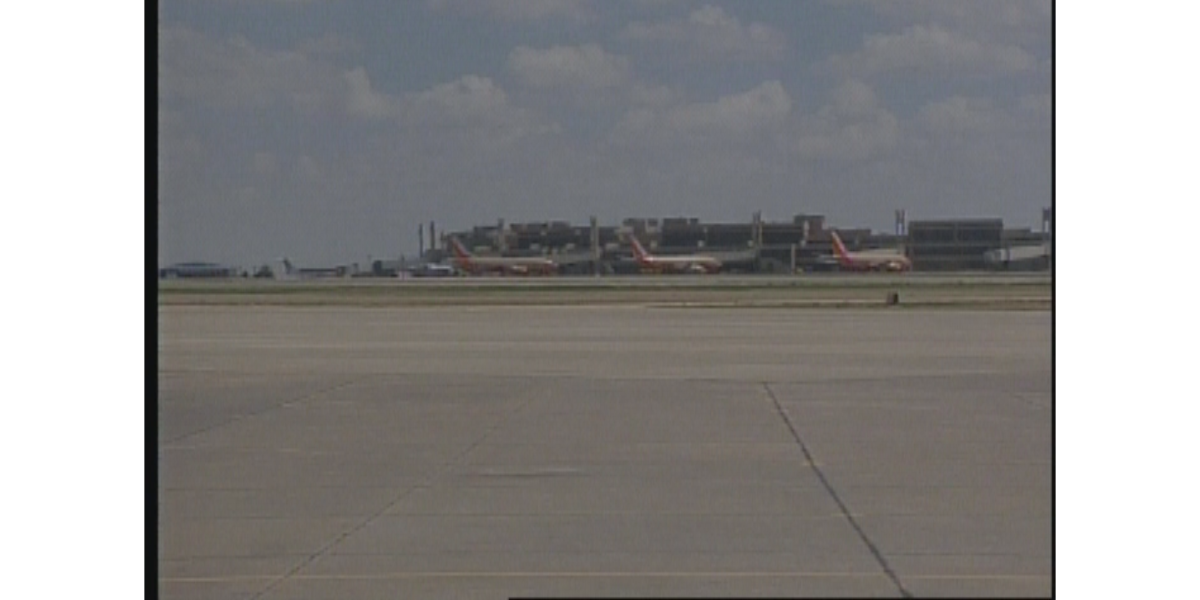
A national ground stop forced Lubbock to line up aircraft along its tarmac. A timelapse from the Smithsonian shows how nearly 4,000 planes found a place to land in less than two hours, at various airports around this nation.
“It felt just that familiar feeling of ‘this is horrible,’ but you’re focused on the things you need to do to fix the problem,” Earle said.
Earle and his staff spent days at the airport without going home. Flights were halted for two days, and when the first one left, air travel had changed.
“It will affect the check-in process at the ticket counter, it will affect the screening checkpoint process, and how long it takes to get through that,” Earle said in a 2001 interview, seen in KCBD archive video.
More forward to today, Earle recalls, “both the FAA security apparatus, congress, heavily involved — more involved than normal with day-to-day operations, everybody’s just trying to solve problems.”
New security protocols take shape
Over the next year, staff from Lubbock worked with industry groups and the government to establish new security protocols to prevent another tragedy, which would ultimately turn into the TSA and the Department of Homeland Security.
“The support and understanding that everybody gave from the public to the city council supporting what the airport did but especially the team members at Lubbock International Airport, they did a great job,” Earle said.
While security policy and technology are evolving and changing, Lubbock helped give air travelers their confidence back in the wake of tragedy.
Related stories
Lubbock photographer recalls documenting 9/11 from New York rooftop
25 years after 9/11: Rep. Arrington recalls attack from White House
Texas Tech orchestra honors 9/11 with concert on 25th anniversary
Texas Tech professors reflect on how they teach 9/11 to students
Copyright 2026 KCBD. All rights reserved.