
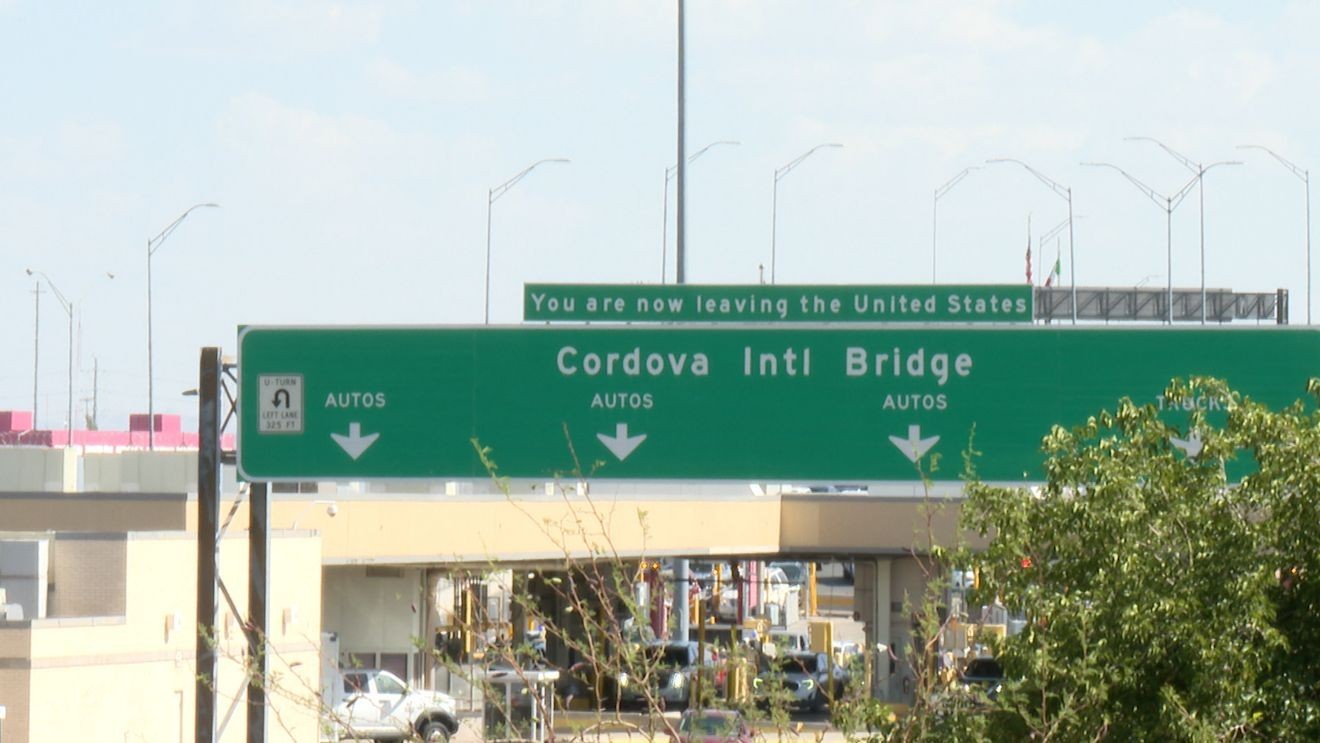
EL PASO, TEXAS (KFOX14/CBS4) — A new study is fueling debate over the planned end of commercial truck traffic at the Bridge of the Americas Port of Entry, a change federal officials have tied to a major modernization project that supporters say would improve quality of life for nearby residents but critics warn could cost the El Paso region billions.
The U.S. General Services Administration is modernizing the Bridge of the Americas, also known as BOTA, to update aging infrastructure while ending commercial cargo operations.
An economic impact study by the El Paso Chamber of Commerce examined what that shift could mean for the region’s economy and for truck traffic at other ports of entry.
Ricardo Mora, president and CEO of the El Paso Chamber of Commerce, said the study projects significant losses if commercial truck processing ends at BOTA.
“The number that this commission shows is $2.3 billion of loss in economic output in our region,” Mora said.
RECOMMENDED: Bridge of the Americas modernization project moves to design-build stage
The study estimates about 11% of truck traffic would leave the region. Of the remaining truck traffic, Mora said about 64% would shift to the Ysleta-Zaragoza port of entry, 34% to Santa Teresa and less than 2% to Tornillo.
A climate justice organizer with the local advocacy group Sembrando Esperanza, Veronica Carbajal, criticized the study and said it does not justify reversing the federal plan.
“So, we’re very disappointed that the Chamber of Commerce has spent resources on a study that we feel doesn’t prove anything that necessitates changing this decision,” Carbajal said.
The study also points to growth in cross-border trade. It found monthly exports through the Paso del Norte region grew from about $3.1 billion in January 2020 to nearly $7.5 billion in May 2026.
It also found BOTA alone processed about $12 billion in commercial truck trade last year.
Carbajal said that trade has consequences for people living near the bridge.
“The residents have also said, you know, the trucks create noise, they create vibrations that are impacting the stability of their homes, as well as the fumes that are released,” she said.
The chamber’s study also projects economic gains tied to the modernization itself, estimating construction would generate about $617 million in economic activity and additional passenger crossings could generate another $514 million.
Those benefits are included in the study’s projected net loss of $2.3 billion through 2036.
RECOMMENDED: El Paso Chamber fights plan to reroute commercial trucks from Bridge of the Americas
Carbajal said removing commercial trucks would have broader traffic benefits.
“The removal of the commercial trucks will benefit not only the people living next to the I-10 connection to the Bridge of the Americas, but also to everyone who use I-10 in the afternoon,” she said.
Residents interviewed described daily disruptions they attribute to truck traffic near BOTA.
“Sometimes we can’t sleep at night, especially because they all start backing up. And once they start backing up, they get irritated and start honking, thinking that’s going to solve the problem. But it only gets worse and worse,” said Juan Ontiveros, a resident.
Ricardo Leon, also a resident, described long lines of trucks and exhaust. “During the right time, when the wind is blowing this way, coming north, we get all the exhaust. So, we’re living in a very contaminated area,” he said.
The study says removing trucks could improve air quality near BOTA and shift nearly $20 billion in trade to Santa Teresa, but its projections assume no new commercial lanes open through 2036.
In a statement, U.S. Rep. Veronica Escobar said the decision is not expected to change.
“The Department of Homeland Security (DHS) and Customs and Border Protection (CBP), the agencies which ultimately made the decision to remove commercial traffic, made clear to the Chamber and to me that the decision is final and would not be reversed — even after the Chamber’s visit with them in Washington earlier this year when they flew to D.C. to lobby against the project.
RECOMMENDED: El Paso officials defend BOTA modernization plan as Chamber warns of trade fallout
Mora said the chamber wants the plan delayed.
“We request for the pause of the implementation of Alternative Four, which removes commercial traffic, while our elects at the state and federal level can evaluate the alternatives,” he said.
According to the GSA, construction is expected to begin in early 2028, when commercial truck processing will also end. The project is expected to be completed by the summer of 2031.
Full economic impact study here.
Sign up to receive the top interesting stories from in and around our community once daily in your inbox.