
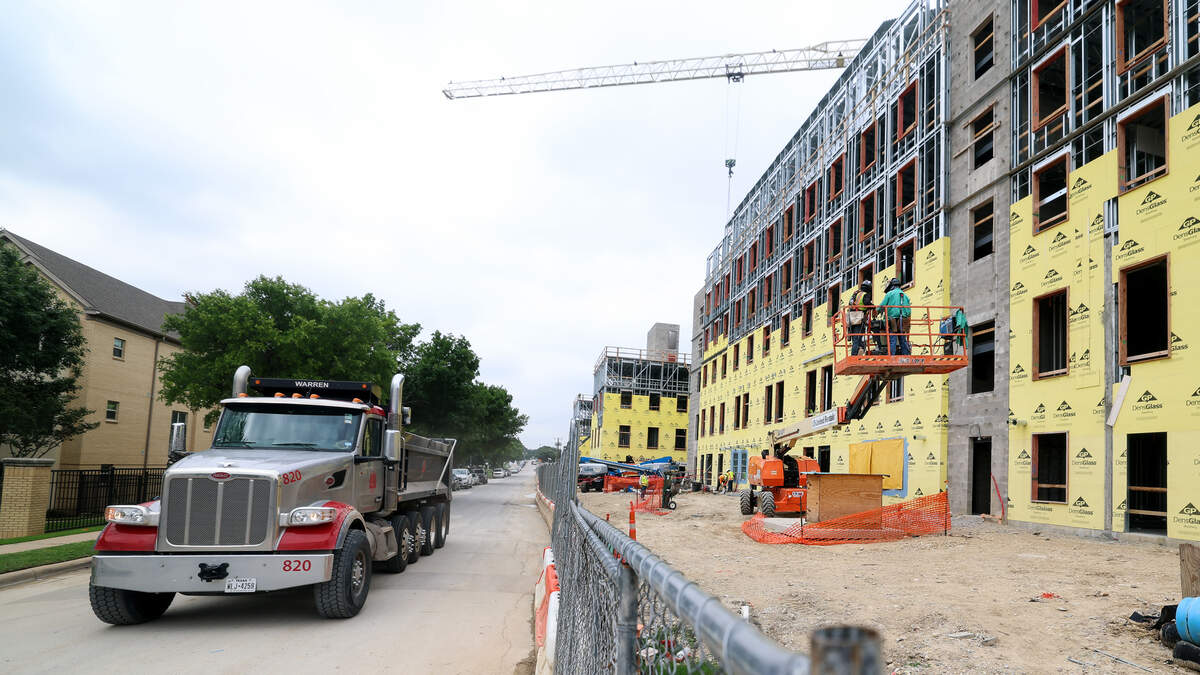
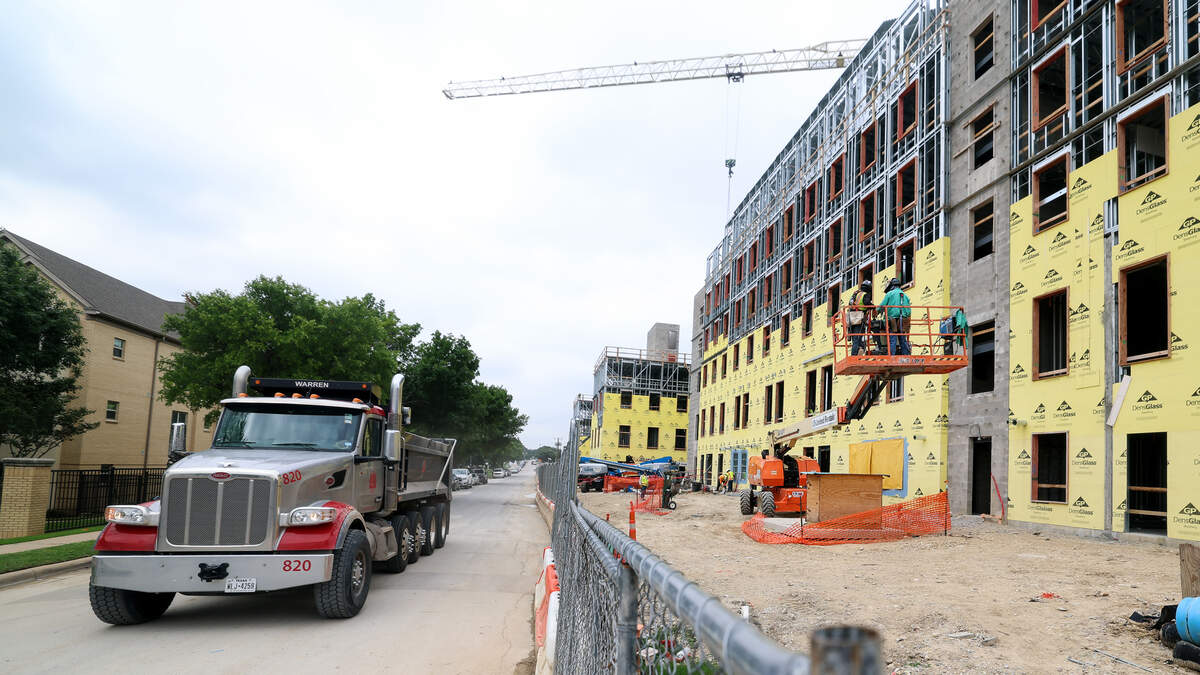
Construction continues on dorms for TCU students on Tuesday, June 16, 2026. As TCU expands to meet a growing student body nearby neighborhoods are changing, creating friction with longterm residents.
Amanda McCoy
FORT WORTH STAR-TELEGRAM
If your student just joined TCU’s record-breaking freshman class — or is thinking about applying for next year — you’re probably trying to picture where they’ll actually live, eat and hang out over the next four years. The short answer: the campus you toured or will tour won’t look quite the same by the time your student graduates.
TCU welcomed more than 2,800 first-year students this fall, the largest freshman class in university history and a slight jump from the 2,754 who arrived the year before. Undergraduate enrollment is now over 11,000, and the university’s stated goal is to grow total enrollment (undergraduate and graduate) to nearly 18,000 students by 2035. That kind of expansion is reshaping housing options, the streets around campus and even the relationship students have with their off-campus neighbors.
Here’s what families should understand as a new semester kicks off.
More on-campus beds are coming in 2027
If your student is a freshman or sophomore now, the housing landscape they finish college in will be quite different.
Right now, TCU has on-campus housing capacity for 5,204 students, plus 384 additional beds through master lease agreements with apartment complexes. But the university is constructing new residence halls to accommodate nearly 2,500 additional students by 2027.
A townhome complex under construction on McCart Avenue will add 120 units aimed primarily at juniors and seniors. And The Morado on Berry Street — an apartment building for 800 upper-class and graduate students, with 25,000 square feet of retail and parking — is set to open next fall.
For parents, the practical takeaway: on-campus housing options will meaningfully expand right around the time this year’s freshmen become juniors.
The “stealth dorm” question — and who owns them
Not every student lives on campus, and the surrounding neighborhoods have absorbed the overflow. Real-estate investors have bought up single-family homes near TCU and converted some of them into duplexes or rent-by-the-room houses that residents have taken to calling “stealth dorms.”
One of the more visible landlords in that space is Stacks Property Services, whose owner Jeremy Spann — a TCU graduate — owns about 20 rental properties near the university, all catering to students. Spann told the Star-Telegram his lease contracts include strict guidelines meant to keep tenants from creating disturbances, including provisions that subject tenants to fines for certain violations. He said those guidelines have grown more restrictive in recent years.
Not every landlord operates that way. Longtime neighbors, particularly in Westcliff just south of campus, say some student rentals have become chronic sources of noise. According to Fort Worth police records, six homes in the Westcliff area generated 52 calls to police between Aug. 1, 2024 and Nov. 20, 2025 — 37 of them noise or disturbance complaints.
If your student is looking off-campus, it’s worth asking who the landlord is, what the lease says about noise and guests and whether the property is one of the units concentrated in Frisco Heights, Westcliff or Bluebonnet Hills.
TCU’s Code of Student Conduct follows students home
A common misconception — one TCU parents often bump into — is that the university has no say over what students do off campus. That’s not quite accurate.
TCU’s latest Code of Student Conduct prohibits the use or possession of alcohol by anyone under 21, and it prohibits “dangerous use of alcohol” by any student regardless of age. It also prohibits disruptive conduct “at functions sponsored by the university or by members of the university community or in which members of the university community participate” — language that covers off-campus parties hosted by students.
A university spokesperson has said that “when notified of off-campus student events, student affairs leadership meets with the students involved to reinforce expectations outlined in the Code of Student Conduct,” separate from any action by Fort Worth police or the city.
A community engagement liaison overseeing the city of Fort Worth’s Neighbor-to-Neighbor program has told the Star-Telegram that residents can report noise complaints directly to the office of TCU’s dean of students. Deans then review and act on them, though she stressed those meetings with students are “educational, not punitive.”
The upshot for parents: your student’s behavior at a rental house isn’t invisible to the university. Complaints can and do travel back to campus.
A neighborhood conversation that’s still working itself out
The Neighbor-to-Neighbor program — a partnership between the city, TCU and campus-area residents established about a decade ago — was designed to head off conflicts before they reached the police. Longtime residents, though, have said the program’s meeting frequency and participation waned during and after the pandemic. City officials, however, have said the quarterly meeting cadence resumed two years ago, and city staff, council members, police and university leaders have grown more active.
Some residents are frustrated enough that they’ve pooled money to hire off-duty Fort Worth police officers to patrol their neighborhoods on weekends. Others, like Michael Johnston, who has lived a half-mile north of campus for decades, take a more sanguine view. Johnston told the Star-Telegram he’s a Horned Frog season-ticket holder who enjoys living near a vibrant student community, joking, “I can’t sleep unless there’s a party going on.” His bigger concern is that rising rental demand has pushed up property values and taxes, changing the character of established blocks.
For families, the message is simple: how your student treats the neighborhood matters. The people next door are often longtime homeowners, not other students, and they’re paying attention.
Berry Street is being rebuilt as the student hub
If you’ve walked West Berry Street recently and thought it looked underwhelming, TCU agrees. Turning the corridor into what university leaders call TCU’s “place to be” is one of the central pieces of the campus master plan, which proposes as many as 25 new buildings across campus, including 10 along Berry Street alone.
Plans call for apartments, shops, parking and office space, with much of the build-out targeted for completion by 2030. The Morado’s retail component is part of that vision. So is a proposed mixed-use corridor with academic facilities, mixed-use residential buildings and a new “gateway” to campus west of Sandage Avenue.
A 900-space parking garage on the east side of campus is also part of the plan, aimed at easing student parking pressure that has spilled into surrounding neighborhoods like Frisco Heights.
What to tell your student
For parents dropping off a freshman this year — or touring campus with a high school junior — the practical guidance is straightforward. On-campus housing options will grow substantially in 2027. Off-campus rentals vary widely in quality and landlord attentiveness. The Code of Student Conduct doesn’t stop at the campus gate. And the neighborhoods around TCU are full of people who’ve lived there far longer than any student will.
Good neighbors, in other words, tend to have better college experiences.
The summary points above were compiled with the help of AI tools and edited by journalists. The source reporting referenced above was written and edited entirely by journalists.
Do you have an opinion on this topic? Tell us!
We love to hear from Texans with opinions on the news — and to publish those views in the Opinion section.
• Letters should be no more than 150 words.
• Writers should submit letters only once every 30 days.
• Include your name, address (including city of residence), phone number and email address, so we can contact you if we have questions.
You can submit a letter to the editor two ways:
• Email letters@star-telegram.com (preferred).
• Fill out this online form.
Please note: Letters will be edited for style and clarity. Publication is not guaranteed. The best letters are focused on one topic.

Fort Worth Star-Telegram
Matt Adams is a news reporter covering Fort Worth, Tarrant County and surrounding areas. He previously wrote about aviation and travel and enjoys a good weekend road trip. Matt joined the Star-Telegram in January 2025.