
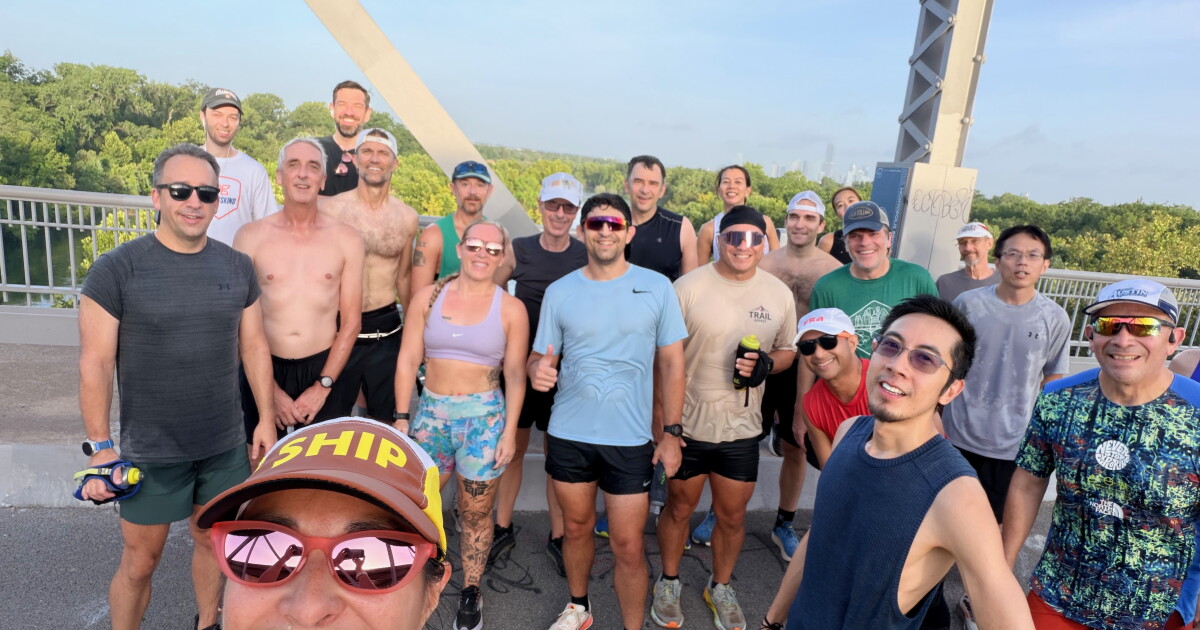
Even in the unbearable heat, getting together for a Saturday morning long run is a ritual for many runners in Austin.
This special group of people set their alarms for 4:45 a.m. when most people are still sleeping because it’s the weekend. They often force feed themselves a banana and a protein bar because pre-run fuel is essential for energy and strength and downing water before its go time.
To non-runners this may seem foolish, but this is the reality for runners who signed up for a fall marathon and have to complete their hardcore training runs in the thick of the summer heat.
This is happening as the city of Austin has been preaching heat safety, urging people to stay indoors, drink lots of water and check on their neighbors. But if you’re training for a fall marathon in Texas, that’s just the name of the game.
Mike Nicholson, who is returning from an injury, said runners often find a rhythm, whether they mean to or not — and even in the heat that becomes meditative.
“It’s like we’re a herd of gazelles,” he said. “It’s very communal. Like you are part of this herd.”
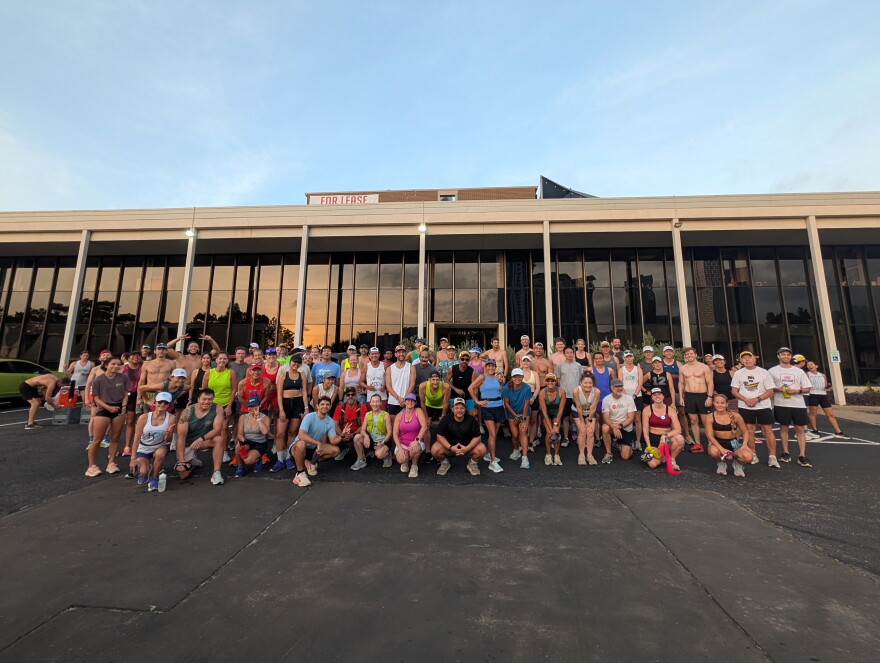
The Ship of Fools run club meets every Saturday morning for a long run. Moreno-Lozano has been running with the group since 2019.
A long July run
On a Saturday morning in July, it’s 76 degrees — which was the low for the day — at 7 a.m. Humidity is 97%, according to the National Weather Service, so it feels much warmer.
It’s a recovery week, so the group is only running a 10-mile loop heading east along the Ann and Roy Butler Hike-and-Bike Trail. I say only 10, because eventually the workouts get up to 22 miles.
As a pacer for the 10-minute mile group, my job is to keep the pace, keep everyone together, and guide those who have decided to run the 5- and 8-mile routes. I count down the miles one-by-one — one down, nine to go. But in the heat it also means being strategic about hydration, fuel and effort.
One of the most important things is simply just slowing down. Abi Huntoon, who has been marathon training all summer, said that can be harder than most people realize.
“I have to practice being patient with myself,” Huntoon said. “We can get down on ourselves … especially when I’m supposed to be running a 3:50 marathon and I’m running my long runs at 10:00 to 10:30 minute pace. But realistically you want to be running your long runs one to two minutes slower than your marathon pace.”
There’s always opportunities to adjust. Some days it’s OK to push the pace and the mileage a bit. But really it’s about how you feel that day.
“We’re people who wake up early and go, or late in the afternoon,” said Eugene Pushin, who has been running in Austin for nearly a decade. “I’d say be sure to hydrate during the day. Drink a lot of water. That always helps a lot. And then just listen to your body.”
The goal for many is to just avoid “bonking.” That is what runners call the overexertion, hitting-the-wall phase that often comes with nausea, fatigue and lightheadedness.
John Ragland has been running in Austin since at least 1987.
“I got to mile 14 and I could barely walk,” Ragland said, reflecting on a previous run. “It was just one of those days. It was like I was pulling a plow.”
A little more than 3 miles into the route, we come to our first water stop. Several people volunteer each week to set out cold water and gatorade along the route — a welcomed pit stop in this heat.
Not only is it an opportunity to hydrate, but also to catch your breath, check in on fellow runners and remind yourself that you can do this.
Keir Semmens said it can be hard running in the heat, but it pays off on race day.
“Running in the heat is free speed,” Semmens said. “It’s like training at altitude and then coming down to sea level. Your body adapts to the training so that you fly on race day.”
Luz Moreno-Lozano
/
KUT News
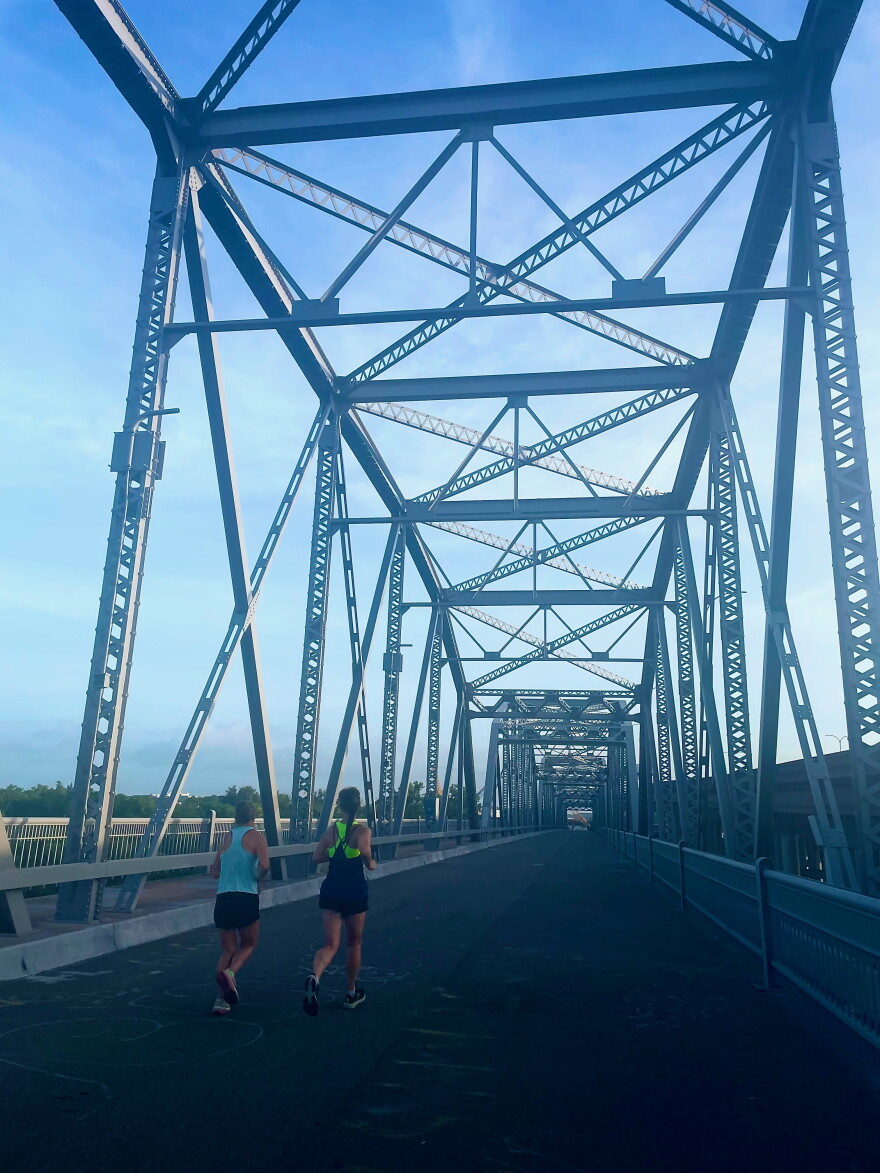
The Montopolis Bridge is near the halfway point along the route.
Mental and physical toughness
Slowly the miles start to tick down. The conversation bounces around. The temperature starts to rise. And eventually there’s just a couple of miles left. This can be one of the hardest parts of the run. When the end is near, and there’s a heavy desire for a cold glass of water, a cup of coffee and a shower.
This is when the rubber meets the road. When all the training pays off and the mental toughness you’ve built helps keep rhythmic breaths and steady strides.
This far into a long run, it’s not uncommon to be deep in thought about why in the world you’ve decided to do this. Questioning your life choices is a rite of passage when you become a runner. But for each person the why is different.
Some like the “hurts so good” feeling after being done. Others like testing their limits. For many though, it’s a good distraction from life. Running is their time away from being a parent, a spouse and away from work.