
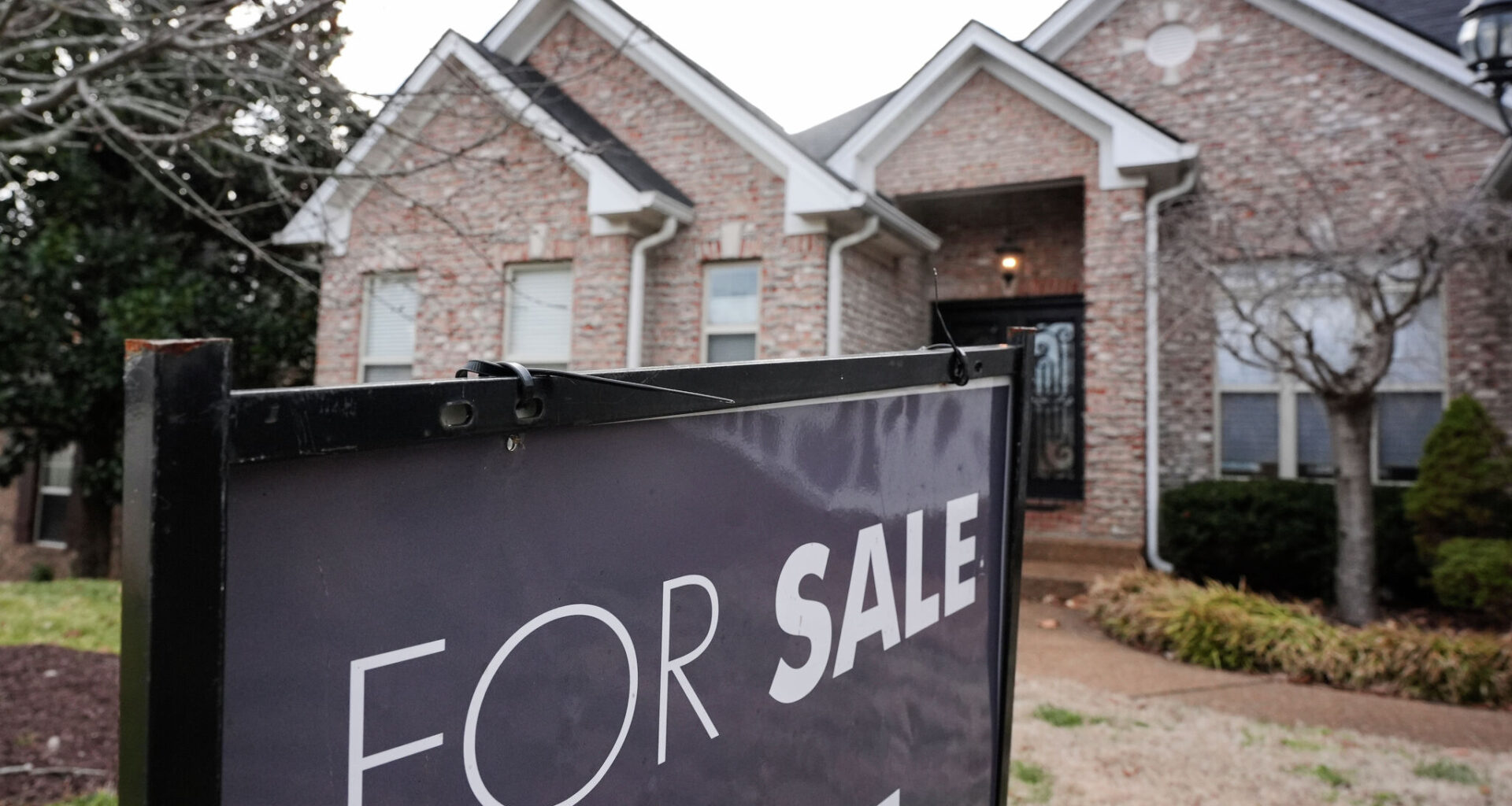
Austin housing experts say home prices are cooling while a slowdown in apartment construction could start pushing up rents.
George Walker IV/Asssociated Press
Austin housing experts say home prices are cooling while a slowdown in apartment construction could drive up rents.
LM Otero/Associated Press
By the end of the year, the median price of a home in Austin could be as much as $115,000 less than the peak hit during the pandemic, but it’s not all good news for buyers.

Real estate professionals gathered for the annual Central Texas Housing Summit where Unlock MLS and the Austin Board of Realtors presented the latest data on the region’s housing market. It showed prices continuing to fall but suggested buyers’ leverage could be slipping as the supply of homes for sale tightens and mortgage rates stay high.
Article continues below this ad
Housing is a hot topic in fast-growing Austin, where boom times have exerted pressure on the market. Austin Mayor Kirk Watson, speaking at the event Wednesday, pointed to the attention the city’s efforts to address the issue have received from across the national political spectrum.
“Vice President JD Vance complimented Austin on how we go about doing our work in regard to housing and reforms. Shortly after that, Mayor Mamdani also complimented Austin,” Watson said, referring to the Republican vice president and Democratic New York Mayor Zohran Mamdani. “The way I’m looking at it, if we’ve got both of those guys, we’re probably doing pretty good.”
But the numbers showed a housing market that remains complex for buyers to navigate.
Lower prices are providing some relief after Austin’s pandemic-era boom, but buyers now are contending with high mortgage rates and a shrinking supply of homes for sale. And, after two years of conditions largely favoring buyers, data suggests some of their leverage could be slipping away.
Article continues below this ad
Vaïke O’Grady, market research advisor for Unlock MLS and ABoR, is projecting that the median sale price across the Austin-Round Rock-San Marcos metro area will continue to decline through the remainder of 2026, finishing the year at between $410,000 and $420,000. The median was $435,000 in July, down from its 2022 peak of $525,000.
Affordability doesn’t hinge solely on price. Mortgage rates also affect how much buyers pay each month, meaning a lower purchase price does not necessarily translate into a lower monthly payment.
The average U.S. rate for the benchmark 30-year fixed rate mortgage rose to 6.76% last week, mortgage buyer Freddie Mac said Thursday, its highest since May 2025. A year ago, the average rate was 6.35%. Rates have been mostly rising this year due to the U.S. war with Iran and inflation.
Some other conditions that have favored buyers are beginning to change.
Article continues below this ad
O’Grady noted that the supply of homes is shrinking. Active listings across the metro area in July fell 9.9% year over year, while inventory declined by more than a month to 4.7 months. Within the city limits of Austin, active listings dropped 18.2%.
A market with about six months of inventory is generally considered balanced, with more than that typically favoring buyers and less favoring sellers. At 4.7 months, the Austin metro is moving further away from the inventory levels associated with a traditional buyer’s market.
Homes sold for 93.7% of their asking price in July, up from 93% a year earlier, another sign that buyers are getting slightly less room to negotiate. There are still deals to be found, though, especially for buyers willing to consider new construction.
O’Grady said builders have adjusted to the slower market much faster than existing homeowners and that’s reflected in the price gap between new construction and resale homes, which is now the widest it’s been since 2011.
Article continues below this ad
Newly constructed homes had a median price of $385,000 in July compared with $451,739 for existing homes. Builders’ asking prices have fallen from roughly $500,000 in 2023 to $387,240, while resale asking prices moved from $519,900 to $499,999. More than half of active resale listings have taken a price cut.
Builders are competing beyond sticker price, using incentives like mortgage-rate buydowns and closing-cost credits, which can make a significant difference in buyers’ monthly payments and upfront costs.
Renters, meanwhile, have enjoyed a very different market — though that may not last.
Austin renters have benefited in recent years from a wave of apartment construction that added 120,000 units between 2015 and 2024. That’s a 30% increase in inventory, according to the Pew Research Center, more than three times the national growth rate.
Article continues below this ad
That influx of new housing options helped create an unusually competitive rental market. As more apartments came online and vacancies increased, property managers were forced to offer concessions to attract tenants and lower rents that drove rates down from pandemic-era highs. Apartment List data shows the median rent for a one-bedroom apartment fell from $1,482 in August 2022 to $1,151 in March 2026. Across all unit types, median rent dropped from $1,546 in December 2021 to $1,296 in January 2026.
Now, O’Grady said, the construction boom that fueled those conditions is winding down.
Austin’s apartment construction pipeline has fallen 73% from its 2023 peak. The region has 14,247 units under construction, down 31%, and just 588 units broke ground in the second quarter compared with an average of 2,571.
Article continues below this ad
Unlock MLS said it expects apartment deliveries to drop sharply in 2027, potentially putting upward pressure on rents and ending the apartment glut and the leverage renters have become accustomed to.