
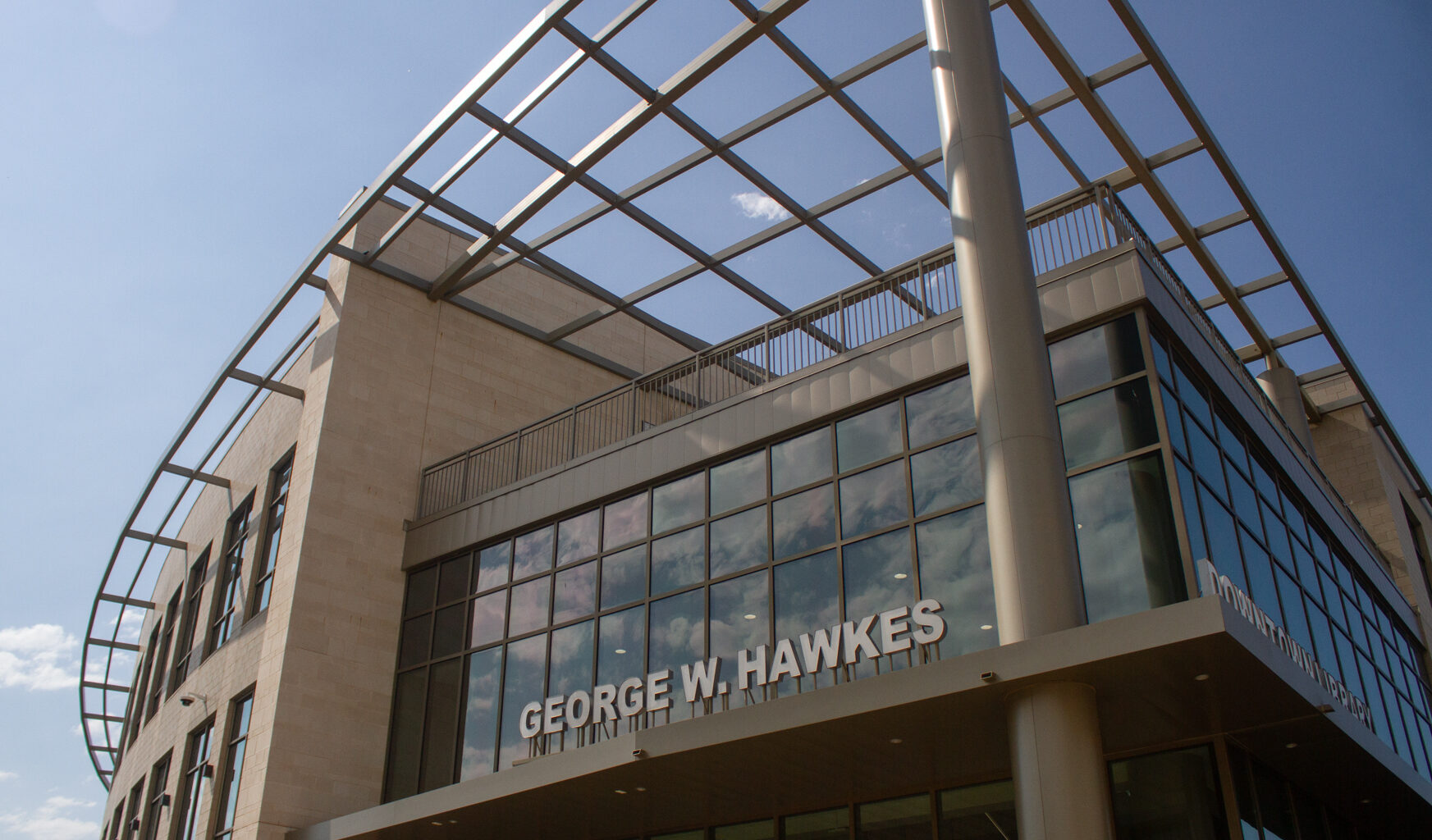
In May, the Arlington Public Library launched neurodiverse programming for adults focused on making its events more accessible and inclusive. Now, that programming will see a boost after the library received more than $25,000 in state and federal grant funding.
Mark Dellenbaugh, a librarian who led the programming’s launch, said the events have gotten a positive response from the community and that he is glad to see they’re on the right track.
“No one yet has said, ‘Why are you wasting your money on this?’ It’s more like, ‘Can we get more of this,’” Dellenbaugh said. “We feel like, with the pilot, we are really on the cusp of something pretty significant.”
Library staff first started hosting the events in May, building upon the launch of sensory-friendly programming for children in 2025.
Dellenbaugh was assigned to oversee the program’s creation late last year and immediately began researching neurodiversity.
The program works in two different ways, he said.
Some events are focused on the experience of neurodivergent adults, which helps them contextualize those experiences, while neurotypical adults learn what those experiences are like.
“It’s for neurodiverse adults, in that some of it is explicitly focused on and targeted to the lived experiences of neurodiverse adults,” Dellenbaugh said, “and other people may look over their shoulders, and maybe they’ll get it, maybe they won’t.”
Those events are the foundation of the speaker series Dellenbaugh has created. The library has held three so far, each focused on a different topic associated with neurodiversity:
Later-in-life neurodivergent diagnosis
Masking and unwritten social rules
Task initiation
Bringing these conversations to the library has meant a lot to Dellenbaugh. When he was in his 30s, he was diagnosed with ADHD. He said watching the events create connections within the community was fulfilling.
“It’s enormously satisfying for me, personally, as an adult professional with ADHD because it’s both an opportunity to bring things to the library that I wish someone had brought for me when I still didn’t know what I know now, and also a lab in which I get to test how much progress I have made,” Dellenbaugh said.
Dellenbaugh added that his neurodivergence has helped throughout the process of creating the events.
“My experience as a neurodiverse adult allows me to approach this from the inside out, but I’ve got lots of neurotypical librarians around me who helped me bring it into the boundaries and approaches that are going to be the most useful in this kind of environment,” Dellenbaugh said.
Sharon Granado, who oversees adult programming across the city’s public libraries, said the second approach involves making the library’s previously existing programming more accessible and inclusive.
This has included taking a look at the sensory environment in which events are taking place, Granado said.
“We are promoting (the program to patrons) to come and participate as much as you like, or as little as you want to,” Granado said. “We’ve had people say, ‘I just want to be around people; I don’t want to participate. I just want to sit here,’ and they can do that.”
During loud events, like the library’s game nights, they’ve created areas for quieter games with less sensory overload.
One aspect of making the spaces more neurodiverse-friendly has been adjusting the lighting and seating in the library.
Dellenbaugh said he has found that large lighting fixtures pointing down from the ceiling get an “almost universal dislike” from neurodiverse adults and that the seating in some of the rooms isn’t ideally staged for the conversations in the program.
“We’ve experimented, very low budget, with what it would be like if we had better lighting in the room. Then I look and go, what would be even cooler is better lighting and a rug, then people are more like in a living room and less like a library,” Dellenbaugh said.
That experiment is in the process of taking a step up.
In late August, the library was awarded a $25,386 grant from the Texas State Library and Archives Commission and the U.S. Institute of Museum and Library Services.
The grant will be used to support the current programming efforts and help create more resources, like sensory kits for adults with higher support needs. Granado said the funding is being broken up into smaller pieces to help in many different ways.
“One of the things that we did was silent disco,” Granado said. “That had the average patron that attends programs go, but it also attracted people who really needed just to have their own headsets, listening to their own music. With the grant, we’re going to be able to buy our own headsets, so we’ll be having more silent disco.”
Another piece of the grant will go to pay an intern to assist Dellenbaugh with the program management. Alongside his work with the neurodiverse programming, he also runs the downtown library’s Retro Technology Lab and genealogy collection.
“The main thing (the grant) really does is bring a dedicated person who can focus on extending this beyond low supports and high-functioning needs in professional jobs, university students, and bringing it to a broader audience that I personally don’t have the experience to do right with,” Dellenbaugh said.
Dellenbaugh acknowledged that the Arlington Public Library isn’t the first to have these initiatives, but he said he’s happy to have put the programming together.
“I’m really pleased that we’ve had the opportunity to try to develop something that’s not just something here, something there, but something more comprehensive that we’re able to do in a more thought-out way,” Dellenbaugh said. “I’m very grateful that we’ll now have the funds to supercharge what we did experimentally. We figured out what works, and now we can really go to town with it.”
Chris Moss is a reporter for the Arlington Report. Contact him at chris.moss@arlingtonreport.org.
At the Arlington Report, news decisions are made independently of our board members and financial supporters. Read more about our editorial independence policy here.
This <a target=”_blank” href=”https://fortworthreport.org/2026/09/14/arlington-librarys-adult-neurodiverse-programs-to-expand-with-new-grant/”>article</a> first appeared on <a target=”_blank” href=”https://fortworthreport.org”>Arlington Report</a> and is republished here under a <a target=”_blank” href=”https://creativecommons.org/licenses/by-nd/4.0/”>Creative Commons Attribution-NoDerivatives 4.0 International License</a>.<img src=”https://i0.wp.com/fortworthreport.org/wp-content/uploads/2021/04/cropped-favicon.png?resize=150%2C150&ssl=1″ style=”width:1em;height:1em;margin-left:10px;”>
<img id=”republication-tracker-tool-source” src=”https://fortworthreport.org/?republication-pixel=true&post=783536&ga4=2820184429″ style=”width:1px;height:1px;”><script> PARSELY = { autotrack: false, onload: function() { PARSELY.beacon.trackPageView({ url: “https://fortworthreport.org/2026/09/14/arlington-librarys-adult-neurodiverse-programs-to-expand-with-new-grant/”, urlref: window.location.href }); } } </script> <script id=”parsely-cfg” src=”//cdn.parsely.com/keys/fortworthreport.org/p.js”></script>