
AUSTIN, Texas — As Austin voters prepare to choose their next City Council representative for District 1 in November, housing affordability and displacement are emerging as central issues for residents who say rising costs are changing the character of East Austin.
Shirley Terry, who has lived in East Austin for more than 70 years and owns a home there, said she has watched property taxes climb and neighbors struggle to stay in place.
“It makes me feel like we just don’t matter in district one,” Terry said.
“I’ve seen the homes, I’ve seen the neighbors displaced and can’t pay their property taxes, lose their homes, and developers come in,” she said.
Those concerns were reflected in HousingWorks Austin’s latest District 1 scorecard using 2024 data. The scorecard shows the district has more than 11,000 subsidized housing units. It also found that 26% of homeowners and 44% of renters are cost-burdened, meaning they spend more than 30 percent of their income on housing.
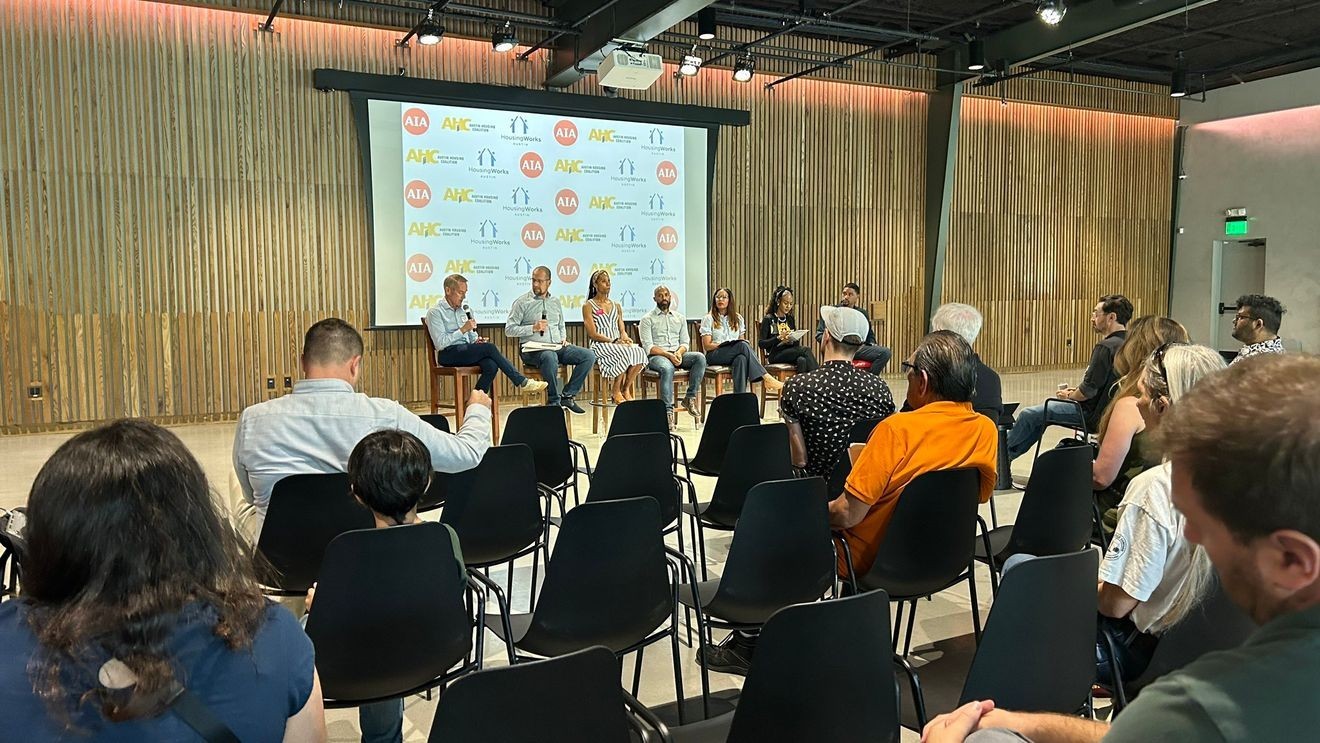
Monday night, the six candidates running for the open District 1 City Council seat discussed how they would address affordability during a housing forum at Assembly Hall. Candidates were questioned about a potential $350 million housing bond in 2028, future mixed-income developments and displacement.
“The permitting processes, I think, need to be streamlined and that will help us build more deeply affordable housing in Austin,” Amber Goodwin said.
“One of the big things that I’ve seen across district one is the displacement rate and how fast people are pushed out whenever a new development comes in,” Misael Ramos said.
“So we gotta make sure that the taxes that they are spending their money on are actually coming back to the community, or just don’t tax them,” Steven Brown said.
After hearing from the candidates, Terry said she wants her next council member to take a stronger stand for the district.
KEYE
ALSO| ‘I have a lot to say’: Austin brain implant helps patient communicate in real time
“I’d like to see them actually stand up and fight for district one, and not just let it be a developer takeover of our neighborhoods,” Terry said.
Current District 1 Councilmember Natasha Harper-Madison is not re-running for her seat on city council and will leave office in January.
Here is how each candidate responded to questions about housing challenges and the future of housing in District 1. The following responses are transcribed from candidates’ remarks and lightly edited for clarity.
Question 1: Why do you live where you live (District 1)?
Michael Nahas: “I lived there because a friend of mine owns the house, and I was looking for a place, and it was available. I’ve chosen the East Side because I’m a Quaker, and the Quaker Meeting House is on the East Side. One of my favorite places is the Vortex Theater and Butterfly complex. I had my 50th birthday there. Yeah, I just enjoy the artistic side of the East Side.”
Alexandria Anderson: “I chose the East Side because I’ve had the opportunity of living on the East Side, being here 21 years in Austin, whether it was when I was at UT, living off a Riverside Crossing Place apartment. I chose to live where I do now because, when I was looking for a home, it was an area that was still affordable. I tell people right now that if I were to go live where I live now, I would not be able to afford to stay there. So I think it brings vibrant green spaces as well. I’ve had the opportunity of being able to mentor at different elementary schools in the area. I love the Neighborhood Association. A lot of the churches that I attended, St. James and then also Greater Mount Zion, when I was in college, were on the East Side. So I’ve been deeply rooted in the East Side since I got here in 2005.”
Misael Ramos: “The reason why I’ve chosen the East Side is because of the rich history, the culture, but also the community. I have a lot of family who also came to school here, and we’re connected to East Austin. They introduced me to folks at St. James Baptist Church, where I have family ties with the pastor. I’ve had a lot of family who also come to school here, and we’re connected to East Austin, and they introduced me to folks at St. James Baptist Church who have a family tie with the pastor there. Just being a part of it, the first thing that I did was get connected to my neighborhood association. I met Brenda Malik, and also Bo Macarver, who eventually would become mentors to me in the area, and that has continued to keep me locked in and rooted in the community. It’s just been really good to be a part of it.”
Amber Goodwin: “I love East Austin. I was not born and raised in Austin. I was raised in Midland, Texas, and I got to Austin as quickly as I could. After college and after doing a little bit of work in D.C., I came here originally to work on the Obama campaign and have stayed here and really loved Austin, especially East Austin. It has afforded me the ability, 18 years ago to be able to afford my first home in his office in Dora Hills. I’ve also lived way out east as far as District One goes in Whisper Valley, had an apartment, also lived in a townhome, and I love the diversity of housing. I love options that people are able to have, but I also really just appreciate the embracing that I’ve had not only as an advocate, working not only on political campaigns, but also working on an issue that is deeply important to me and I know is something that has been impacting the East Side, which is gun violence prevention. It’s one of the reasons why I stay in East Austin as well.”
Portia Riggins: “I am born and raised in East Austin. I’ve lived in District 1 my entire life. I’ve watched East Austin experience growth, investment, new amazing neighbors, and displacement firsthand. Professionally, I’ve worked in accounting operations and analytics at Texas REALTORS, Austin 3-1-1, TCAD, and [unclear] dealership, where I learned about transportation and mobility firsthand. It was very important to me to learn more and more about our city and these databases and make sure that cybersecurity is at the forefront. Of course, while we’re here, it’s important that we focus on housing. That’s an important issue in our community. We need to make sure that, as a community, we’re here together.”
Steven Brown: “I was born and raised in East Austin. I grew up on Ninth Street, lived all over, and went to AISD schools from elementary through high school, where I went to LBJ. I also graduated from Austin Community College, Huston-Tillotson University, and Texas State University, where I recently got my master’s degree. I’ve raised both of my sons here. I’ve been a health care professional here, so I’m used to taking care of my community. I’ve been a deacon at my church and coached with the Junior Jags. I have deep roots here in Austin and East Austin, and I’m proud of those roots. My great-grandmother is buried at Evergreen, and that’s where I will be buried someday. I’m not leaving Austin. My goal is to make sure I leave an inheritance to my children, not just a big tax bill. Having seen gentrification firsthand, I want to make sure we leave something to our children.”
Question 2: Would you support a housing bond measure in 2028, upwards of $350,000,000? And if so, how would you like to see those funds allocated?
Michael Nahas: “No, I would not approve a bond if it is similar to the last one. The language last time was extremely flexible; City Council could do anything it wanted. I think we need to promise voters what we are going to do with a bond and be specific. We have already seen criticism of spending. Second, I object to what it was spent on last time: units at 50% to 65% MFI. I am an economist, and I have worked on housing. I care about this issue because I have been working since 2017 to lower rents by making it easier to build housing in Austin. I think that is the best way to be fair to everybody. If we build specific units for people at 65% or 50% MFI, not everybody gets those. We need a bureaucracy to hand them out, a waiting list, and all sorts of other things. That is not a fair system. For the middle class, we should have low rents. Any funding, I believe, should go to people who need permanent supportive housing and those at the lowest income level, about 30% MFI. I think people who can live independently should have a voucher and be allowed to live wherever they choose. I know there are issues with vouchers, and I can talk to a lot of people about those. But I think that is the best approach. If we tie people to a particular location and there is a job available somewhere else in Austin, they have to give up a good location where they are living to take that job. They will not pick the best job because they are tied to a subsidized location. So, if there is another bond, I would want it to support permanent supportive housing going forward.”
Alexandria Anderson: “I think it is something that we currently need to have. We have a lot of housing in District 1. In fact, one-fifth of the affordable housing in the city is located in District 1. Much of that housing serves people earning 60% to 80% of median family income, and that is not meeting the mark. Back in 2020, there was a development proposed at 12th and Springdale. I and the other co-chairs of my contact team advocated for 50% to 60% MFI, and we were told then that it was not doable. Yet, here we are in 2026, and now it is doable. We have to have a real, hard, tough conversation: We are not meeting the mark. Individuals who truly need affordable housing in this city are earning between 20% and 50% MFI. I know that, currently, when you look at what the federal government or even our city is giving in terms of points or credits, we are not getting credits for 40%, and we are not getting credits currently for 20%. So, we are not incentivizing people to want to build affordable housing. For me, it is about having deeply, deeply affordable housing and incentivizing developers to build it. I also look at homeownership. In the northeast crescent part of the district, communities in Copperfield, Windsor Hills, and North Acres have starter homes. We do not have starter homes in Austin currently in District 1 unless they are older or outside the city. If you are looking inside the city center, we do not have that. To Misael’s point, we need to educate residents, seniors, and first-time homeowners about property taxes, and we also need to look at land acquisition, which is something I am currently doing as a candidate for District 1.”
Misael Ramos: “I would definitely support the bond. I was part of a coalition earlier this year, rallying with VOCAL Texas, DSA, UIC, Integral Care and other groups to push for a bond. We were told that 2028 would probably be a better time to pursue it. We need to ensure that we are investing in deeply affordable housing. I look at the 0% to 30% units that have been built, and we just have not had enough. If we are thinking about homelessness and unhoused people, that is where we need to start. We have to look at mechanisms that allow funding to reach the folks doing the work. I also see some bond money going toward not only rental housing, but homeownership opportunities. I have been blessed to own a condo on the East Side in District 1, and I would love for other families to be able to do that as well. As someone who lived in a Foundation Communities housing development in Dallas, it would mean a lot to me to see others have the opportunity to not only find an affordable rental, but eventually move into affordable homeownership as well. Finally, there are groups, organizations, and nonprofits working to help people with property-tax relief. That is something we have to take into account when we are thinking about people in District 1 who are [unclear]. If you do not know about the race to 65, come to me afterward, and I’ll tell you about it.”
Amber Goodwin: “Yeah, I would support the bond. I think about housing as part of an ecosystem and take a public health approach to this big issue. In supporting the bond, I would want to make sure we are talking about the people who are most vulnerable first. In terms of resources and where to put bond money, I would first look at people who are unhoused and make sure we have permanent affordable housing. But it’s not just about permanent and affordable housing; it’s also about the resources we use to stabilize people so they can stay in the homes they want to stay in. Using a public health approach, I also think about prevention. East Austin and District 1 have a high poverty rate, but we also have, quote unquote, the most affordable units. That doesn’t square up to probably any of us here, right? We need to think about how we keep people in their homes. The Eastern Crescent has a significant eviction issue, so we need prevention: How do we get people in? How do we stabilize people who want to stay in their homes? And how do we make sure people can afford these homes and that they are actually affordable—units under $1,000? I want to make sure people who want to stay in their homes are educated about how that can happen and what resources are available. I was able to afford my first home because I had incentives as a first-time homeowner, and I would want money and resources to go toward that. Finally, there are many community-based organizations already working on housing and affordable housing, including some here. I want to make sure the table is as big as possible: architects, people doing this work across different coalitions and, most importantly, the community. That means not just one-time or two-time grants, but building funding into the budget to make sure the community has a seat at the table.”
Portia Riggins: “Yes, I would support continued investment in affordable housing. Before determining whether $350 million is the appropriate amount, I believe Council has a responsibility to account for the existing dollars first. I want to know how they have been spent. As a community, we should know what is already committed, what has been completed, and where the remaining needs are greatest. My priorities include preserving and rehabilitating existing affordable housing, deeply affordable rental housing, attainable homeownership, preventing displacement and making sure we can accommodate new neighbors while helping longtime residents and homeowners remain in their homes. That is truly important to Austin’s culture. Every major investment should also have measurable completion rates and transparent reporting so taxpayers can see what their dollars have actually produced.”
Steven Brown: “I know there’s been collectively probably around $600 million in bond money between 2018 and this most recent bond. I think a lot of people are concerned about how much money has been spent and what we’ve actually gotten out of it. It’s important to see what was actually done and how much affordability was delivered. Then, we need to see where we can subsidize or place more money to get the biggest bang for our buck. I would support it, but I’d like to see an audit done first to see what programs are working and what’s not working. Until we know where affordability dollars are best spent and what we’re getting out of this bond, I think it’s important to be cautious. A lot of people are seeing their taxes rise. One of the things that really drove gentrification on the East Side has been higher taxes. We need to make sure we’re mindful that we are not funding our own displacement through bonds that we don’t see come back to our community. Making sure the community is engaged and its voices are brought to the table as foresight, not an afterthought, is very important. People need to see solutions in their community, with them at the forefront. When it comes to affordability and raising taxes, we need to be mindful, pay attention, and be good stewards of tax dollars and the people who pay those taxes. Again, I would support the bond if there’s an audit and we see that these bonds are moving the needle, but we need to be responsible to the people.”
Question 3: As a District One council member, what commitments, if any, would you hold the city and developer to in order to ensure that the people who have lived in Colony Park aren’t priced out before the development is complete? How would you make those commitments durable and enforceable?
Michael Nahas: “I have studied housing in Austin and reviewed the data. First, I looked at TCAD data. About 90% of Colony Park residents own their homes, and a good portion are over 65. It was hard to nail down an exact number, but TCAD data from two years ago put that figure at about 30%. I also looked at voter-age data, so that number may be lower now. Another thing I looked at was Mueller. I have data from 2012 to 2022, and I did a GIS plot to see what happened there. Mueller’s prices went up, but the surrounding neighborhoods did not, according to TCAD data. Areas north of Mueller did increase, but those neighborhoods had lots that could be split, so you would expect those lots to go up in price because new owners may buy them expecting to split them. So, I do not anticipate a huge problem in the Colony Park area. I think we need to look especially at renters when rates go up, but I do not anticipate a major issue there.”
Alexandria Anderson: “I think this continues a little bit of what I spoke about last time. I know it was recently proposed that Colony Park would have 20% of its units be income-restricted. I think that was something the city later pulled back on. I would move forward with that as one of the ways we look at anti-displacement mitigation and help people stay in their homes. When I have been block walking, a lot of people are not even aware of all the programs we have as a city. We need to look at home repair, be aggressive with it, and educate our seniors and neighbors. As Mike said, a good portion of the area’s residents are seniors, and District 1 in general has a large senior population. We need to educate them about how they can stay in their homes. I also think we need to look at the development coming to that area and allocate 20% of retail spaces for small, minority-owned and women-owned businesses. We need to look at this holistically. One area we do not touch on enough is the environment. There are critical features and wildlife out there that we need to protect. District 1, especially that area, is limited when it comes to green space. Walking in [unclear] Hills and those areas, people want more green space and parks. That is something that is being given in that area and should not be taken lightly. We are seeing what is happening—or what could happen—at Dog’s Head. We need to protect that area, include 20% deeply affordable housing in that space, and make sure small businesses are part of it as well.”
Misael Ramos: I think a big part is first doing the outreach and connecting folks to the resources and the potential funding. One of the big things that I’ve seen across District One is the displacement rate and how fast people are pushed out whenever a new development comes in, and property taxes skyrocket and appreciate and essentially lead to gentrification and people getting moved out of the area. So I believe that, you know, first and foremost, having our volunteers, also our campaign office, and not only our campaign officer but also our staff, go out into the actual community and inform the community about what resources they actually have and can connect to so that they can have some property tax relief. I also would like to see some potential for some co-ops and community stewardship. A trust that basically allows the community to have a piece of the equity in some of those developments. We’re talking about an area where people have been historically disinvested and also have been forced out of their generational wealth, and so we need to be pouring back into that part of the district and part of that neighborhood as well. I would also make sure that we are investing in homeownership opportunities and affordable commercial rental units over there off of 12th Street and Chaconne. There’s the Deere Diary, and Deere Diary is a great coffee shop. And the reason why they are actually around is that they had an affordable unit. And so I would ensure that we’re building that so that we can continue to have black ownership and small business entrepreneurial ownership in that area too.
Amber Goodwin: “I know some people dislike the term ‘working group’—I do too—but I would support a permanent working group that tackles housing through an all-of-government approach. This is not something that one City department, or just the City of Austin, should be concerned about. What could happen at Colony Park should involve the county, state, and federal government. There are many parts to making it affordable, and this has to be a long-term process, not something that happens in the first year or the first five years. I would commit to bringing the community together as part of that working group and establishing community-benefit agreements up front. We also need to analyze what the district and Colony Park look like right now. Colony Park may be compared to Mueller or other places, but it is different. District 1 is different, and Colony Park may need to look different as well. We need to conduct that analysis, look at land trusts, and educate the community about the role it can play in the process. One of the most durable ways to make sure housing stays affordable and stays with the community is for the City to buy some of that land itself. The City has the ability to do that, and we have seen it succeed in other cities similar in size to Austin. We also need to look at existing affordable homes, educate residents, and work with community-based organizations like BASTA and others so renters can stay in their homes and people who want to buy homes have the incentives to do so.”
Portia Riggins: “I know firsthand the experience of being in a predominantly Black public-housing neighborhood and fighting to make sure displacement does not happen. My great-grandmother and great-great-grandmother have deep roots in this community. There is a picture of them painted at Seventh and Chicon. I have seen people have to move — not specifically my great-grandmother. For Colony Park, residents need to be protected and receive the investments they have waited for. That includes low-income and underserved residents, new neighbors, and longtime residents. As a council member, I would provide oversight of commitments affecting homeowners, renters, affordable housing, and local small businesses. Transparency and communication are important. Growth and development can happen while protecting residents, but community engagement has to be part of it.”
Steven Brown: “Yes, and I agree with a lot of what has been said up here. A lot has happened to District 1 and East Austin, but not with District 1 and East Austin. Colony Park is not an unknown issue to me. I went to LBJ High School and had a lot of friends there. The community has not been engaged. Many people do not have the opportunity to have their representatives come into the community and share, on the front end, what is going on. Community members deserve a say in what happens in their community and what comes into it, in a way that matches the character of the community. I am committed to radical transparency. When a developer comes into the office, the first question should be: Have you talked to the stakeholders? Have you talked to Barbara Scott and the people in that community? What do they want to see? What community agreements have you discussed? If the answer is no, then they need to go back and do that until the community feels like there is a partnership. That is the biggest thing we can do: bring the community along. To keep people from being displaced, we also have to address taxes. Residents should not be funding projects or being told to fund a Cap & Stitch project when the park down the street is not fixed. If you are going to tax us, spend the money to solve a problem in the community, or give us our money back so we can solve our own problem. Let’s not overtax people.”
Question 4: What are your priorities to address displacement and tenant stabilization needs?
Michael Nahas: “Displacement is a hard problem. I am an economist, and I have looked at it for nine years. I have not seen a solution from anybody. Stopping displacement costs a tremendous amount of money. About half of Austin’s stored value — people’s wealth — is in homes and land, which is twice what people own in stocks. Changing land and housing takes a tremendous amount of money. Land trusts require buying the land, and they often forgive taxes on that land, so the city is paying twice for it. It is amazingly expensive. If you are trying to do it on the cheap, you cannot. The best thing I know is that homeowners are less likely to be displaced. Displacement also happens when younger members of the community cannot move into a neighborhood where the social organizations and businesses are already there. We need to make it affordable for younger families to move in. In Austin, land is extremely expensive, so the best solution I have found is allowing people to build on smaller pieces of land — townhomes and similar housing. Houston does it with smaller lots. Mueller does it. Philadelphia’s minimum lot size is 800 square feet, less than half of Austin’s new minimum lot size. The best defense is to allow small lots and encourage homeownership as much as possible.”
Alexandria Anderson: “I think a lot of us up here have the same lens when it comes to stabilizing the community. Housing stability has always been a concern for me. We have shared multiple times that our community, especially the areas where we live, has deep senior roots. A big priority for me would be housing stabilization and eviction prevention, including providing legal services so people can stay in their homes. We also need to look at land acquisition so we can build on it. Misael mentioned community land trusts, and that is something we could explore more deeply. I have had the opportunity to work with developers who build affordable housing and are looking to build deeply affordable housing. I want to support people who are looking to do that in the community and throughout Austin. I also support a community-navigation program, as the one discussed for Colony Park. Housing is not rocket science. The more deeply involved you are in a community, the more you hear residents’ concerns and worries. You learn how much people are making. If I know my neighbor down the street is making only $60,000, I know an 80% MFI apartment is not going to work for them. We need to dive deeper into the community and listen to what residents are saying. I am open to working with developers in this city who are truly looking to do the work.”
Misael Ramos: “For about seven years, I served on the Blackland Community Development Corporation, a nonprofit in East Austin that works on affordable housing. I led that organization for about three years. One thing I learned was the importance of community land trusts and expanding them. If you talk to various churches in the area, you will learn they have land trusts of their own to keep housing perpetually affordable. I want to expand that by working in coalition with GNDC and other partners, and continue bringing the Community Land Trust Accelerator to the communities we serve. I would also look at developing on land the city already owns. One of the biggest barriers for nonprofit developers is purchasing land. Construction costs are high, too, but buying land is especially difficult. If we can partner with nonprofit organizations to develop on city-owned land, we can begin reaching the deeply affordable rates we desperately need. I would also streamline the process and make it easier to develop more affordable housing, while bringing communities in so they know they have opportunities to rent or own an affordable home.”
Amber Goodwin: My priorities would be taking an all-of-government approach and making sure there is accountability across City Council. The displacement of District 1 did not happen because the people who lived there in 1928 wanted to be displaced. It happened because of all of Austin. We need to look both upstream and downstream. Upstream, that means examining the permit process. We have all learned more about the permitting process by talking to voters every day, whether they live in a home, rent a property, or are trying to build on their property. I think the permitting process needs to be streamlined, and that will help us build more deeply affordable housing in Austin. Downstream, we need to make sure people can stay in the homes they want to live in. My big, bold idea is to think about why and how people get displaced. Evictions are high in Austin, especially East Austin. A University of Chicago study earlier this year found a direct correlation between gun violence and the lack of safe, affordable homes. It found higher rates of gun violence and violence in communities where people did not feel they had safe, affordable homes. I want to create a community violence-intervention and eviction unit to tackle both violence prevention and housing, so people can have stable housing and feel safe whether they are walking their kids to school, going to a community grocery store, or going to new development. We need to think about this holistically, taking an all-of-government approach and considering how decisions inside City Hall affect people upstream and downstream — especially those who want to stay in deeply affordable units that should be built throughout the district.”
Portia Riggins: “My main focus in this race has been making sure we do not leave anyone behind during this period of rapidly advancing technology and innovation. It can affect new residents, longtime residents, and neighbors moving here from other cities. It is important that we safeguard that and keep this community and its land safe. As I have mentioned at other forums, the city budget will be a priority for me. We need to make sure allocations are going where they need to go to protect the environment while expanding and building housing as the community grows. We have to be able to house as many individuals as possible. We need completion rates — not just people talking about it, but people actually completing it. That is what I am prioritizing: completion rates and using data effectively to get the job done. I would be honored to serve you.”
Steven Brown: “I cannot talk about taxes enough. We have to slow down with upzoning and make sure this community has a say in the character of its neighborhood. We need to look at taxation, zoning, and land-development decisions through a social, racial, and economic lens. We can also use land the city of Austin already owns and affordable-housing bonds to subsidize housing. This community has lost intergenerational wealth, and the biggest thing to me is helping it regain that wealth. Homeownership is the biggest thing we can do, including making sure starter homes are available. At the end of the day, this is about trust. Who do you trust to go in and do the right things, not just say the right things? People have not been told on the front end what is going on in their community and what could take place, and they are often caught off guard. I am from this community. I was born and raised here, and I have been fortunate enough to make ends meet while raising two kids here. My convictions will not allow me to compromise or fail to go out to the community and tell them what is going on. We need radical transparency, and we cannot be paternalistic leaders. We need to do what the community asks us to do, bring their voices along, and work with all stakeholders so there are more win-wins. Right now, everyone feels divided, and we need more win-wins.”