
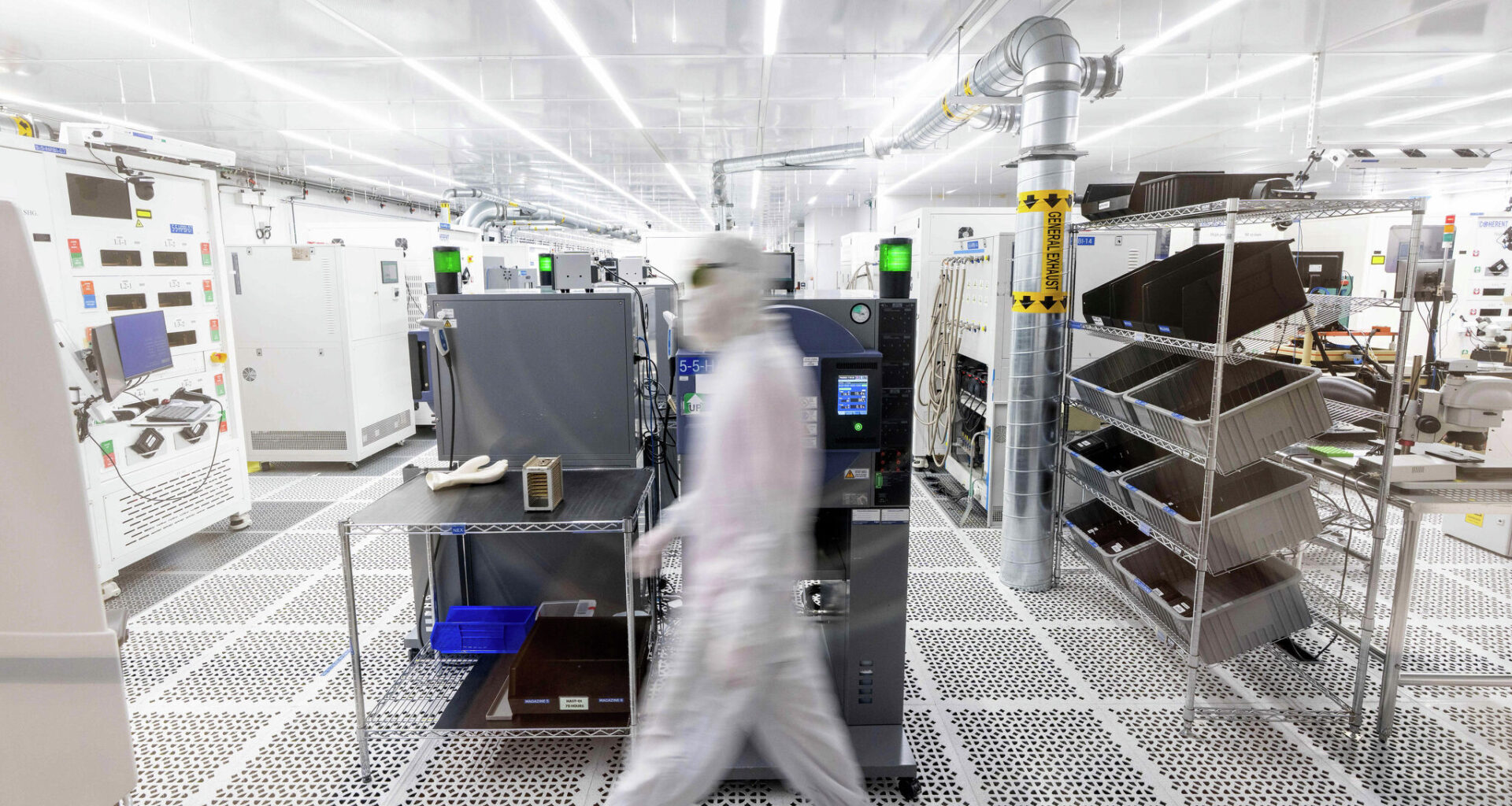
A gowned worker walks through the indium phosphide wafer product testing room in a Coherent manufacturing facility where lasers are developed for transmitting data among chips, which could decrease power use by AI systems, on Tuesday, June 16, 2026, in Sherman, Texas.
Jeffrey McWhorter/Associated Press
More than a quarter of North Texas businesses are using artificial intelligence — a higher percentage than in New York or Los Angeles, according to a recent analysis of U.S. Census data conducted by WeWork.

The report found that 26% of D-FW-area firms were using AI in July, up from just over 20% in January. D-FW’s usage rate ranked above the national average, which registered around 22% in July, and higher than the usage rate in the nation’s three largest metro areas. In greater New York, the rate was around 18%, in greater LA it was around 20% and in greater Chicago it was around 22%.
Broadly, the report also reiterated a prevailing business trend, whereby AI has become widely adopted by large firms and in certain sectors, while other sectors and smaller businesses have been slower to embrace the technology.
Article continues below this ad
“Read together, the numbers point to unevenness,” WeWork’s report noted. “For all its revolutionizing potential, AI is still a relatively new technology that continues to advance unevenly and at an unpredictable pace.”
It also offers additional evidence of D-FW’s emerging status as a national tech hub: Earlier this summer, a different analysis of BLS data, from the IT company CompTIA, found that D-FW had nearly 11,000 tech-related job postings, a number that ranked third among all U.S. metro areas. Another recent analysis, from the commercial real estate firm CBRE, ranked D-FW as the eighth best market for tech workers in North America, three spots behind Austin and ahead of Vancouver, Denver and greater LA.
D-FW also ranks among the world’s top markets for the data centers fueling the AI boom, and analysts point out that the region’s diversified economic growth is translating into a wide variety of tech-related roles.
“These tech jobs are popping up in a wide variety of industries,” Seth Robinson, vice president of industry research at CompTIA, previously told The Dallas Morning News. “It’s not just in the high-tech industry.”
To come up with its report, WeWork analyzed results from the U.S. Census Bureau’s Business Trends and Outlook Survey, a semifrequent survey the agency conducts that collects information from more than 1 million businesses around the country. The bureau’s survey asks businesses if they have used AI in the last two weeks, and if they expect to do so over the next six months. WeWork compared AI-related responses from the survey across metro areas and time periods, looking at results from January and July.
Article continues below this ad
D-FW’s July usage rate ranked roughly on par with Miami’s, while metros including Seattle, San Francisco and Boston recorded slightly higher rates. Along with New York and LA, metros including Phoenix, Portland and St. Louis recorded lower usage rates. The results also indicated D-FW’s usage was trending steadily upward, with just over 29% of respondents saying they expected to use AI over the next six months.
While the Census-based analysis did emphasize vast disparities among industries and different sized companies — it found that 39% of the largest firms were using AI, compared to 21% of the smallest firms, for example. The overall AI usage numbers it recorded were also far lower than some other AI usage estimates. This spring, a different survey from the Dallas Fed, based on responses from a cross-section of more than 300 Texas executives, found that two-thirds of Texas businesses were already using the technology to at least some degree. It also found that the tech was leading to productivity gains and in some cases, leading to a lower need for human workers.
“I think the big question in terms of the labor market is, ‘Is AI automating or augmenting workers?’” Emily Kerr, a senior business economist at the Dallas Fed, told The News at the time. “‘Is it replacing or enhancing workers?’ That’s like the big, open question. And from our survey over the past couple years, as we’ve been asking about this, the answer continues to be both.”